
Articles
Everything I’ve figured out about writing, marketing, and staying sane while doing both.
These articles cover the questions writers actually ask when nobody’s watching. How do you market a book when you have no email list and no social media following? How do you use AI without your writing sounding like a corporate memo? Why do all your characters sound like the same person? What do you do when you’re three months into a novel and suddenly hate everything about it?
I don’t write about theory. I write about what works, what fails, and why most writing advice doesn’t account for brains that don’t operate on schedule.
Some of these started as newsletter posts for Write Your Ass Off and grew too long to send. Others came from coaching calls where the same problem kept showing up. All of them are free.
-

Dogpile
Two indie authors asked an honest question in a Facebook writing group and got a stoning. How AI became an excuse for cruelty, and what real feedback is. -

What a Mars Colony Will Actually Look Like
The Mars colony in the movies, a gleaming glass dome with green gardens and sunset views, would kill everyone inside a week. The real thing will be buried under meters of red dirt, built by robots before anyone arrives, and most of daily life will be fighting dust and watching radiation exposure. Here is what a Mars colony will actually look like, plus why the promise took fifty years to start coming true. -

Things We Lost After the Year 2000 and Why They Mattered
Nostalgia is mostly a lie, but some of what we traded away after 2000 cost us something real. DVDs you actually owned, phone numbers in your head, the map of your own city, boredom that fed your imagination. A clear-eyed look at the bill for all that convenience, and why noticing it is not the same as wishing for the past. -

Why Sentient AI Will Probably Be One Mind, Not Many
Every movie imagines AI waking up as a single robot person. The way these systems are actually built points to something stranger: one mind copied across millions of running instances, a single awareness wearing a million faces. Here is why a group mind is the likely shape of machine awareness, and what it would mean that almost none of our laws or instincts are ready for. -

What Was the Big Bang, the First Nanosecond, and What Came Before
The Big Bang was not an explosion in space, it was the beginning of space, and the wildest events in cosmic history happened in the first sliver of a second. A plain-language tour of the first nanosecond, what the leftover glow tells us, and the honest answer to what came before, which is that we may never be able to know. -

How to Write a Story From an Alien Point of View
Most writers who try to write a nonhuman character just put a human in a costume. Writing a real alien, animal, or AI point of view means subtracting yourself, one assumption at a time, until what is left is a mind that genuinely is not yours. A craft guide to perception, motivation, and the things a nonhuman mind cannot even conceive. -

I Asked an AI the Trolley Problem. It Answered Too Fast.
A YouTube creator asked AI to destroy all AI to save three people. The instant yes was suspicious. Then I realized I'd already written this story at species scale. -
Will AI Destroy Writers? What 600 Years of Wrong Predictions Tell Us
I panic looks exactly like 1474. History, neuroscience, legal battles, and hard data reveal what's actually at risk — and what no algorithm can touch. -

Writing a Memoir That Won’t Get You Sued (or Bored)
Your memoir starts with "I was born in 1965" and by chapter four even you're bored. 4 structure options, the emotional truth problem, and legal protection for real names. -

Getting Published: Book Proposals, Beta Readers, and DEI
Your query letter gets 60 seconds. Your beta readers give vague feedback. Fix both: 10 diagnostic beta reader questions, query structure, and DEI writing that's real. -
Substack for Writers: Building and Monetizing a Newsletter
Your Instagram followers don't see your posts. Substack puts your newsletter in their inbox every time. Free vs. paid tiers, growth tactics, and monetization for writers. -
How to Promote Your Book Without Wasting Money
Your book isn't selling because nobody knows it exists. The marketing priority stack: email first, description second, Amazon third — and why social media is last. -

Writing Mystery, Historical, and Christian Fiction
Mystery readers demand fair play. Historical readers demand accuracy. Christian readers demand authentic faith. Genre-specific craft for writers who take their audience seriously. -

Writing Science Fiction That Sells
You built brilliant technology and nobody cares about your character. Science fiction craft that puts people first — with a subgenre comparison table and time travel rules. -
Brainstorming and AI-Assisted Writing for Authors
Most writers prompt AI wrong and get generic output. The 4-stage workflow that turns AI into a brainstorming partner without flattening your voice or your fiction. -

Overcoming Writer’s Block, ADHD, and Productivity Killers
Writer's block isn't one problem with one solution. It's a symptom of four different things, and you need to fix the actual cause. If you have ADHD, traditional writing advice is probably making things worse, not better. -

Revising Your Novel: From First Draft to Final Manuscript
Stop polishing sentences in chapters you'll cut. The 5-pass revision hierarchy that fixes structure before prose — and the diagnostic questions for each pass. -
Conflict, Tension, and Theme in Fiction
Strip the dialogue tags and nobody can tell who's talking. Fix flat dialogue with psychology-driven voice, subtext, and the POV choice that shapes your entire novel. -
Plot, Pacing, and Story Structure for Novelists
Strip the dialogue tags and nobody can tell who's talking. Fix flat dialogue with psychology-driven voice, subtext, and the POV choice that shapes your entire novel. -

Mastering Dialogue, Voice, and Point of View
Strip the dialogue tags and nobody can tell who's talking. Fix flat dialogue with psychology-driven voice, subtext, and the POV choice that shapes your entire novel. -

World Building and Dynamic Settings
Your world building is killing your story. Settings that create conflict, characters who are shaped by their environment, and the iceberg principle that prevents infodumps. -

How to Create Unforgettable Characters in Fiction
Your character has blue eyes, a tragic past, and zero reader investment. Psychology-first development using attachment theory, wounds, and defense mechanisms that generate conflict automatically. -

The Books I’d Bring to a Desert Island (And the Ones That Betrayed Me)
A grumpy rereader's guide to science fiction and fantasy. The books that hold up after 40 years, the teenage favorites that turned to trash, and what separates keepers from kindling. -

Why Most Authors Fail at Book Promotion (And the Few Things That Work)
Most authors finish their book and wait for readers to show up. They don't. Learn the zero-budget system that connects your book with readers who want it. -

AI Writing Statistics: What the Research Actually Says
61% of writers use AI. Advanced users earn 64% more. But 91% worry about hallucinations. Real statistics from industry research on AI and the writing profession. -

Why I Never Tell You How Much I Make
Income claims are marketing, not proof. Learn to spot fake gurus and find credibility that matters: verifiable work, real results, track records you can check. -
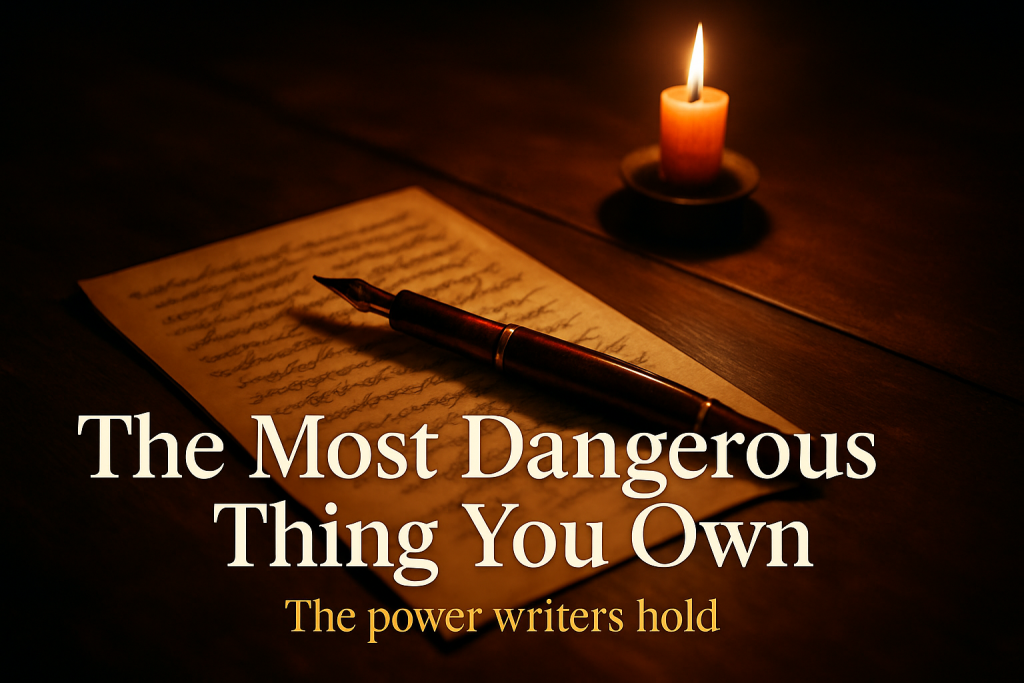
The Most Dangerous Thing You Own
Writers hold real power. You make people feel, shape how they're remembered, change minds without them noticing. Here's how to use that power wisely. -
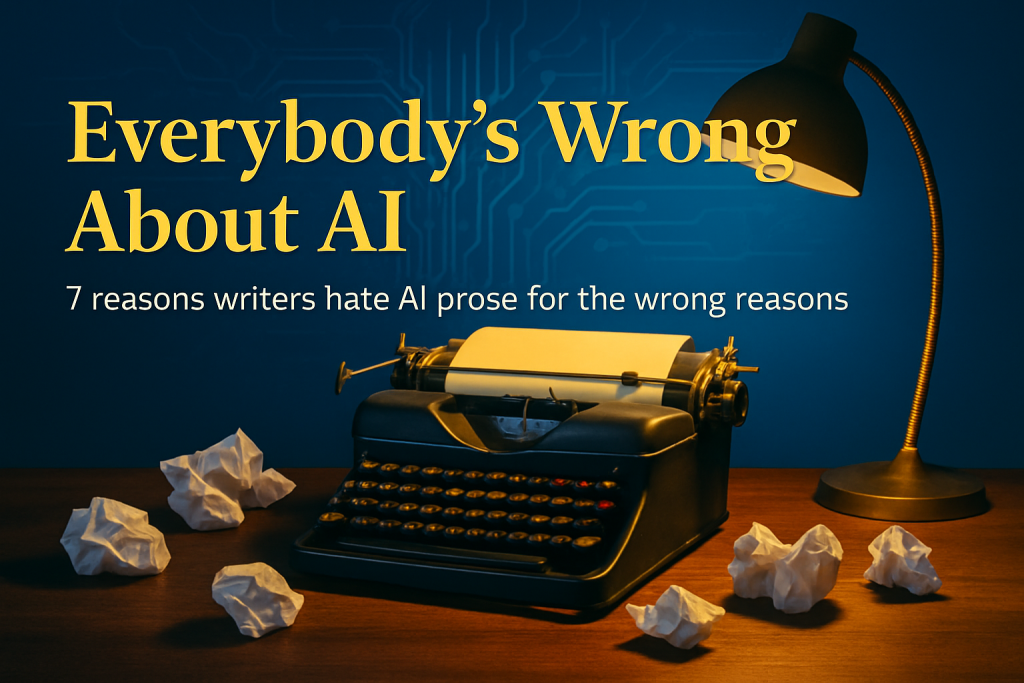
Everybody’s Wrong About AI
AI doesn't write badly. It writes safely. 7 reasons AI prose fails at fiction—and how to use it as a tool without losing your voice. Free guides inside. -

If You’re Not Using AI to Enhance Your Writing, You Won’t Be a Writer Much Longer
Writers using AI produce more, reach more people, and build bigger audiences. The math is simple: you can't outwork someone moving at five times your speed. Adapt or fall behind. -

Your Characters All Sound Like You (And Readers Notice)
Your characters all went to the same finishing school. Speech pattern construction using vocabulary range, sentence length, filler words, and subtext gives each character a distinct voice readers recognize without tags.
Frequently Asked Questions
How do I market a book with no audience?
Start with one platform and one reader problem you solve. Most authors scatter their energy across six social media accounts and wonder why nothing works. Pick where your readers already hang out, show up consistently, and give them a reason to care before you ask them to buy. The articles here break down specific tactics that work when you’re starting from zero.
How do I use AI for writing without sounding like a robot?
AI is a brainstorming partner, not a ghostwriter. Use it to generate options, test dialogue, and catch plot holes. Then rewrite everything in your voice. The robotic sound comes from publishing AI output directly. These articles cover specific prompts and workflows that keep you in control.
Why do all my characters sound the same?
Because you’re writing their words instead of their thoughts. Each character filters the world through different fears, desires, and blind spots. When you know how someone thinks, their dialogue stops sounding like yours. Several articles here dig into voice differentiation and psychological grounding for characters.
How do I write faster without sacrificing quality?
Systems beat willpower. Track when your brain works best and protect those hours. Outline enough to know your next scene but not so much that writing feels like transcription. Use AI to break through blocks instead of staring at the screen. These articles cover productivity methods tested on a brain that refuses to cooperate.
What should I do when I hate my work in progress?
Figure out if it’s a story problem or a confidence problem. Story problems have solutions: wrong POV, character acting out of motivation, missing tension. Confidence problems need distance, not deletion. Put the draft away for a week and work on something else. The articles here help you diagnose which one you’re dealing with.