

Mystery Fiction: The Genre That Punishes Cheating
Mystery readers are detectives. They’re reading your book with a notebook open, tracking clues, evaluating suspects, and building their own theory of the case. When your reveal arrives, they want one of two reactions: “I should have seen that” or “I never could have predicted that, but it all makes sense.”
What they don’t want: “That’s not fair.” A mystery that solves itself through information the reader never had access to breaks the implicit contract between mystery writer and mystery reader. This is the fair play principle, and it’s been the foundation of the genre since the Detection Club laid out the rules in the 1920s.
Fair play means every clue the detective uses to solve the case must be available to the reader. Not obvious — buried in plain sight, disguised by context, surrounded by red herrings — but available. The reader should be able to go back after the reveal and find every piece they missed.
I’ve written 113+ books and the mystery-structured ones require the most precise planning. You can’t pants a mystery. You need to know the solution before you plant the clues, or the clues won’t be there when the solution needs them.
Building a Mystery: Backward From the Solution
Start with the crime. Who did it, why, and how. Work backward to plant the clues that point to the solution, the red herrings that point elsewhere, and the complications that prevent the detective from reaching the answer too quickly.
Clue placement requires the plot structure precision of a chess game. Each clue needs to be discoverable at a specific point in the investigation. Each red herring needs to be plausible enough to divert suspicion without being so compelling that the reader feels cheated when it’s dismissed. Each complication needs to arrive at a moment when the detective is close to a breakthrough, forcing them to recalibrate.
Suspects need psychology, not just opportunity. The reader should understand why each suspect might have committed the crime based on their psychological profile. The guilty party’s motive should be rooted in their wound, their fear, or their desperation. A mystery where the killer’s motive is “they’re bad” fails the same way a villain with no real motivation fails in any genre.
The Mystery Writer’s Handbook covers clue placement, red herring design, detective psychology, fair play mechanics, and AI prompts for testing your mystery’s logic before readers find the holes.
Mystery Subgenres: Know Your Contract
Cozy mysteries promise a safe reading experience. The violence is offstage. The detective is an amateur in a small community. The tone is warm despite the murder. Readers come for the puzzle and the community, not for darkness.
Police procedurals promise realism. The investigation follows actual law enforcement methods. The detective deals with bureaucracy, politics, and the emotional toll of the work. Readers expect procedural accuracy and will notice when you get it wrong.
Noir promises moral ambiguity. The detective is compromised. The world is corrupt. The solution doesn’t fix anything. Readers expect cynicism, atmosphere, and a protagonist who’s fighting a losing battle and knows it.
Thriller-mysteries promise pace and physical danger. The detective isn’t just solving a puzzle — they’re in danger. The clock is ticking. Wrong answers have consequences beyond embarrassment. Readers expect the tension mechanics of a thriller applied to a mystery structure.
Each subgenre has its own genre contract. Breaking it doesn’t make your book innovative. It makes your readers angry.
Historical Fiction: Accuracy as Foundation, Story as Purpose
Historical fiction readers know their periods. Write a Regency novel and they’ll know if your character uses a word that wasn’t coined until 1850. Write a World War II novel and they’ll know if your timeline contradicts documented events. Write about ancient Rome and they’ll know if your senator is wearing the wrong toga.
This audience researches for fun. They read historical fiction to immerse themselves in a period they love, and every inaccuracy pulls them out of the immersion. The bar for research is high.
But accuracy isn’t the story. Accuracy is the foundation that allows the story to exist. The story is about people — their relationships, their conflicts, their impossible choices made inside the constraints of their historical moment. The setting creates pressure that contemporary settings can’t generate. A woman with ambition in 1850 faces different obstacles than a woman with ambition in 2026. Those period-specific obstacles are the story. Behind the Wire — a WWII memoir of a Navy cook captured at Corregidor — shows how period-accurate detail creates pressure no contemporary setting can match.
Historical dialogue is the hardest element to get right. Modern speech in historical mouths sounds wrong. Over-the-top period speech sounds like a Renaissance fair. The solution is a middle register that evokes the period without imitating it — slightly more formal, avoiding obvious anachronisms, but readable by modern audiences.
The Historical Writer’s Handbook covers period research methods, historical dialogue techniques, balancing accuracy with story, and AI prompts for fact-checking your manuscript against period-appropriate details.
Christian Fiction: Faith as Character, Not Sermon
Christian fiction fails when faith becomes a lecture. A character who delivers theological speeches isn’t a character. They’re a tract with a name attached. The reader came for a story, not a Sunday school lesson.
Faith in fiction works when it’s embedded in character psychology. A protagonist who genuinely believes in God’s plan faces a crisis that tests that belief. Their faith isn’t a prop — it’s the lens through which they interpret suffering, make decisions, and determine what’s worth sacrificing. The struggle between faith and doubt, between what they believe and what they’re experiencing, is the story’s emotional core.
Christian readers want to see faith taken seriously, which means it has to be tested. An untested faith isn’t faith. It’s assumption. Put your character’s beliefs under pressure. Let them doubt. Let them question. Let them rage at God if that’s where their psychology takes them. The journey back to faith — or the transformed faith they discover through crisis — is what readers find moving.
The line between faith-based fiction and mainstream fiction with Christian themes is audience expectation. Christian fiction readers expect that faith will be presented positively, even when tested. They expect clean content — no explicit sexual content, limited profanity, violence that serves the story rather than gratifying the reader. Violating these expectations loses the audience regardless of how well-crafted the story is.
The Christian Writer’s Handbook covers faith integration in fiction, clean content craft, biblical allusion and symbolism, moral complexity within faith-based frameworks, and AI prompts for developing characters whose faith is tested rather than performed.
Where These Genres Overlap
Historical mysteries combine period accuracy with fair-play puzzle construction. The investigative methods must be period-appropriate — no DNA analysis in 1920 — which creates constraints that generate creative solutions. The historical setting provides unique motives and methods unavailable in contemporary mysteries.
Christian historical fiction combines faith with period research. The character’s faith interacts with the specific theological and cultural context of their era. A Christian in first-century Rome faces fundamentally different faith challenges than a Christian in Civil War America.
Christian mysteries combine the fair-play structure with faith-based themes. The detective’s faith influences their approach to justice, mercy, and moral judgment. The crime forces questions about evil, forgiveness, and divine justice.
These overlaps work when both genres are honored fully. A historical mystery with sloppy period detail fails both audiences. A Christian mystery that uses faith as the solution to the puzzle (“God revealed the killer to me”) violates the fair-play contract. Respect every genre contract your book enters.
Research Methods That Don’t Kill Your Momentum
The research trap: you spend six months reading about the Tudor period and never write a word. Research becomes procrastination disguised as preparation.
Research enough to start writing. You need the major facts: key events, social structures, daily life details, and the specific constraints that affect your plot. You don’t need to become a historian. You need to know enough that your characters move through their world believably.
Research as you write. When you hit a detail you’re unsure about — what did they eat for breakfast in 1943? how long did a transatlantic voyage take in 1870? — mark it and keep writing. Research the detail later. Don’t stop your creative momentum for a fact you can verify in five minutes after the session.
AI is excellent for research questions. Ask it for period-specific details, then verify anything that matters against primary sources. AI will give you a starting point and sometimes hallucinate historical facts. Use it to generate research leads, not as your final source. The AI brainstorming workflow applies to research the same way it applies to plot development: generate options, verify, select.
The AI-Enhanced Writer’s Library covers mystery, historical, and Christian fiction as distinct genres with unique craft requirements, because each audience deserves a writer who takes their expectations seriously.
Free Stories, Straight to Your Inbox
Start with Nine Doors, nine short stories across nine genres, yours free the moment you sign up. After that, the occasional new collection and a note when there's a new book worth your time. No spam, no daily clutter. Just good stories.
We use MailerLite to manage our list and send these emails. Your address is used only to send you what you signed up for. We will not sell it, share it, or use it for anything else, and you can unsubscribe anytime.
Frequently Asked Questions
How do I plant clues without making the mystery too obvious?
Bury clues in context. Surround the real clue with more interesting but irrelevant information. Introduce it during an emotionally charged moment so the reader is focused on the emotion rather than the clue. Present it as something that seems to mean one thing but actually means another. The reader should be able to find it on a second read, but it shouldn’t stop them cold on the first.
How much historical accuracy do readers expect?
Major facts must be accurate: dates, events, social structures, technology available. Minor details should be period-appropriate: food, clothing, speech patterns, daily routines. You can take creative liberties with gaps in the historical record, but flagging those liberties in an author’s note prevents readers from assuming you made errors. Historical fiction readers research for fun and they will check your work.
How do I write about faith without being preachy?
Embed faith in character psychology rather than dialogue. A character who prays during crisis is showing faith. A character who lectures another character about God’s plan is preaching. Put the character’s beliefs under genuine pressure and let the reader watch them struggle. The struggle is the story. The sermon is what kills it.
What is the fair play rule in mystery writing?
The fair play rule means every clue the detective uses to solve the mystery must be available to the reader before the reveal. No hidden evidence, no last-minute information, no solutions that depend on knowledge the reader couldn’t access. The reader should be able to re-read the book and see every clue in plain sight, disguised by misdirection rather than withheld by the author. Breaking this rule is the fastest way to lose mystery readers permanently.
How do I write historical dialogue without it sounding like a Renaissance fair?
Use a middle register — slightly more formal than modern speech, avoiding obvious anachronisms, but readable by contemporary audiences. Cut contractions sparingly rather than eliminating them entirely. Avoid slang from the wrong era but don’t overcompensate with thee and thou unless the period demands it. Research which words existed in your era and which didn’t. The goal is evoking the period without imitating it. If the dialogue sounds like a costume, you’ve gone too far.
-
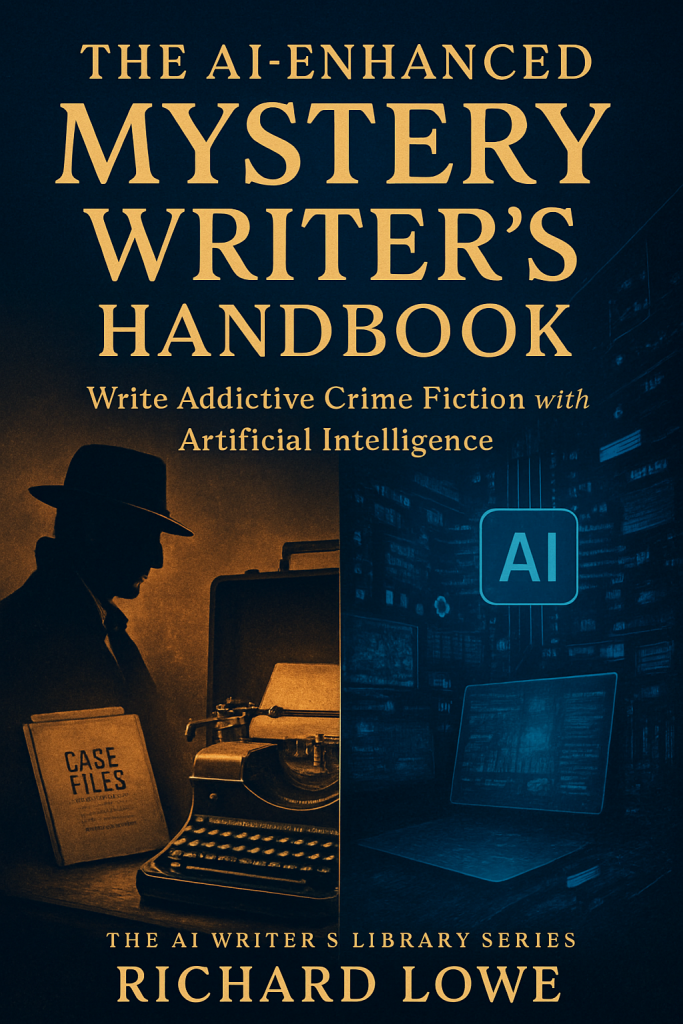
Mystery Writer’s Handbook
Psychology-first mystery guide covering fair play, red herrings, forensic accuracy, and AI timeline coordination. Amateur sleuth to procedural. 244 pages. -
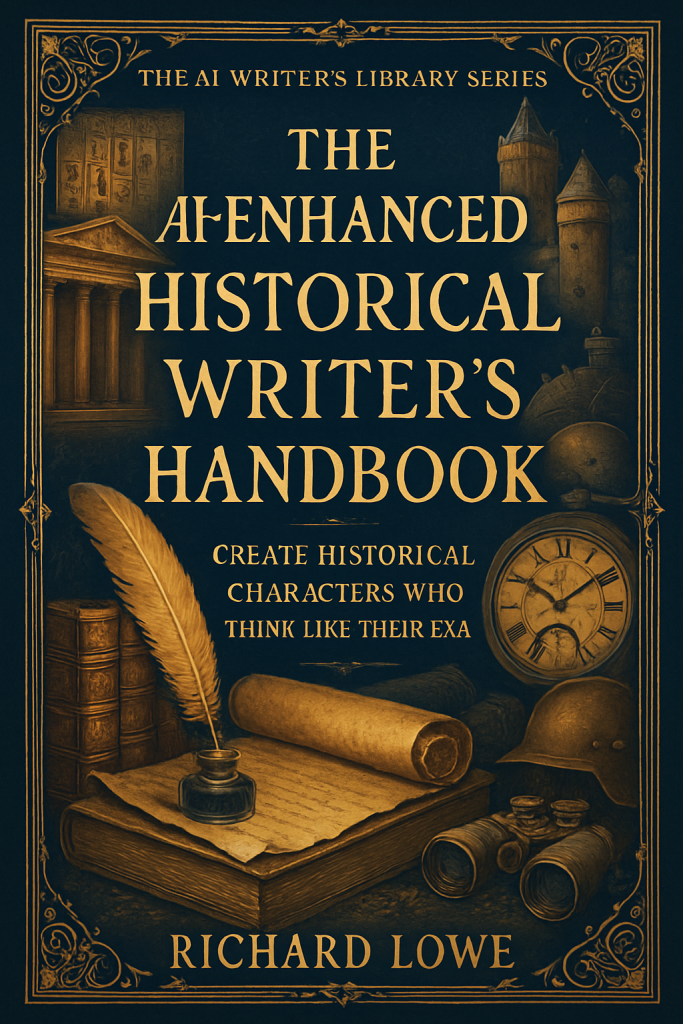
Historical Writer’s Handbook
Psychology-first historical fiction guide with 300+ scenarios from Ancient Egypt to WWII. Stop writing modern people in costumes. AI techniques included. 294 pages. -
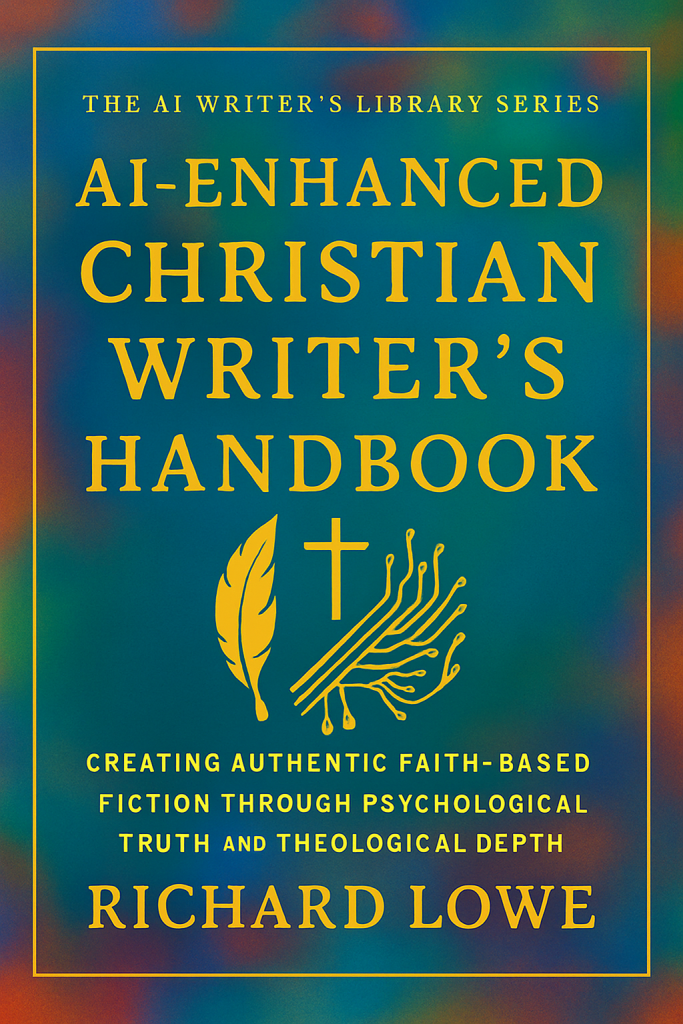
Christian Writer’s Handbook
Write Christian characters readers believe. Psychology-first faith development, authentic spiritual struggles, redemption arcs. 190-page guide from 113-book author. -

The ADHD Christian
Written by someone who left church at 14 due to ADHD struggles. A theological and practical guide for Christians whose brains don't fit conventional spiritual expectations.