
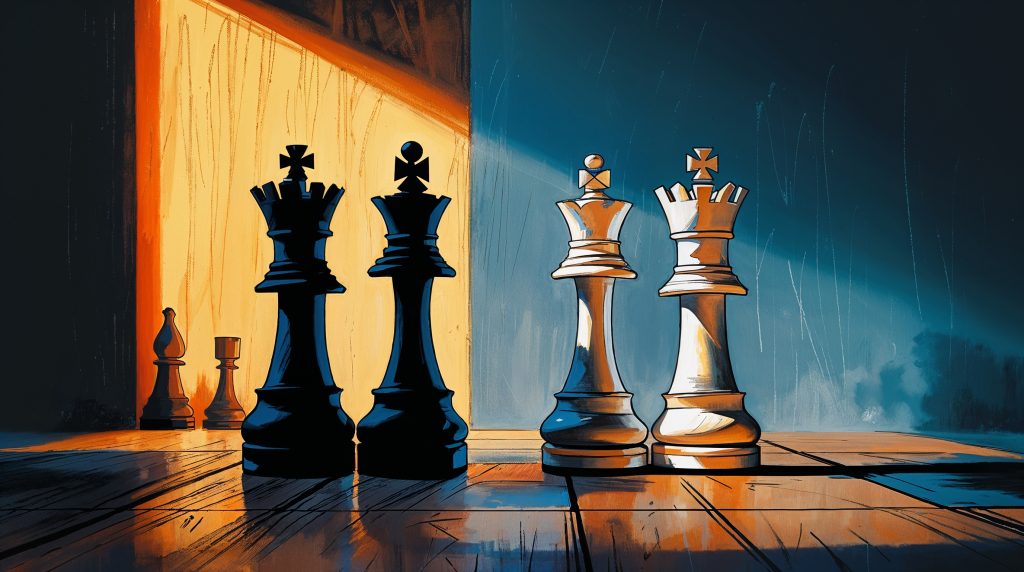
Your Story Has Conflict but No Tension (And That’s Why It Feels Flat)
Your characters argue. Cars explode. Swords clash. Monsters attack. There’s conflict on every page and the reader still doesn’t care. They’re skimming. They’re putting the book down between chapters instead of staying up past midnight.
Conflict and tension are not the same thing. Conflict is what’s happening. Tension is the reader’s emotional experience of uncertainty about what will happen next. You can have a fistfight in every chapter and zero tension if the reader knows the protagonist will win every time. You can have two people sitting in a quiet room and unbearable tension if the reader knows one of them is about to reveal something that destroys everything.
Tension comes from uncertainty. The reader must not know the outcome. They must care about the outcome. And the possible outcomes must include something the reader fears. Without all three, you have conflict without stakes, which is just noise.
I’ve written 113+ books and the ones that work best — the ones readers say they couldn’t put down — aren’t the ones with the most action. They’re the ones where every scene makes the reader afraid of what might happen next.
Internal vs. External Conflict: Why You Need Both
External conflict is what most writers default to. Villain attacks hero. Storm destroys the ship. Corporation threatens the town. These are obstacles the character must overcome to achieve their goal.
Internal conflict is the war inside the character’s head. Their desire pulling them one direction and their fear pulling them another. Their values clashing with their survival instincts. Their love for someone competing with their need to protect themselves.
Stories that rely only on external conflict feel shallow. The character fights bad guys and wins. So what? Stories that rely only on internal conflict feel static. The character thinks about their problems but nothing happens.
The magic is when internal and external conflict collide. The external obstacle requires the character to do something their internal conflict makes nearly impossible. A protagonist who fears vulnerability must open up to save someone they love. A character who can’t trust anyone must rely on a stranger to survive. The external problem would be solvable if the character didn’t have this specific psychological flaw, and the flaw wouldn’t matter if this specific problem hadn’t appeared. (This is the interlocking of character psychology and plot that makes fiction feel inevitable.)
The Conflict and Tension Handbook covers internal, external, and interpersonal conflict systems with case studies showing how published authors create tension that makes readers unable to stop reading. AI prompts help you identify where your manuscript has conflict without tension and fix it.
The Tension Toolbox: Specific Techniques That Work
Dramatic irony is the strongest tension tool. The reader knows something the character doesn’t. The bomb under the table. The betrayal being planned. The test results the character hasn’t opened yet. Every second the character operates in ignorance, the reader’s anxiety builds.
Ticking clocks create urgency. The asteroid hits in three days. The antidote expires at midnight. The trial starts Monday. Deadlines compress decision-making and eliminate the character’s ability to wait, think, and plan carefully — which forces mistakes, which creates complications.
Dilemmas create tension that action can’t resolve. The character must choose between two things they value, and choosing one destroys the other. Save the hostages or catch the villain. Tell the truth and lose the relationship, or keep the lie and lose themselves. No right answer exists, which means the reader can’t predict what the character will do.
Promises and payoffs create structural tension across chapters. Plant a gun in Act One and the reader spends Acts Two and Three wondering when it will fire. Mention that the character hasn’t told their partner about the diagnosis, and every scene with both characters present vibrates with the unspoken revelation.
Escalation creates cumulative tension. Each scene’s stakes should be higher than the last. Each failure should cost more. Each success should create a larger problem. The reader should feel the net tightening around the character with every chapter. (This is the same escalation principle that fixes sagging middles in plot structure.)
The Tension Audit: Five Questions for Every Scene
Before you finalize any scene, run it through these five diagnostic questions. If you answer “no” to two or more, the scene has conflict but no tension — and needs revision.
1. Does the reader not know how this scene ends? If the outcome is predictable from the second paragraph, there’s no uncertainty. No uncertainty means no tension, regardless of how much conflict is happening.
2. Does the reader care about the outcome? A fistfight between two characters the reader has no investment in generates zero tension. The reader must have a reason to fear one outcome and hope for another.
3. Is something the reader fears a possible outcome? Tension requires threat. If the worst possible outcome of the scene is mild inconvenience, the scene can’t generate the anxiety that keeps readers turning pages.
4. Does the scene change something that can’t be unchanged? Reversible outcomes reduce tension retroactively. If the reader suspects everything will reset to normal after the scene, the stakes are illusory.
5. Does the character’s internal conflict complicate the external situation? A character who could solve the external problem easily but can’t because of their psychological wound creates tension that pure action scenes can’t match.
Here’s how this plays out in practice. Same situation — a woman confronting a colleague who took credit for her work — written with conflict only versus conflict plus tension:
Conflict only: Sarah stormed into Mark’s office. “You put your name on my proposal.” They argued. Mark denied it. Sarah produced the email timestamps. Mark admitted it and apologized. Sarah left.
Conflict plus tension: Sarah’s hand was on Mark’s door handle for a full minute before she turned it. Mark was the only person on the promotion committee who’d supported her last year. She needed that vote in three weeks. The proposal had her name on the draft — she could prove it. But proving it meant Mark would know she’d been tracking his edits. And if he voted against her in retaliation, the promotion was dead.
The second version has less action and more tension because the reader understands what Sarah stands to lose no matter what she does. The dilemma — not the confrontation — creates the tension.
Interpersonal Conflict: Where Psychology Creates the Best Drama
Two characters with different attachment styles in the same room generate conflict without either of them doing anything wrong. The anxious character pushes for closeness. The avoidant character pulls away. Both are behaving according to their psychology. Both feel justified. Neither understands why the other is acting this way.
Interpersonal conflict rooted in psychology is the most compelling kind of fiction conflict because there’s no villain. Both characters have legitimate needs and legitimate fears. The reader understands both sides and can’t figure out how it resolves, which creates the uncertainty that drives tension.
This is why family dynamics produce the richest conflict in fiction. Family members know each other’s wounds and push each other’s buttons in ways strangers never could. A mother who says “I just want you to be happy” can deliver a devastating blow if the subtext is “your choices make me unhappy.” The what characters don’t say often hits harder than any explicit confrontation.
Parent-child relationships, romantic partnerships, sibling rivalries, mentor-student dynamics, and friendships where one person has outgrown the other — these all generate conflict from the characters’ fundamental psychological needs clashing with each other. Nobody has to be evil. They just have to be themselves, incompatibly.
Theme: The Meaning Your Story Earns Instead of Announces
Theme isn’t a message you paste onto your story. It’s the question your story explores through its events, characters, and conflicts. The answer — if there is one — emerges from what happens, not from what the author tells the reader to think.
A story about a man who sacrifices everything for his family explores the theme of duty versus self. The story doesn’t need a character to deliver a speech about sacrifice. The events themselves make the argument. The reader watches the sacrifice happen, sees its consequences, and draws their own conclusions.
Theme becomes a lecture when the author doesn’t trust the reader. Characters start making speeches about the “real meaning” of what’s happening. The narrative voice editorializes. Scenes are engineered to prove a point rather than explore a question. The reader feels manipulated rather than moved.
The strongest themes emerge from genuine conflict where both sides have merit. Is loyalty more important than truth? Is freedom worth the cost of safety? Is it possible to love someone without trying to change them? Stories that explore these questions honestly — without pre-deciding the answer — produce themes that stay with readers long after they finish the book.
The Theme and Meaning Handbook covers emergent theme development, symbolic systems, thematic integration across plot and character, and AI prompts that help you discover what your story is really about instead of forcing a message onto it.
How Conflict Drives Theme (Not the Other Way Around)
Most writers think about theme too early. They decide the book is “about” forgiveness, then engineer every scene to demonstrate forgiveness. The result feels didactic because the story serves the theme instead of the other way around.
Start with character and conflict. A woman with a wound from her father’s abandonment who falls in love with a man who travels constantly for work. The conflict writes itself: her need for security versus his need for freedom, her fear of abandonment versus his fear of being trapped. As they navigate that conflict, the theme emerges naturally. Is love enough? Can two people with opposing needs build something that works?
You discover your theme through your characters’ struggles, not before them. Write the conflict honestly and the theme will reveal itself. Then, in revision, you can sharpen it — make the symbolic connections more deliberate, ensure the ending earns the thematic conclusion, and cut anything that contradicts the meaning the story has found for itself.
Raising Stakes Without Raising Volume
The instinct when tension drops is to make things louder. Bigger explosions. More dramatic revelations. Higher body counts. This works once or twice but produces diminishing returns. The reader becomes desensitized, and each escalation has to be more extreme to produce the same effect.
Emotional stakes are renewable in a way that action stakes aren’t. The reader can care about a character’s relationship being at risk in every single scene because emotional vulnerability doesn’t escalate on the same curve as physical danger.
The most effective tension comes from combining external and emotional stakes. The bomb under the table (external) matters more because the characters at the table are in the middle of their first honest conversation in years (emotional). Defusing the bomb isn’t just about survival. It’s about protecting a relationship that might have been saved.
Lower the volume and raise the personal cost. A quiet betrayal can generate more tension than an explosion if the reader understands what the character is losing. The psychology of reader expectations shows that readers respond to emotional threat at least as powerfully as physical threat, and often more.
Building a Conflict System for Your Novel
Before you write, map the conflict system. Identify the external conflict (what stands in the protagonist’s way), the internal conflict (what stands in their own way), and the interpersonal conflicts (how relationships create friction). These should interconnect.
The external conflict should require the protagonist to overcome their internal conflict. The interpersonal conflicts should complicate both. Every major character should want something that puts them at odds with at least one other major character, and those conflicts should trace back to the psychological foundations you’ve built.
Layer in tension tools: dramatic irony, ticking clocks, dilemmas, and escalating stakes. Place them strategically so tension builds through Act Two and reaches maximum pressure at the climax. Your dialogue carries the interpersonal conflicts. Your plot carries the external. Your narration carries the internal. All three should be working simultaneously in every major scene.
The AI-Enhanced Writer’s Library integrates conflict, tension, and theme into the same character-driven system. Because these elements don’t exist in isolation, the handbooks are designed to work together.
Free Stories, Straight to Your Inbox
Start with Nine Doors, nine short stories across nine genres, yours free the moment you sign up. After that, the occasional new collection and a note when there's a new book worth your time. No spam, no daily clutter. Just good stories.
We use MailerLite to manage our list and send these emails. Your address is used only to send you what you signed up for. We will not sell it, share it, or use it for anything else, and you can unsubscribe anytime.
Frequently Asked Questions
What’s the difference between conflict and tension?
Conflict is what’s happening: arguments, fights, obstacles. Tension is the reader’s emotional experience of not knowing how it will turn out. You can have a fight scene with zero tension if the reader knows the hero will win. You can have two people eating dinner with crushing tension if the reader knows one of them is hiding a devastating secret. Tension requires uncertainty, stakes the reader cares about, and the possibility of an outcome the reader fears.
How do I develop theme without being preachy?
Start with character and conflict, not with a message. Create characters with opposing values and let them collide. The theme emerges from the honest exploration of that collision. If you discover your theme during writing rather than deciding it beforehand, the story explores the question instead of lecturing about the answer. Sharpen thematic connections during revision, not during drafting.
How do I maintain tension across an entire novel?
Layer multiple tension sources. External threats create urgency. Interpersonal conflicts create emotional investment. Internal conflicts create uncertainty about the character’s choices. Use dramatic irony, ticking clocks, and unanswered questions that span multiple chapters. Each scene should resolve one tension while introducing or escalating another, so the reader always has something pulling them forward.
What are the different types of conflict in fiction?
Character vs. character (direct opposition), character vs. self (internal psychological conflict), character vs. society (fighting systems or norms), character vs. nature (survival against environment), and character vs. fate (struggling against destiny or circumstance). The strongest fiction layers multiple types — a character fighting an antagonist while simultaneously battling their own psychological wound creates richer conflict than any single type alone.
How do I write a theme without stating it?
Let the theme emerge from the collision between what your character believes and what the story proves. If your theme is ‘love requires vulnerability,’ put a character who equates vulnerability with weakness into situations that only love can resolve. The theme lives in the gap between the character’s false belief and the truth the story demonstrates. Never have a character state the theme in dialogue. If you can summarize the theme in a fortune cookie, you’re telling it instead of showing it.
-
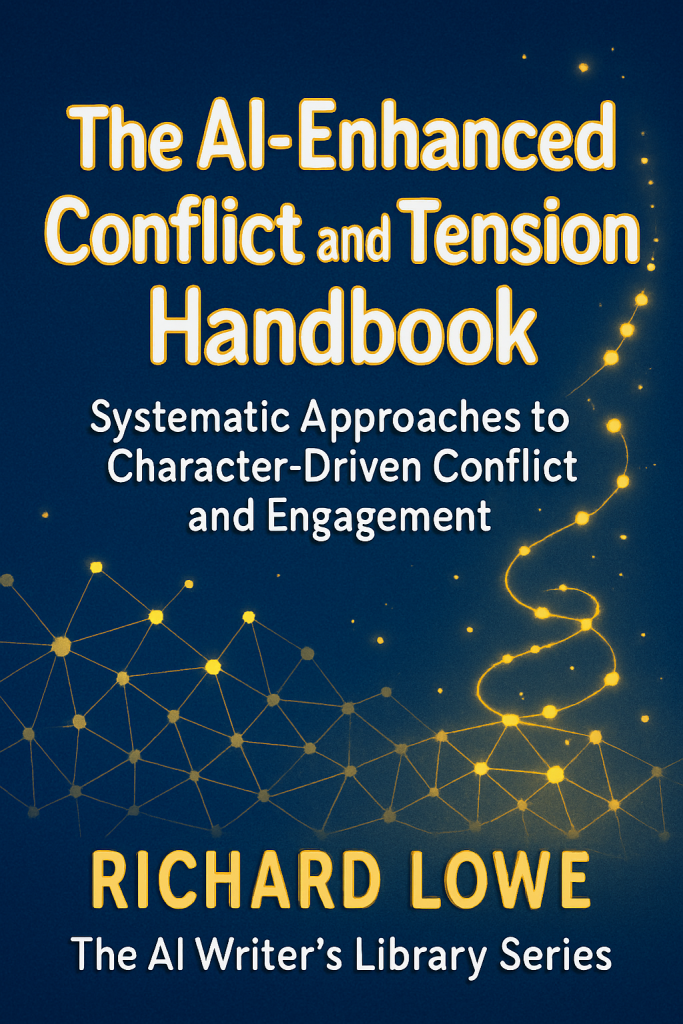
Conflict and Tension Handbook
Create tension readers can't escape. Psychology-first conflict, dialogue subtext, meaningful stakes, escalation that feels inevitable. 200-page guide from 113-book author. -
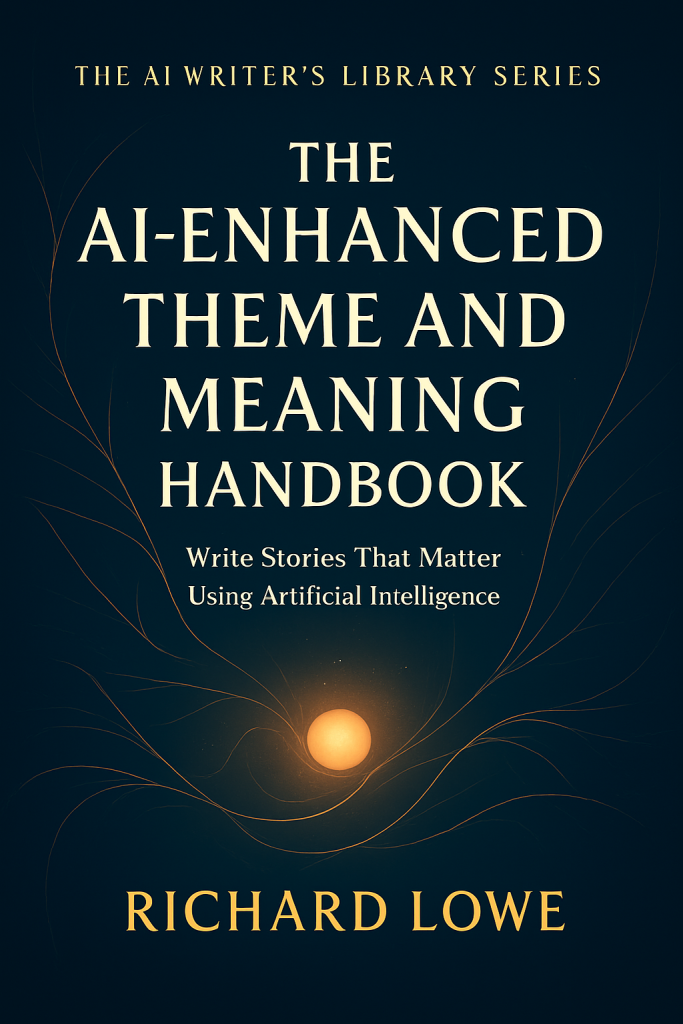
Theme and Meaning Handbook
Psychology-first theme guide covering character wounds, symbolic integration, and subtext. Tolkien & Breaking Bad case studies. AI prompts for thematic analysis. 152 pages.Psychology-first theme guide covering character wounds, symbolic integration, and subtext. Tolkien & Breaking Bad case studies. AI prompts for thematic analysis. 152 pages.