
Enemies of You Series
Most commentary tells you the system is broken. The Enemies of You series names the specific forces doing the breaking, how each one operates, and what a clear-thinking person does about it.
Eight books. Eight forces working against you and the country you live in. Some come from outside: private equity hollowing out the businesses you depend on, information operations run by hostile states, an industrial base too thin to defend itself. Some come from inside: the slow surrender of your own thinking to the machine, the hours handed to an algorithm, the snap judgments you make without noticing. Each book names one enemy clearly, traces exactly how it works, and lays out the rational response.
These are not self-help books and they are not doom. Every one of them documents the people and communities that refused to go along, because the counter-examples exist and their existence proves none of it was inevitable. Read one or read all eight. Either way, you will recognize things you wish you had seen sooner.
-

Everybody’s Prejudiced
Most people think prejudice is something other people have. This book takes that apart. Richard Lowe puts his own biases on the table first, then shows that the same mechanism runs in every brain and points in every direction at once. -
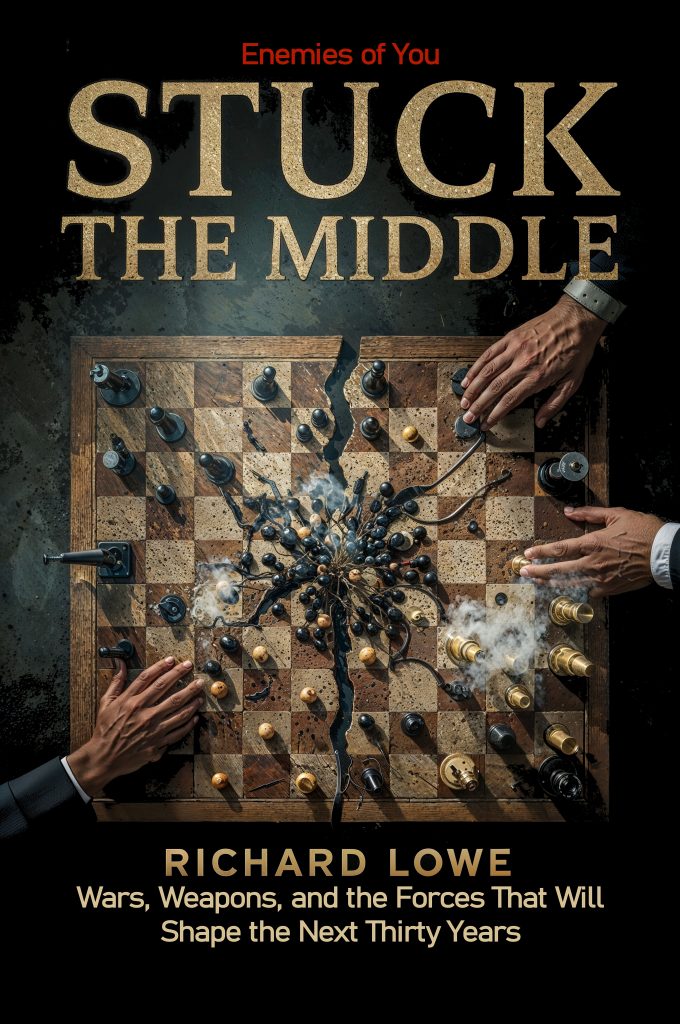
Stuck in the Middle: Wars, Weapons, the Next Thirty Years
Connects cognitive decline, civic collapse, military overreach, and geopolitical competition into one structural argument about the next thirty years. -

The Birth of the Augmented Human
The Death of Thinking mapped the problem. This book maps the other path — the practices that maintain cognitive capacity and what they build over time. -
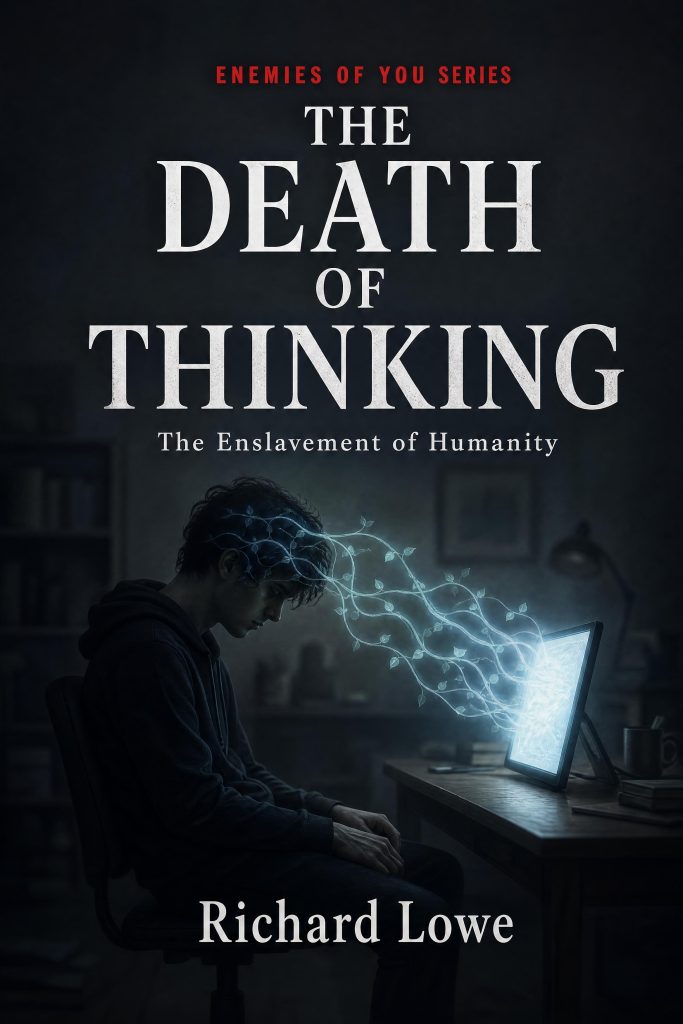
The Death Of Thinking
What happens when you consistently outsource your thinking to AI? Documents that pattern — its causes, costs, and what gets lost before you notice. -

The Emasculation of America
A national security argument. Documents the sixty-year Soviet operation to target American masculinity and degrade national capacity. Not a culture war book. -

The Enshittification of America
How private equity transformed American commerce from serving customers to extracting value. Thirteen industries documented. The playbook never changes. -

The Villainization of America
America's failures are real. This documents the operation that uses them to build a permanent indictment — who built it, who funds it, what it costs. -

Turn Off the TV, Get Off Your Ass, and Do Something
Four hours of TV a day, no time for what matters. Richard Lowe's guide to crossing the line from consuming to contributing.
Frequently Asked Questions
Anyone who senses something is wrong but is tired of explanations that stop at outrage. The series is written for people who want the mechanism, not the mood: how a thing actually works, who benefits, and what a rational person does next. You do not need a background in economics, defense, or psychology to follow any of it. If you have ever watched a business you trusted get worse, felt your own attention slipping, or wondered why the public debate never seems to name the real driver, these books are aimed at you.
Because a problem is something you stumble into and an enemy is something with intent, direction, and a beneficiary. Most of what the series documents is not accidental. The Enshittification of America shows extraction run on purpose by people who know exactly what they are doing. The Emasculation of America traces a deliberate operation, not a cultural accident. Naming these forces as enemies is not melodrama. It is precision: you respond differently to a deliberate adversary than to bad luck.
No. Each book stands alone and names one enemy completely, so you can start with whichever force you most want to understand. They do speak to each other, though. The Death of Thinking maps the problem of outsourced cognition and The Birth of the Augmented Human maps the other path, so the two read well as a pair. Read one or read all eight; the order is yours.
No. The arguments cut across the usual lines and will frustrate anyone looking for a team to cheer. The Villainization of America defends honest reckoning with the country’s real failures while refusing the move that declares the whole project irredeemable. Everybody’s Prejudiced puts the author’s own biases on the table first and argues the wiring points in every direction at once. The series is about how forces operate, not about which side you are supposed to pick.
Two things. First, every book ends at the rational response, not the alarm: what the force is, how it works, and what a clear-thinking person actually does about it. Second, every book documents the people and communities who refused to go along, because the counter-examples exist and their existence proves none of it was inevitable. Doom commentary leaves you stuck. This series is built to leave you with ground to stand on.
The series splits roughly along that line. The external enemies are structural and adversarial: private equity extraction in The Enshittification of America, hostile-state information operations in The Emasculation of America, and the thin industrial base of Stuck in the Middle. The internal enemies live in your own habits: outsourced thinking in The Death of Thinking, the hours surrendered to a screen in Turn Off the TV, Get Off Your Ass, and Do Something, and the snap judgments in Everybody’s Prejudiced. Most readers find they are fighting on both fronts at once.
Every title in the series is available as a Kindle ebook on Amazon, as an ePub on Kobo, and in paperback direct from IngramSpark. Each book’s page above links straight to all three. There is no bundle requirement and no reading order, so you can pick up a single title or work through the whole set as you go.
Richard Lowe, a 113-book author who spent thirty-three years in enterprise IT, twenty of them as Director of Computer Operations at Trader Joe’s, before writing full time. That background runs through the series: the books read like field reports from someone who watched systems get built, get gamed, and get hollowed out from the inside, then sat down to document exactly how it happened and what holds up against it.