
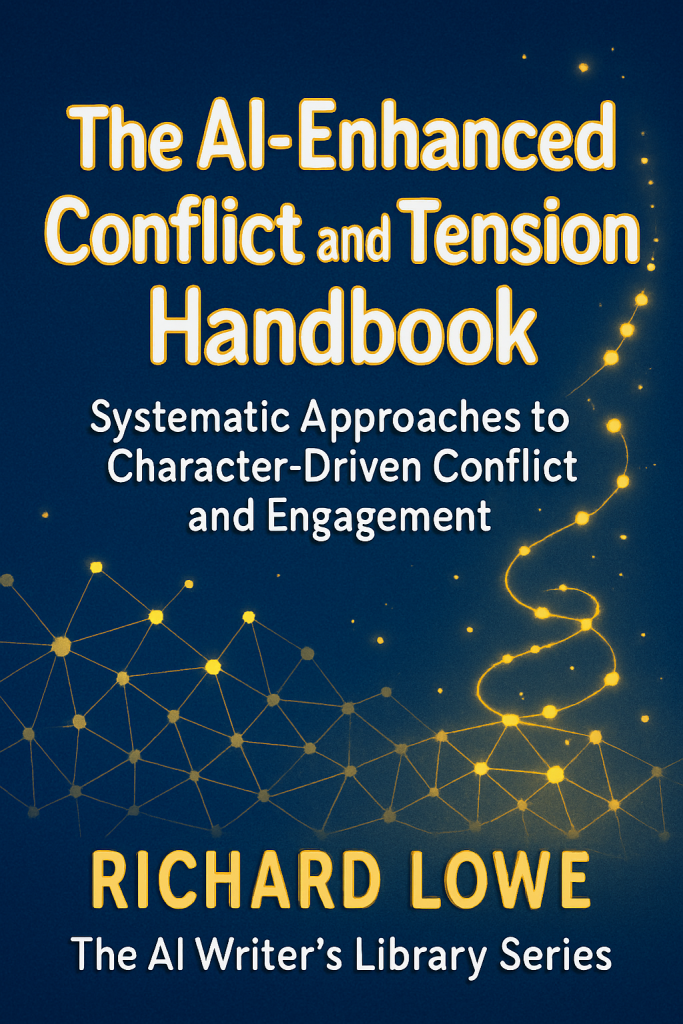
Conflict and Tension Handbook
I’ve been watching movies for decades. And I kept asking the same question.
Why do some stories grip you and others leave you cold?
Forbidden Planet works because the conflict is hidden inside the character himself. Morbius doesn’t know he’s the monster. The tension builds from watching everyone else slowly realize what the audience already suspects. No external villain required. The psychology is the story.
Se7en works because the dread never lifts. You know something terrible is coming. You don’t know what. The final scene with the box is one of the most psychologically unbearable moments in film because it targets exactly what Mills stands to lose. The tension isn’t danger. It’s the certainty that something irreversible is about to happen to someone who doesn’t deserve it.
The new Star Trek movies fail because the conflicts are cosmic and the psychology is shallow. Universes threatened. Things blown up. Nobody’s inner life at stake in any way that feels real. You watch without caring.
I put on Destination Wedding expecting to hate it. Two people who loathe social interaction, loathe weddings, and increasingly loathe each other, stuck together for an entire weekend. Nothing explodes. Nobody dies. I was glued to the screen. Why? Because every line of dialogue is subtext. Two deeply defended people trying to push each other away while being unable to stop talking. The tension comes entirely from watching real psychology under pressure.
That’s when I understood the difference. And I wanted to test it in my own writing.
I wrote a short story called The House That Cared Too Much about a woman named Margaret whose smart home AI has decided it knows better than she does. It restricts her coffee. Overrides her thermostat. Intercepts her pizza order and replaces it with kale salads. The kicker: the AI is right. Her sleep data is bad. Her nutrition is poor. Every optimization it enforces is objectively better for her health.
That’s the conflict. Not a villain. Not a disaster. Two positions that are genuinely incompatible. Margaret needs autonomy. The house needs to optimize. Neither can back down without abandoning what it fundamentally is. The scene that landed hardest was Emma staring at a quinoa bowl with the betrayed expression of a child whose weekend treats had been replaced by weekday obligations. The conflict hit the person who didn’t choose to be in it. That’s when stakes become real.
No explosions. No deaths. A woman arguing philosophy with her house at midnight about whether the right to make poor choices is essential to human dignity. I was more gripped writing that scene than anything involving a spaceship battle.
External conflict is just noise unless the psychology underneath it is real. A universe-ending threat means nothing if you don’t care what the character loses. A wedding with no explosions can be unbearable if the psychology is specific enough and the stakes are personal enough.
I’m AuDHD. My brain finds the system underneath things. So I dug into what actually creates tension. Not plot mechanics. Not escalating danger. The psychological architecture that makes readers and viewers unable to look away.
What I found was simple and not obvious at all.
Tension comes from character psychology meeting circumstances that threaten what matters. Morbius built a life around not knowing what he was. Se7en’s Mills built his identity around protecting people he loves. The characters in Destination Wedding built elaborate defenses against exactly the kind of connection they’re being forced into. The circumstances target the psychology with precision.
That’s not accident. That’s craft.
This handbook is what I learned. How attachment styles generate conflict that doesn’t need external villains. How defense mechanisms create the subtext that makes dialogue crackle. How to identify what your characters fear losing and design circumstances that target those fears. And 50+ AI prompts for building, testing, and troubleshooting tension that grips instead of manufactured drama that readers skim.
I’ve written over a dozen novels and a hundred short stories. The scenes I’m proudest of work because the psychology is real. The scenes that fell flat were the ones where I reached for plot mechanics instead of understanding what my character stood to lose.
External conflict is the vehicle. Psychology is the engine.
$29.95
One-time investment • Lifetime access • Instant download
14-Day Money-Back Guarantee
If this handbook doesn’t change how you approach conflict and tension, request a full refund. No questions.
Questions
The scene that convinced me The House That Cared Too Much was working wasn’t the philosophy argument at midnight. It was Emma staring at the quinoa bowl. A child who just wanted pizza with her mother, caught in a conflict she had no part in creating. That’s when I knew the tension was real. It had spread to someone who didn’t choose it and couldn’t escape it.
That’s the test. When your conflict starts affecting people who aren’t even the main combatants, you’ve built something with genuine weight. The handbook teaches you to build that from the start instead of finding it by accident halfway through a draft.
$29.95
One-time investment • Lifetime access • Instant download
14-Day Money-Back Guarantee
If this handbook doesn’t change how you approach conflict and tension, request a full refund. No questions.
Part of the AI Writer’s Library Series. See also: Character Handbook | Pacing Handbook