
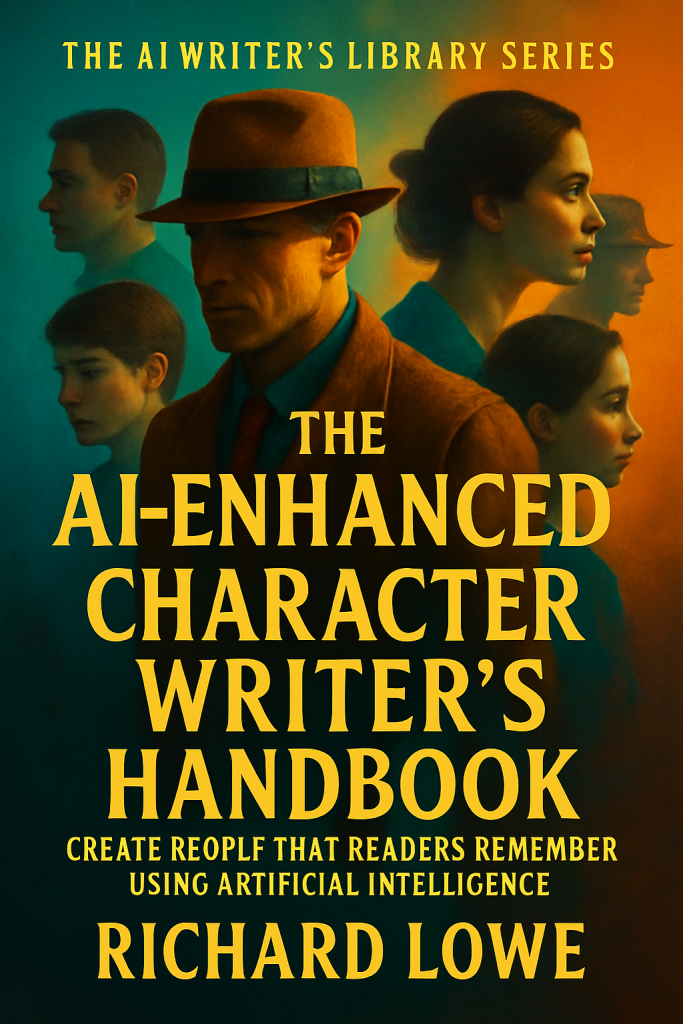
Character Writer’s Handbook
I watch a lot of movies. And I kept asking myself the same question.
Why does Lisbeth Salander work?
Not just work. Haunt you. Stick with you for years after you close the book or leave the theater. You understand exactly why she is the way she is, why she trusts nobody, why she’s brilliant and broken in those specific ways. Nothing about her feels arbitrary. Everything connects back to a psychology so consistent and so specific that she feels more real than most people you’ve met.
A Marvel movie gave me a villain who wants to do something with red stuff.
The difference isn’t budget. It isn’t writing talent. It’s psychology. Lisbeth Salander was built from the inside out. The Marvel villain was built from a plot function outward. One feels like a person. One feels like a placeholder.
I expected to hate Murderbot. A socially anxious security construct who would rather watch television serials than interact with humans? It sounded like a gimmick. I was wrong. I loved it from the first page to the last and immediately wanted more. Why? Every character in that series has a specific psychology. Not quirks. Not traits. Actual internal architecture that generates consistent behavior across every scene. Murderbot’s anxiety isn’t a personality detail. It’s the foundation everything else is built on.
I’m AuDHD. My brain is wired to find the system underneath things. When I write fiction, I need to understand why a character does what they do at a level deeper than “because the plot needs it.” So I dug into actual psychology. Attachment theory. Defense mechanisms. Cognitive patterns. The internal systems that make humans tick.
What I found changed how I write.
Attachment theory explains why Lisbeth can’t let anyone close without pushing them away first. Defense mechanisms explain why she intellectualizes everything instead of feeling it directly. These aren’t random character choices. They’re a coherent psychological architecture that generates her behavior across every scene, every relationship, every crisis.
Once I understood that, I stopped collecting character traits and started building character psychology. The traits emerged from the foundation instead of floating on the surface with nothing underneath.
This handbook is what I learned. Attachment theory translated into writing tools. Defense mechanisms as a menu of protection strategies. Voice patterns that emerge from psychology instead of verbal quirks. Relationship dynamics that create authentic conflict because the psychologies are genuinely incompatible. And 50+ AI prompts for building, testing, and troubleshooting characters who feel like people instead of plot functions.
I didn’t plan Grim’s wound. Grim is the narrator of my novel of the same name, a man who walks up the hill at Golgotha and demands answers from a dying man. He arrives furious, convinced he’s accusing. His son died of fever. His faith collapsed. He’s spent his grief turning it into anger because anger feels like doing something and grief feels like drowning.
I didn’t engineer that from a framework. I wrote him into a corner and the wound surfaced on its own. But I recognized it the moment it appeared because I understood what wounds do to people. His defense was aggression. The wound was grief. The mechanism is what made the scene real instead of theatrical. That’s not an accident. That’s what happens when you understand psychology well enough to recognize it when it shows up in your own writing.
I’ve written over a dozen novels and a hundred short stories. The characters I’m proudest of are the ones I built this way, or found this way. The ones I’m not proud of are the ones I built from the outside in and hoped depth would emerge.
It doesn’t emerge. You build it. Or you write deep enough that it finds you. Either way, you have to know what you’re looking for.
$29.95
One-time investment • Lifetime access • Instant download
14-Day Money-Back Guarantee
If this handbook doesn’t change how you approach character development, request a full refund. No questions.
Questions
I didn’t plan Grim’s wound. He arrived on the page as a man demanding answers from a dying man on a hill outside Jerusalem. I wrote him into that corner and the wound surfaced by itself: a son dead of fever, faith collapsed, a grief he’d turned into accusation because accusation was the only thing left that felt like doing something.
I didn’t engineer that from a framework. The writing found it. But I recognized it when it appeared because I understood what wounds do to people. I knew what I was looking at. And I knew how to build the rest of the character around it once I had it.
That’s what this handbook teaches. Not a formula. The understanding that lets you recognize a character’s wound when it surfaces, and build from there.
$29.95
One-time investment • Lifetime access • Instant download
14-Day Money-Back Guarantee
If this handbook doesn’t change how you approach character development, request a full refund. No questions.
Part of the AI Writer’s Library Series. See also: Dialogue Handbook | Deep Character Handbook