

Why Do My Characters Feel Flat? The Psychology Problem Nobody Talks About
Most fiction writers build characters the same way: fill out a profile sheet, pick some quirks, give them a goal, and start writing. The result is a character who walks through scenes doing plot-appropriate things without ever feeling like a real person.
Readers notice. They might not be able to explain the problem, but they feel it. They put the book down at chapter three. They leave reviews saying “I couldn’t connect with the characters.” They never buy the sequel. (If you’re losing readers early, the chapter three dropout problem is worth understanding on its own.)
The difference between forgettable characters and the ones readers obsess over comes down to psychology. Not surface traits, not backstory bullet points, but the deep patterns of behavior that make a person feel real on the page.
I’ve written 113+ books and ghostwritten memoirs for Fortune 50 executives. Every project taught me the same lesson: characters work when their psychology drives their decisions, and they fail when the author moves them around like chess pieces to serve the plot.
How to Create a Character Profile That Actually Works
Character profile sheets are popular because they feel productive. You fill in eye color, favorite food, childhood pet, and blood type. You’ve “done the work.” Except none of that information generates a single interesting scene.
Real people don’t act based on their favorite food. They act based on what scares them, what they need but refuse to ask for, and which coping mechanisms they developed in childhood to survive their family dynamics.
A character whose mother was emotionally unavailable doesn’t just “have trust issues.” She tests every relationship by pushing people away to see if they’ll stay. She reads abandonment into innocent comments. She keeps backup plans for backup plans because relying on one person feels like standing on a trapdoor.
That behavior pattern generates conflict in every scene she enters without the author manufacturing external drama. It also shapes how she speaks, what she says, and what she refuses to say out loud.
The profile that matters isn’t what your character looks like. It’s what they’re afraid of, what they believe about themselves that isn’t true, and what they’ll do when that belief gets challenged. Those three things produce more usable story material than a hundred questions about eye color and hobbies.
Using Attachment Theory to Write Realistic Characters
Attachment theory is the single most useful framework for writing characters who feel psychologically real. Psychologist John Bowlby’s research showed that early relationships with caregivers create templates for how people handle intimacy, conflict, and stress for the rest of their lives.
Four attachment styles show up in fiction and in life: secure, anxious, avoidant, and disorganized.
A character with anxious attachment clings. They text too much. They interpret silence as rejection. They sacrifice their own needs to keep people close because losing a relationship feels like losing oxygen.
An avoidant character withdraws. Intimacy makes them uncomfortable. They value independence to the point of isolation and would rather end a relationship than admit they need someone. When someone gets too close, they pick a fight or manufacture distance.
A disorganized character does both, often in the same scene. They crave connection and fear it simultaneously. They pull someone in, then push them away, then panic that they’ve lost them. This creates the kind of unpredictable behavior that makes characters feel dangerously alive on the page.
Your protagonist and your love interest having different attachment styles creates automatic conflict. An anxious character paired with an avoidant one produces a push-pull dynamic that romance writers spend entire series exploring. You don’t need to invent obstacles when the characters’ psychology creates them naturally. This is also why all your characters sound like you if you haven’t done this work. Without distinct psychological wiring, every character defaults to your own communication patterns.
The Character Writer’s Handbook covers attachment theory, defense mechanisms, and voice development across 270 pages with AI prompts designed for fiction writers who want psychology-driven characters instead of cardboard cutouts.
How to Write a Compelling Backstory That Drives the Plot
Every compelling character carries a wound. Not a scar from a sword fight or a tragic backstory mentioned once and forgotten. A psychological wound that shapes how they see the world, what they avoid, and what they’ll destroy themselves to get. (For a deeper look at how wounds and arcs interact, see Character Arcs vs. Character Wounds.)
Walter White’s wound isn’t cancer. It’s decades of feeling invisible, overlooked, and underestimated while less talented people succeeded around him. Cancer just removed the last reason he had to keep swallowing that rage.
Katniss Everdeen’s wound isn’t growing up poor in District 12. It’s watching her mother shut down after her father’s death, forcing a child to become the adult in the family. That wound makes Katniss fiercely protective but emotionally guarded. She’ll volunteer as tribute to save her sister, but she can barely tolerate being cared for by anyone else.
The wound creates what I call the Wound-Adaptation-Pattern framework. The wound happens. The character adapts by developing protective behaviors. Those behaviors become patterns that persist long after the original threat is gone. Now your character has built-in conflict: the strategies that kept them safe as children are destroying their adult relationships, careers, and goals.
A man who grew up with an unpredictable, angry father learns to read rooms and anticipate danger. As an adult, he’s hyper-vigilant in social situations, always calculating, never relaxed. That served him at eight years old. At thirty-five, it makes him exhausting to be around and impossible to get close to. His girlfriend thinks he doesn’t trust her. He thinks he’s protecting himself. Both are right.
This framework connects backstory to present-day behavior in a way that feels inevitable rather than contrived. Readers don’t need to know the wound explicitly. They feel its effects in every decision the character makes. The wound also generates conflict and tension without the author having to manufacture external threats.
The Deep Character Handbook spends 503 pages on the Wound-Adaptation-Pattern framework, attachment theory applications, defense mechanisms in fiction, and case studies showing how published authors build characters from the inside out.
How to Write a Protagonist Readers Root For
The fastest way to kill reader engagement is a protagonist who’s good at everything and conflicted about nothing. Competence is fine. Flawlessness is boring. Readers don’t root for characters who have it together. They root for characters who want something badly enough to make terrible decisions. (If your hero looks good on paper but feels dead on the page, the passive protagonist problem is probably what’s happening.)
Not stupid decisions. Decisions that make perfect sense given the character’s psychology, even when the reader can see the disaster coming. That gap between what the reader knows and what the character’s blind spots prevent them from seeing is the tension that keeps pages turning.
A few protagonist types generate strong reader engagement. The reluctant hero doesn’t want the responsibility but takes it because nobody else will. The antihero operates outside conventional morality but retains enough vulnerability or opposition to something worse that readers stay invested. The everyperson has no special abilities but faces extraordinary circumstances, which lets readers project themselves into the story.
The protagonist’s arc matters more than their starting position. A character who begins weak and becomes strong is satisfying. A character who begins strong and gets broken down, then rebuilds differently, is more interesting. A character who begins believing one thing about themselves and slowly discovers they were wrong all along produces the kind of story readers remember for years.
The arc has to cost something. If your protagonist achieves their goal without sacrificing anything they care about, the ending feels hollow. The sacrifice doesn’t have to be physical. Giving up a belief, a relationship, or a version of themselves they’ve clung to for decades can hit harder than any battle scene.
The Protagonist Handbook covers seven hero types, character arcs, and 40+ AI prompts for building protagonists readers invest in. Case studies run from Katniss to Walter White to show how different protagonist types generate different reader contracts.
How to Write a Good Villain: Antagonists Who Believe They’re Right
Bad villains want to destroy the world because they’re evil. Good villains want something reasonable through methods the protagonist can’t accept. Great villains expose the flaw in the hero’s worldview just by existing. (For a focused breakdown, see Why Villain Motivations Fall Apart.)
Thanos believes he’s saving the universe. Nurse Ratched believes she’s maintaining order for her patients’ benefit. Anton Chigurh in No Country for Old Men operates on a philosophy of fate and chance that’s internally consistent even though it produces horrifying outcomes. None of these characters think they’re the villain of the story.
The antagonist’s job isn’t to be evil. It’s to pressure the protagonist in exactly the places where they’re weakest. A protagonist who fears abandonment needs an antagonist who isolates them. A protagonist who can’t ask for help needs an antagonist who creates problems too big to solve alone. The antagonist is a stress test for the hero’s psychology.
The most effective villains share something with the hero. They want the same thing through different means, or they represent what the hero could become if they gave in to their worst impulses. Magneto and Professor X want the same outcome for mutantkind and disagree completely on method. That shared goal makes their conflict richer than any hero-versus-pure-evil setup because both sides have a point.
Write your villain’s version of the story. If you can’t make a coherent argument for why the antagonist believes they’re justified, they’re not developed enough. The reader doesn’t need to agree with the villain. They need to understand the logic, even if the logic is twisted.
The Antagonist Handbook covers psychology-first villain development, seven antagonist archetypes, and case studies showing how to build antagonists who test your protagonist where it counts. 116 pages with AI prompts for developing villains with internal logic.
How to Choose Character Names That Carry Weight
Character naming is craft, not administrative busywork. A name signals class, culture, era, and psychology before the reader processes a single line of description. Readers form expectations the moment they see a name, and those expectations either support your story or fight against it.
“Atticus Finch” sounds like a man of principle and intelligence. “Hannibal Lecter” has a predatory elegance built into its syllables. “Katniss Everdeen” sounds unusual enough to signal a different world while remaining pronounceable. These names do work before the author writes a single line of dialogue.
Names also create practical problems writers don’t think about until it’s too late. If your cast includes Karen, Kara, and Karl, readers will mix them up. If your fantasy novel features Xylithraxian and Zyphorentius, readers will skip the names entirely and track characters by role instead of identity. Both problems break immersion.
Cultural authenticity matters more than most writers realize. AI tools default to the same handful of “diverse” names because they’re trained on patterns, not cultural understanding. The result is characters who feel like a casting checklist rather than people from specific places and families with naming traditions that go back generations.
Start names from different letters. Vary syllable counts. Make sure each name sounds distinct when read aloud. If you’re writing across cultures, research naming conventions for the specific region and era, not just “common Japanese names” or “popular Nigerian names.” The specificity makes the difference between a name that feels authentic and one that feels like it came from a baby name website.
The Character Naming Handbook covers naming psychology, cultural research methods, fantasy naming systems, and 50+ AI prompts for generating names that carry weight. Seven case studies show how naming choices affect reader perception across genres.
Why Character Development Is a System, Not a Checklist
Character development isn’t one skill you master and move on from. It’s a system of interconnected decisions: the psychological wounds that drive behavior, the attachment patterns that shape relationships, the names that set reader expectations, the protagonist arc that earns emotional investment, and the antagonist pressure that forces growth.
Most writing advice treats these as separate topics. They’re not. A character’s wound determines their attachment style, which affects their relationships, which shapes the kind of antagonist who can break them open, which drives the arc. Change one element and the others shift with it. The character’s psychology also determines their voice and dialogue patterns, their role in the plot structure, and how they handle conflict and tension.
This is why character profile sheets produce flat characters. They catalog disconnected facts instead of building a psychological system where every element reinforces every other element. Knowing your character’s favorite color tells you nothing about how they’ll react when their best friend betrays them. Knowing their attachment style, their core wound, and their primary defense mechanism tells you exactly what they’ll do, and it won’t be what a healthy, well-adjusted person would do, which is what makes it interesting.
The writers who produce characters readers remember for decades understand this interconnection. They don’t build characters from checklists. They build them from the inside out, starting with psychology and letting behavior, dialogue, relationships, and choices follow naturally from that foundation.
The AI-Enhanced Writer’s Library covers every aspect of fiction craft through a psychology-first lens, with AI prompts built for writers who want tools that produce useful results instead of generic writing advice.
Free Stories, Straight to Your Inbox
Start with Nine Doors, nine short stories across nine genres, yours free the moment you sign up. After that, the occasional new collection and a note when there's a new book worth your time. No spam, no daily clutter. Just good stories.
We use MailerLite to manage our list and send these emails. Your address is used only to send you what you signed up for. We will not sell it, share it, or use it for anything else, and you can unsubscribe anytime.
Frequently Asked Questions
How do I make my characters feel more real to readers?
Start with psychology instead of physical description. Give your character a core wound from their past, an attachment style that shapes their relationships, and a defense mechanism they use when threatened. These three elements generate authentic behavior in every scene. A character who grew up with an emotionally unavailable parent will test relationships, read abandonment into innocent comments, and keep people at arm’s length. That pattern produces conflict naturally without the author forcing it.
What’s the difference between a character wound and a character arc?
The wound is what happened. The arc is what changes. A wound is the formative psychological injury that created your character’s protective behaviors and false beliefs. The arc is the journey where those protections get tested, broken down, and either replaced with healthier patterns (positive arc) or doubled down on (negative arc). Walter White’s wound is decades of feeling invisible. His arc is what happens when he stops accepting that invisibility and chooses power instead.
Why do all my characters sound the same when they talk?
Because they share your psychology instead of having their own. When every character processes the world through the same fears, desires, and communication patterns, their dialogue becomes interchangeable. Assign each character a distinct attachment style, a different defense mechanism, and a unique relationship to conflict. An avoidant character deflects with humor. An anxious character over-explains. A disorganized character contradicts themselves mid-sentence. Psychology creates voice.
What is attachment theory in fiction writing?
Attachment theory describes four patterns — secure, anxious, avoidant, and disorganized — that shape how people handle intimacy, conflict, and stress. In fiction, assigning different attachment styles to characters generates automatic relationship conflict. An anxious character paired with an avoidant character produces push-pull tension without the author manufacturing external obstacles. The styles come from psychologist John Bowlby’s research on how early caregiving experiences create lifelong relationship templates.
How many characters should a novel have?
As many as the story requires and no more. Every named character should serve a function that no other character can fill. If two characters perform the same plot role, combine them. Most novels work with three to seven significant characters. The real question isn’t how many, but whether each character has distinct psychology — a different wound, a different attachment style, and a different way of handling conflict.
-
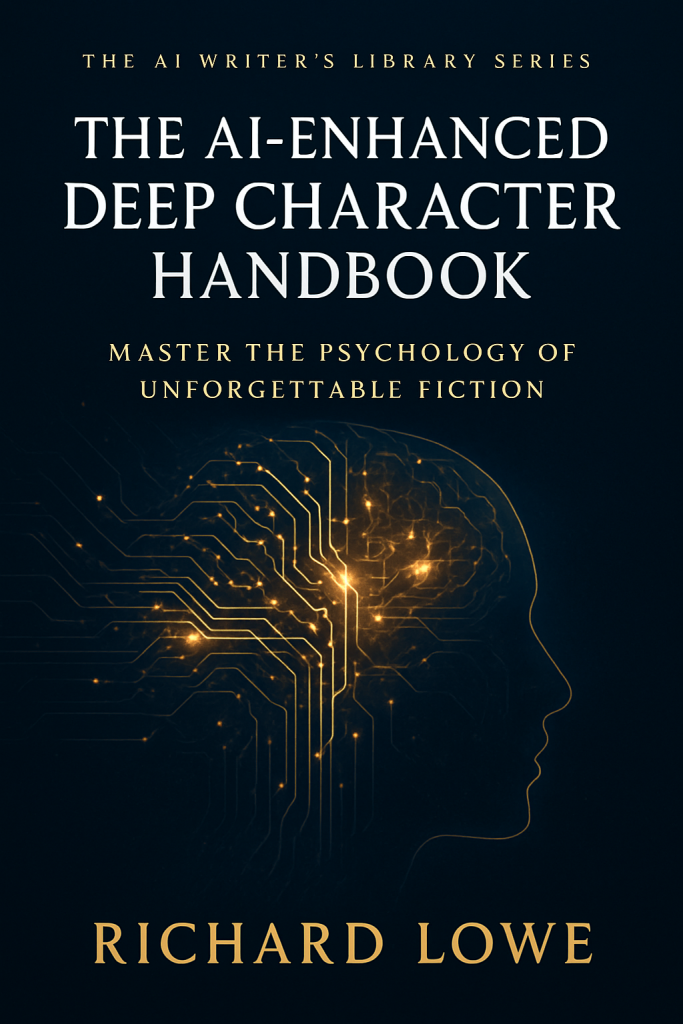
Deep Character Handbook
Master character psychology. Wound-Adaptation-Pattern Framework, attachment theory, defense mechanisms, case studies. 503-page guide from 113-book author. -

Character Naming Handbook
Names are the first promise you make to readers. This handbook teaches character naming as craft—psychology, research, AI tools, and seven detailed case studies. -
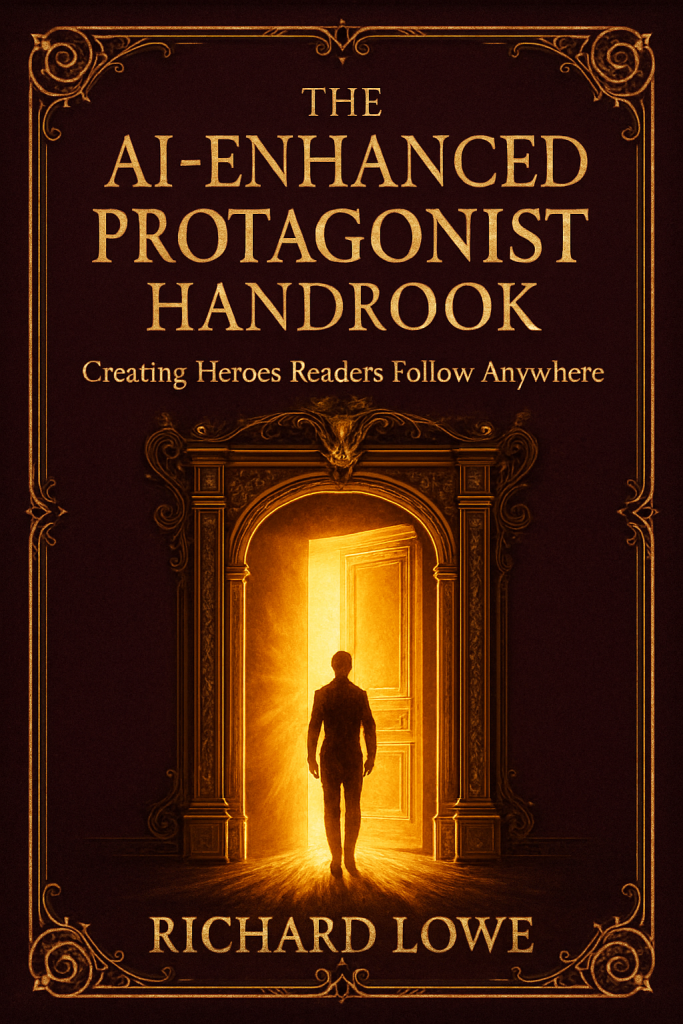
Protagonist Handbook
Stop writing heroes readers tolerate. 120-page handbook covers protagonist psychology, seven hero types, character arcs, and 40+ AI prompts. Case studies from Katniss to Walter White. From a 113-book author. -

Antagonist Handbook
Psychology-first villain development for romance, fantasy & thriller writers. 7 antagonist types, 40+ AI prompts, 5 case studies. 116 pages, $9.95. -
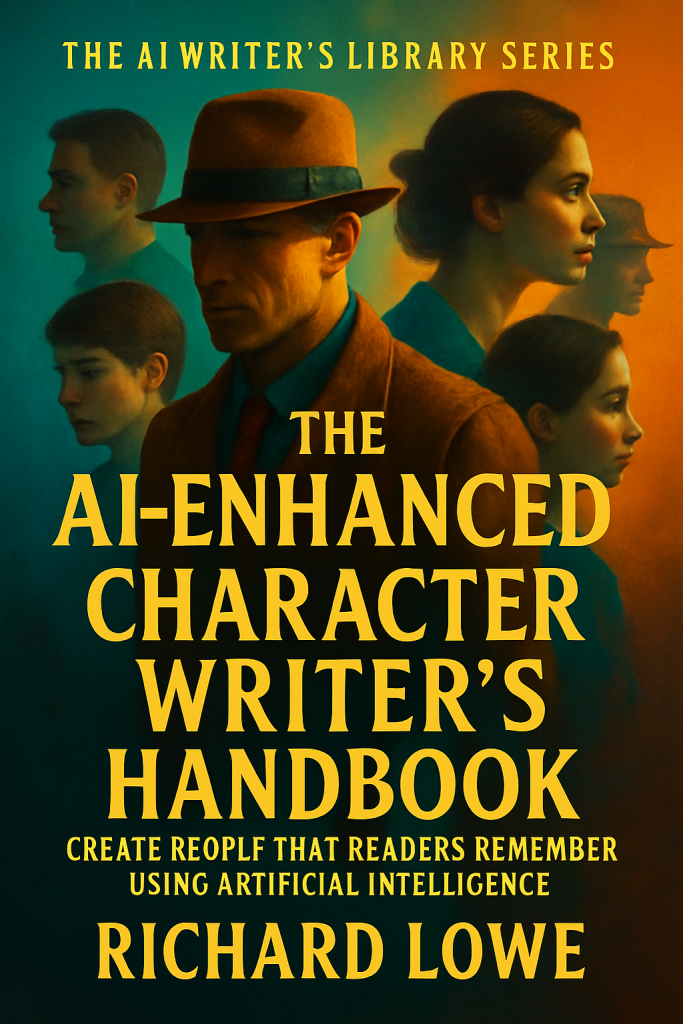
Character Writer’s Handbook
Create memorable characters using psychology. Attachment theory, defense mechanisms, voice development, AI integration. 270-page guide from 113-book author.