I left the Church of Christ at 14.
Not dramatically. I just stopped going, the way teenagers do when the faith they inherited stops fitting and nobody gives them a good enough reason to stay. For nearly fifty years after that, I lived outside organized religion — not hostile to faith, not pursuing it, just absent from it. Carrying whatever that early church experience had given me and whatever questions it had left unanswered.
At 63, I walked into a new Christian church and got baptized.
That fifty-year gap is the most useful thing I bring to this handbook. Because I know what faith looks like from the outside of a comfortable church community. I know what genuine doubt feels like — not the dramatic crisis-of-faith variety, but the quieter kind that just lives in the background for decades. I know what it costs to stay away, what accumulates over years of distance, and what it actually means to choose to come back — not because someone pressured you or because your circumstances got desperate, but because at 63 you looked at your life and decided it was time.
That is not a Sunday school story. And Christian fiction that only knows Sunday school stories cannot write the people sitting in the pews who have versions of that journey — the ones who came back after decades away, the ones who stayed but barely, the ones whose faith is real and complicated and nothing like the clean arc in the novels they’re reading.
The cardboard saint problem comes from writers who’ve only ever seen faith from the comfortable inside. Characters who overcome trauma through single prayers, experience doubt as a brief plot obstacle, and arrive at spiritual transformation on whatever timeline the story requires. Real believers recognize the absence of themselves in those characters and put the book down.
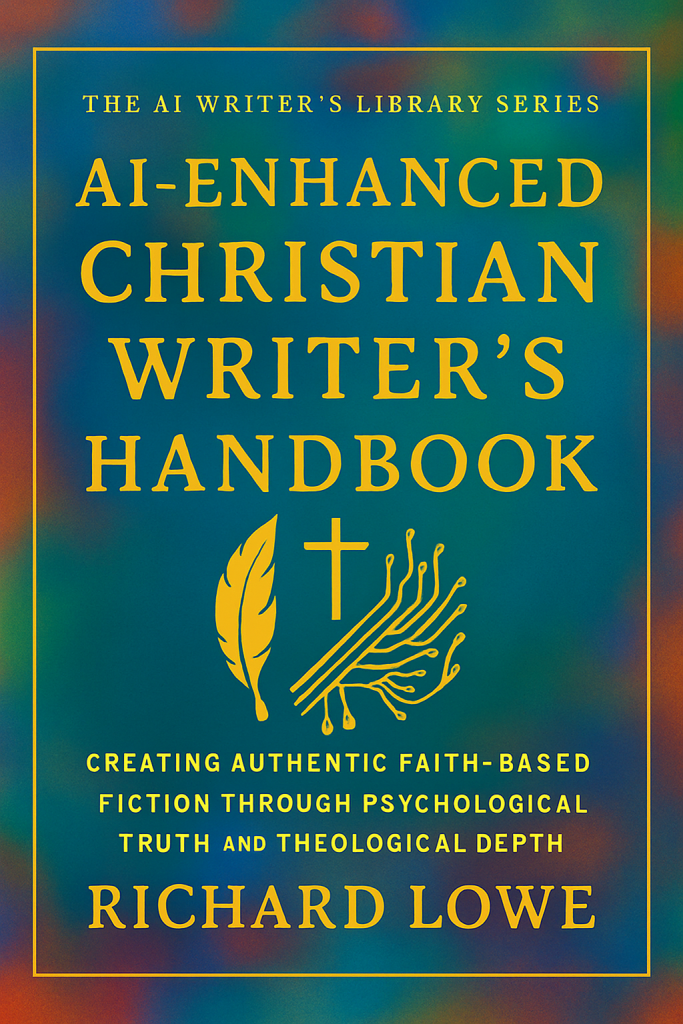
I’m Richard Lowe. 113 published books, ghostwriting clients who’ve secured over $30 million in venture capital, and a faith journey complicated enough to understand what authentic spiritual struggle actually looks like from the inside. This handbook is built on that understanding — and on the psychology that explains why faith develops the way it does in real people rather than the way it conveniently does in religious fantasy.
$29.95
One-time investment • Lifetime access • Instant download
Get The Handbook →
14-Day Money-Back Guarantee
If this handbook doesn’t change how you approach Christian character development, request a full refund. No questions.
Why Psychology-First Faith Development Works
Real believers approach God through their attachment patterns. Someone with anxious attachment worries constantly about losing salvation. Someone with avoidant attachment keeps God at intellectual distance. Someone with secure attachment trusts divine love naturally. Your character’s relationship with God should reflect their relationship patterns with people — because that’s how it works in actual believers.
God designed human psychology as the arena where spiritual transformation happens. Divine grace works through psychological processes, not around them. Understanding that doesn’t undermine faith — it reveals how grace actually operates in real people rather than in theological position papers wearing character costumes.
Questions
What makes Christian characters feel like cardboard saints?
They’re built from theological traits instead of psychological ones. A character described as “faithful, prayerful, and wise” has a doctrine, not a person. Real believers have attachment styles that shape how they approach God, defense mechanisms that create spiritual resistance, and trauma patterns that determine what redemption needs to look like for them specifically. When Christian characters overcome trauma through single prayer experiences and arrive at spiritual clarity on plot-convenient timelines, readers who’ve lived actual faith journeys recognize the absence of themselves in those characters. The handbook teaches you to build the psychology first and let the faith develop through it — which is how it works in actual believers.
Doesn’t psychology undermine faith?
God designed human psychology. Understanding how attachment styles affect relationship with God doesn’t diminish divine truth — it reveals how grace actually operates in real believers. Someone who spent decades away from faith before returning isn’t evidence that God failed. They’re evidence that faith development is complicated, nonlinear, and deeply tied to psychological history. Characters who only experience the clean version of that journey aren’t more spiritually sound than characters who experience the complicated version. They’re just less honest. The handbook honors both human complexity and divine truth — treating them as compatible rather than in tension.
How do I write authentic spiritual struggle without making characters seem faithless?
By making the struggle specific. “I’m questioning my faith” is lazy writing that reads as either dramatic posturing or theological crisis. Real spiritual struggle has specific content tied to specific psychological history. Someone doubts divine love because their father abandoned them — that’s not faithlessness, that’s an anxious attachment pattern expressing itself in the most important relationship in their life. Someone keeps God at intellectual distance because intimacy feels dangerous — that’s avoidant attachment, not apostasy. The handbook maps psychological wounds to specific spiritual struggles so your characters’ doubts feel grounded in who they are rather than convenient for your plot.
How do I write a redemption arc that feels earned?
By honoring realistic timelines and not eliminating psychological complexity at the moment of transformation. Real redemption — the kind your readers have lived or witnessed — involves setbacks, partial progress, regression under stress, and growth that accumulates over years rather than resolving in a single scene. Divine grace doesn’t bypass psychological healing. It works through it. A character whose childhood trauma shaped their relationship with God doesn’t stop having that trauma history after a genuine conversion experience. What changes is what they do with it and what resources they have for navigating it. The handbook covers transformation arcs that enhance rather than eliminate psychological complexity.
How do I write church community dynamics that feel real?
By including the full spectrum of what actually exists in churches — gossips who weaponize prayer requests, board members who confuse personal preference with divine guidance, long-standing feuds dressed in theological language, and genuine saints working through their own wounds alongside everyone else. Churches are communities of broken people pursuing wholeness. The dysfunction and the beauty coexist, and readers who attend actual churches recognize immediately when fiction pretends otherwise. The handbook covers community dynamics that reflect the complex, sometimes painful, occasionally transcendent spiritual families your readers know from experience.
How do I handle different denominations without getting theology wrong?
Different traditions create genuinely different psychological environments for faith development. Reformed theology produces different spiritual anxiety patterns than Pentecostal worship culture. Catholic confession creates different relationships to guilt and grace than evangelical altar calls. These aren’t just aesthetic differences — they shape how characters experience doubt, spiritual growth, and relationship with God in ways that will ring false to readers from those traditions if you get them wrong. The handbook covers denominational navigation that serves diverse Christian markets while maintaining the specificity that makes faith feel real rather than generic.
Refund policy?
14 days. If it doesn’t change how you approach Christian character development, full refund. No questions.
The readers who pick up Christian fiction have their own versions of a complicated faith journey. Some of them left and came back. Some of them stayed but barely. Some of them are sitting in a pew right now with questions they haven’t told anyone about. They deserve characters who’ve lived something like what they’ve lived — not saints who never struggled, but believers whose faith is real precisely because it cost something.
That’s what this handbook teaches you to build.
$29.95
One-time investment • Lifetime access • Instant download
Get The Handbook →
14-Day Money-Back Guarantee
If it doesn’t change how you approach Christian character development, request a full refund. No questions.
Part of the AI Writer’s Library Series. See also: Character Handbook | Dialogue Handbook