
Why Most Science Fiction Fails (And It’s Not the Science)
You built a brilliant technological concept. Faster-than-light travel through quantum tunneling. A civilization that uploads consciousness to avoid death. Terraforming technology that transforms dead planets in decades. The science is rigorous. The extrapolation is thoughtful. The worldbuilding is detailed.
Nobody cares about your character.
The most common failure in science fiction isn’t bad science. It’s characters who exist only to tour the technology. They marvel at it. They explain it. They demonstrate it. They never feel like people with fears, desires, wounds, and complicated relationships that happen to exist within a speculative setting.
Arthur C. Clarke wrote science fiction with thin characters and sold millions. That era is over. Modern readers expect the psychological depth of literary fiction inside the speculative frameworks of science fiction. The character development principles that work in any genre are even more critical in sci-fi because the strangeness of the setting demands an emotional anchor.
I’ve written science fiction, ghostwritten memoirs, and produced 113+ books across genres. The lesson is always the same: technology is interesting, but people are compelling. Your speculative concepts get readers to pick up the book. Your characters keep them reading.
Hard Science Fiction vs. Space Opera: Know What You’re Writing
Hard science fiction prioritizes scientific accuracy and logical extrapolation. The technology follows known physics or plausible extensions of it. The plot complications arise from how the science actually works, including its limitations. Readers expect rigor and will fact-check your orbital mechanics.
Space opera prioritizes scope, adventure, and emotional stakes. The technology serves the story — faster-than-light travel exists because the plot needs interstellar civilization, not because the author has a theory about how it works. Readers expect epic conflicts, complex political systems, and characters who operate on a galactic stage. Peacekeeper is built on this principle — Admiral Jessica Lang’s psychological unraveling drives sixteen volumes of galactic-scale conflict because the technology matters less than the person trapped inside it.
Most science fiction falls somewhere between these poles. Knowing where your book sits determines what readers will forgive and what they’ll punish. Hard sci-fi readers tolerate thinner characters if the science is brilliant. Space opera readers tolerate hand-waved physics if the characters and conflicts are compelling. Neither audience tolerates both thin characters and lazy science.
Genre expectations matter more in science fiction than in most other genres because the readership is knowledgeable and vocal. Promising hard sci-fi and delivering space opera, or vice versa, produces the kind of reader backlash that kills series.
| Subgenre | Science Rigor | Character Depth | Scope | What Readers Forgive | What Readers Won’t Forgive |
|---|---|---|---|---|---|
| Hard Sci-Fi | Must follow known physics or plausible extensions | Functional — can be thinner if science is brilliant | Focused — often single problem or mission | Slower pacing, technical exposition | Bad science, factual errors in established physics |
| Space Opera | Hand-waved — technology serves the story | Essential — characters must carry the epic scope | Galactic — multiple worlds, political systems | Implausible physics, FTL without explanation | Thin characters, stakes that don’t matter |
| Science Fantasy | Mixed — science and magic coexist by design | High — must anchor the genre blend emotionally | Varies — can be intimate or epic | Genre blending, unconventional rules | Internal inconsistency — rules that break themselves |
| Cyberpunk | Moderate — tech extrapolation focused on information and biology | High — characters must be morally complex | Urban, claustrophobic — one city or network | Noir tone, bleak endings | Optimistic resolution, ignoring class/power dynamics |
| Military Sci-Fi | Moderate — weapons and tactics must feel plausible | Squad-focused — loyalty, sacrifice, command dynamics | Campaign-level — battles within a larger war | Technical jargon, procedural detail | Unrealistic combat, consequence-free violence |
| Post-Apocalyptic | Low-moderate — cause of collapse matters less than consequences | Essential — survival is psychological, not just physical | Intimate — small groups, local territory | Vague collapse mechanics, slow pacing | Characters who act irrationally for plot convenience |
Building Speculative Technology That Feels Real
Believable technology follows rules. It costs something. It has limitations. It produces unintended consequences. Technology without costs is magic. Technology without limitations is boring. Technology without consequences isn’t speculative — it’s wishful thinking.
Start with the question “what does this technology make possible?” Then immediately ask “what does it make impossible, difficult, or dangerous?” The second question generates your story conflicts. FTL travel makes interstellar civilization possible. It also makes border control impossible, warfare instantaneous, and isolation a choice rather than a condition. Those secondary effects are where the story lives.
The best speculative technology creates social consequences the inventor didn’t predict. Consciousness uploading was supposed to eliminate death. Instead, it created a class of digital citizens who can be copied, deleted, and edited by whoever controls the servers. The technology’s purpose and its actual effects diverge, and that divergence is your plot.
Ground unfamiliar technology in familiar human experience. The reader doesn’t need to understand quantum mechanics to understand that the teleportation device sometimes loses data, and the data it loses might include memories. Technical accuracy matters for hard sci-fi readers. Emotional clarity matters for all readers.
The Science Fiction Writer’s Handbook covers technology design, extrapolation methods, subgenre conventions, and AI prompts for building speculative systems that generate story conflict instead of requiring explanation.
Time Travel: The Most Dangerous Subgenre
Time travel stories fail more often than they succeed because temporal mechanics create paradoxes that break narrative logic. The reader spends the entire book tracking inconsistencies instead of experiencing the story. If your rules don’t hold up, nothing else matters.
Establish your time travel rules early and follow them without exception. Can the past be changed or is it fixed? Do changes create alternate timelines or do they alter the existing one? Is information about the future accurate or probabilistic? Can the traveler meet their past self? What happens if they do?
The rules you choose determine your story’s possibilities and limitations. Fixed-timeline stories are about accepting the past. Changeable-timeline stories are about the consequences of altering it. Multiverse stories are about the versions of yourself you’ll never be. Each framework generates different themes and different kinds of tension.
The emotional core of a time travel story is usually regret, loss, or the impossibility of going home. The technology creates the situation, but the human emotions drive the tension. A story about a man who can travel in time but can’t save his daughter is a story about grief that happens to use science fiction mechanics.
The Time Travel Handbook covers temporal logic systems, paradox management, case studies from published time travel fiction, and AI prompts for testing your time travel rules against edge cases before your readers find the holes.
World Building for Science Fiction
Science fiction world building differs from fantasy in one critical way: it must feel extrapolated rather than invented. Fantasy worlds can operate on internally consistent but arbitrary rules. Science fiction worlds need to feel like they evolved from conditions the reader can trace, even if those conditions are speculative.
Build from a single “what if” and follow the chain. What if oil ran out in 2035? What happens to transportation, agriculture, military power, international relations, daily life? Each consequence creates another question. Follow the chain far enough and you have a world that feels inevitable rather than designed.
The world building principles that apply to all fiction — the iceberg principle, setting as antagonist, dynamic backgrounds — apply to science fiction with the additional requirement of logical extrapolation. Show ten percent, know the rest, and make sure the rest follows logically from the speculative premise.
Social extrapolation matters as much as technological extrapolation. A world with perfect surveillance technology doesn’t just have cameras everywhere. It has a population that’s adapted psychologically to constant observation. Some people perform constantly. Others withdraw. Others find ways to create unmonitored spaces. The technology changes how people think, not just what they can do.
Common Science Fiction Mistakes
Monocultures are the lazy worldbuilder’s shortcut. An entire planet of warriors. A species that’s uniformly logical. A civilization where everyone agrees. Real cultures contain multitudes, and fictional ones need internal diversity to feel believable.
Technobabble substituting for understanding. If you don’t understand how your technology works, covering that gap with invented jargon doesn’t fool readers. It insults them. Either understand the science well enough to explain it simply, or keep the mechanics offstage and focus on effects.
Present-day morality projected onto alien or future civilizations. A society five hundred years in the future wouldn’t share our specific cultural assumptions. Neither would an alien species. The most interesting science fiction explores how different conditions produce different values, not how everyone eventually arrives at twenty-first-century Western liberalism.
Forgetting that technology changes culture. You can’t add faster-than-light travel to a society and leave everything else the same. Every significant technology reshapes social structures, economic systems, power dynamics, and individual psychology. If your future looks like the present with shinier gadgets, the extrapolation isn’t deep enough.
Science Fiction That Lasts
The science fiction that endures doesn’t endure because the science was correct. Most classic sci-fi predicted the future wrong. It endures because the human questions it explored remain relevant. The books that hold up after forty years do so because they used speculative scenarios to examine permanent aspects of human nature.
Dune explores power, ecology, and religious manipulation. The specific technology is secondary to the human dynamics. Ursula K. Le Guin’s work explores gender, culture, and what it means to be human. The spaceships and alien planets are frameworks for philosophical inquiry, not the point of the story.
Write the human story first. Then build the speculative framework that pressures it in ways only science fiction can achieve. That’s the formula for science fiction that sells and science fiction that lasts.
The AI-Enhanced Writer’s Library includes genre-specific handbooks because science fiction requires different craft emphasis than literary fiction, romance, or thriller — but the foundation of character psychology and story structure remains the same.
Free Stories, Straight to Your Inbox
Start with Nine Doors, nine short stories across nine genres, yours free the moment you sign up. After that, the occasional new collection and a note when there's a new book worth your time. No spam, no daily clutter. Just good stories.
We use MailerLite to manage our list and send these emails. Your address is used only to send you what you signed up for. We will not sell it, share it, or use it for anything else, and you can unsubscribe anytime.
Frequently Asked Questions
Do I need a science degree to write hard science fiction?
No, but you need to research thoroughly enough that scientifically literate readers don’t catch errors. Focus on understanding the principles that matter to your story rather than mastering entire fields. Consult experts for specific details. Hard sci-fi readers will forgive speculative extrapolation but won’t forgive basic factual errors in established science.
How do I avoid infodumping when explaining speculative technology?
Deliver information through conflict and consequence. A character doesn’t explain how the drive works. A character deals with what happens when the drive fails. Show technology in action, reveal its costs as the character encounters them, and trust readers to infer the mechanics from behavior rather than exposition.
Can science fiction and literary fiction overlap?
The best science fiction already is literary fiction. It uses speculative scenarios to explore human questions with a depth and specificity that mainstream fiction can’t reach. The distinction between genres is a marketing category, not a quality boundary. Write the most psychologically complex, thematically rich story you can, and let the bookstore decide which shelf it goes on.
How do I write time travel without plot holes?
Establish your time travel rules in the first act and never break them. Decide whether your model allows changing the past (mutable timeline), prevents it (fixed timeline), or creates branches (multiverse). Each model has different story implications. The most important rule: time travel must cost something — physical toll, memory loss, moral compromise, or irreversible consequence. Time travel without cost removes all stakes. Write your ending first, then work backward to ensure the timeline logic holds.
What is the difference between science fiction and fantasy?
Science fiction extrapolates from what could plausibly exist given known science or reasonable extensions of it. Fantasy operates on rules that don’t derive from scientific principles — magic, supernatural forces, mythological frameworks. The boundary is blurry. A sufficiently advanced technology is indistinguishable from magic, and some subgenres like science fantasy deliberately blend both. The practical distinction is reader expectation: sci-fi readers expect internal logical consistency based on cause and effect. Fantasy readers expect internal consistency based on established magical rules.
-
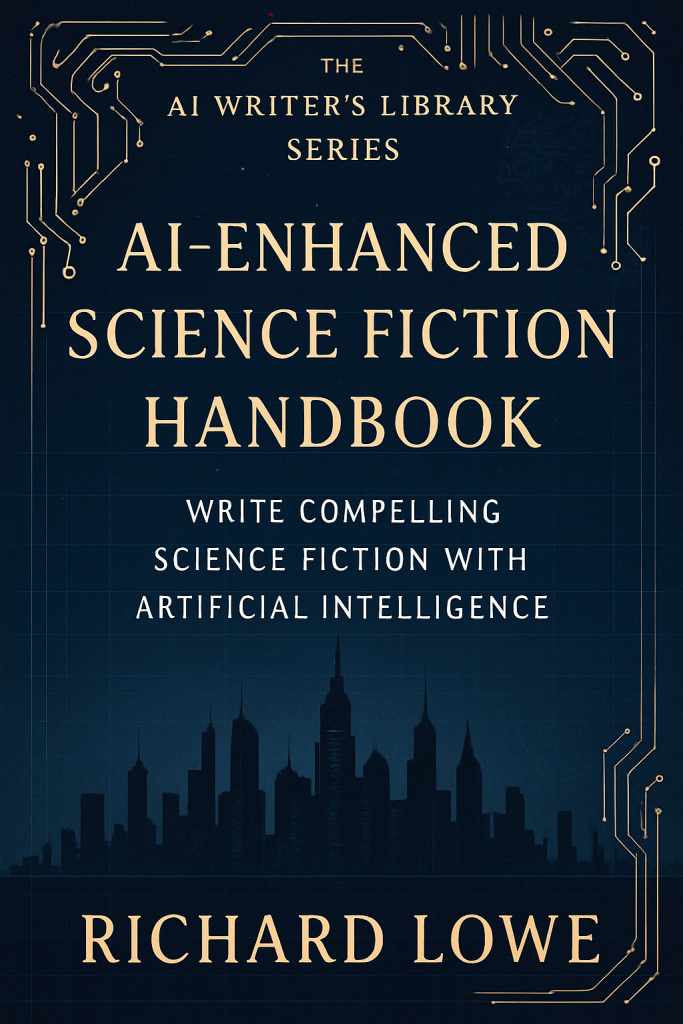
Science Fiction Writer’s Handbook
Psychology-first science fiction guide with 35 prompt chapters. Alien invasions to virtual worlds. Star Trek and Expanse case studies. AI integration. 362 pages. -
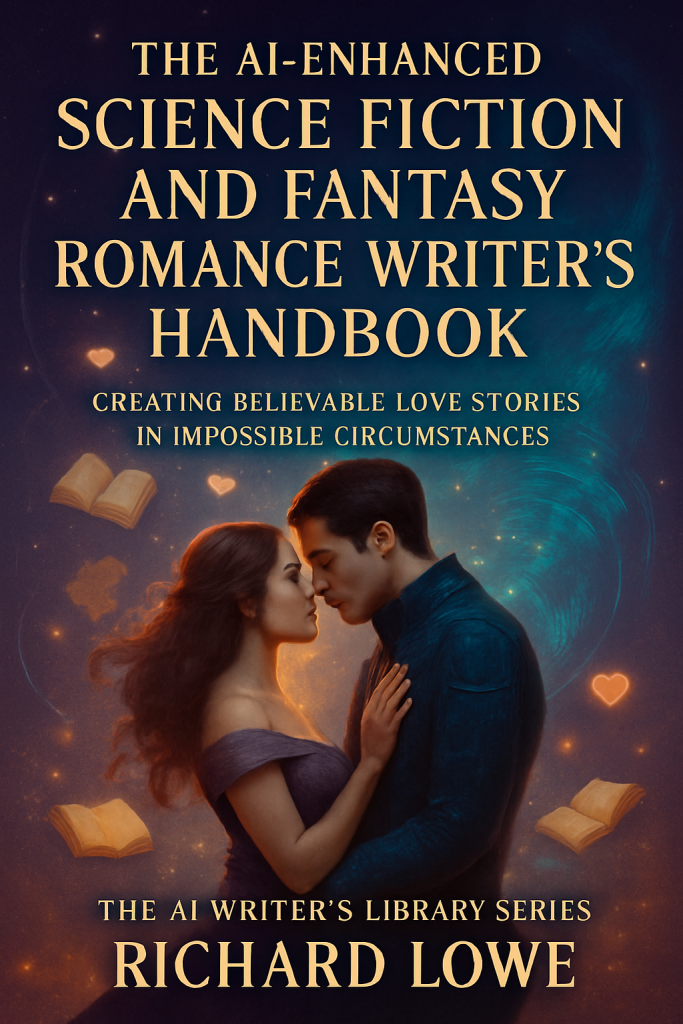
Science Fiction and Fantasy Romance Writer’s Handbook
Complete revision methodology from structural surgery to line editing. AI guardrails, feedback integration, genre-specific requirements. Case studies. 307 pages. -
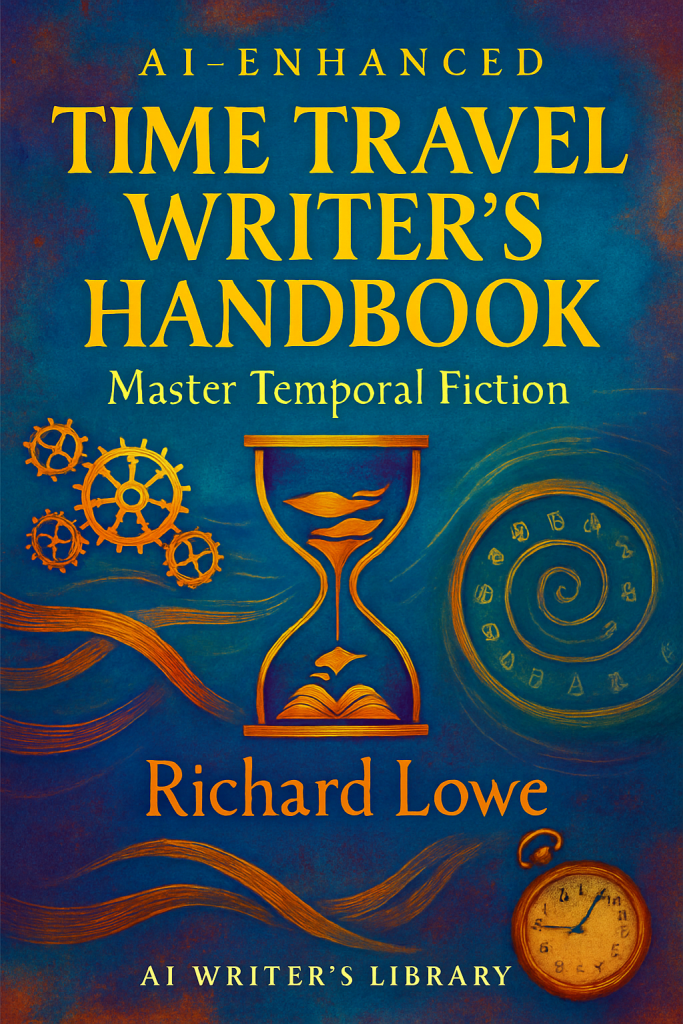
Time Travel Handbook
Write time travel fiction that holds together. Temporal models, paradox management, timeline tracking, 120+ AI prompts. 15 chapters from a 113-book author.