The Time Tunnel aired in 1966. I was a kid and it hooked me immediately.
Two scientists trapped in time with no control over where they land and no way home. Every episode dropped them somewhere new — the Titanic, Gettysburg, ancient Troy — and the premise was merciless: they couldn’t stay, they couldn’t fix anything permanently, they couldn’t get back. The time travel wasn’t a superpower. It was a condition. Something that happened to them, over and over, with consequences they had to live with because there was no undo button.
That’s the version of time travel that gets into you. Not the kind where the mechanics are a convenience, but the kind where the rules are the story. I’ve been watching time travel fiction work and not work ever since. Groundhog Day gets the loop exactly right — Phil Connors can reset the day but he can’t reset who he’s becoming, which means the stakes survive every reset. Happy Death Day 2 earns its complexity by committing to the implications of its own premise instead of hand-waving them. Deja Vu. Next. Each one succeeding or failing based on whether the writers understood what their mechanics actually required.
Then there’s Loki. Everything was there — the premise, the cast, the mythology, genuine creative ambition. Season one built something that felt like it was going somewhere real. Then the ending failed the setup. Season two had moments that were genuinely remarkable and then the finale collapsed under its own weight. Not because the writers weren’t talented. Because they didn’t follow through on what their own rules demanded. The mechanics said one thing. The ending did another. You feel that betrayal in your body when you’ve been watching carefully.
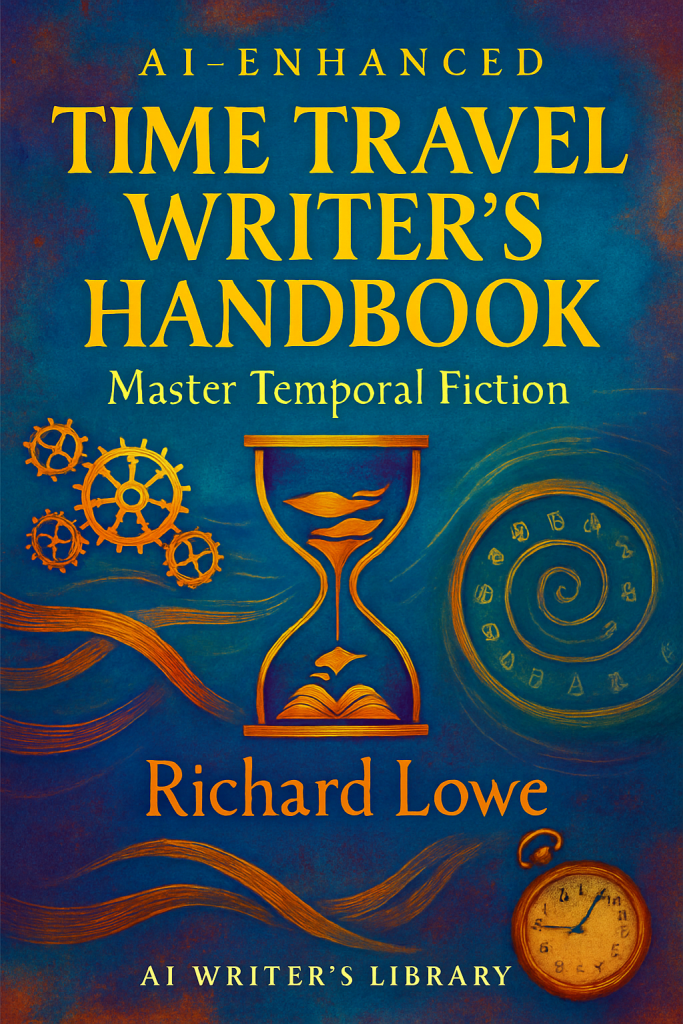
That feeling — the specific frustration of time travel fiction that almost works and then doesn’t — is exactly what this handbook teaches writers to avoid. Not through vague advice about being consistent, but through systems. Rules documents. Timeline tracking. Paradox detection. Stress-testing your mechanics before your draft hits 60,000 words and everything you established in chapter three is quietly contradicting everything you need in chapter eighteen.
I’m Richard Lowe. 113 published books, a childhood spent watching The Time Tunnel and reading every time travel story I could find, and decades of understanding why some of it holds together and most of it doesn’t. The handbook is those systems. Built for writers who want their time travel to work — not just exist, but actually hold together under the scrutiny of readers who are paying attention.
$27.95
One-time investment • Lifetime access • Instant download
Get The Handbook →
14-Day Money-Back Guarantee
If this handbook doesn’t change how you approach time travel fiction, request a full refund. No questions.
Questions
What actually breaks most time travel fiction?
Rules drift. You establish one set of mechanics in the early chapters and gradually shift to different mechanics as drafting needs demand. The first act doesn’t match the third act. You didn’t intend to change your rules — you just needed a scene to work and the rules you’d set up were in the way. By the time beta readers catch it, the contradiction is load-bearing and fixing it means rewriting significant portions of the manuscript. Loki’s season two finale is a masterclass in this failure mode. The show’s own mechanics demanded a specific kind of ending. The writers wanted a different ending. They chose the ending they wanted and the rules collapsed around it. Readers and viewers feel that betrayal even when they can’t articulate exactly why. The handbook gives you systems to catch drift before it compounds — rules documents, timeline bibles, consistency checks at the scene level and the manuscript level.
How do I maintain stakes when my characters can just go back and fix things?
Through constraints that are established early and enforced consistently. The Time Tunnel did this by removing control entirely — the scientists couldn’t choose where they landed and couldn’t stay. Groundhog Day does it by making the loop psychological rather than physical — Phil can reset the day but he can’t reset who he’s becoming. Happy Death Day 2 does it by raising the cost of each reset until the cost itself becomes the story. The “why don’t they just fix it” problem is a stakes problem, and stakes problems have specific solutions: limited uses, physical costs that accumulate, things that can’t be undone even with time travel, and consequences that exist outside the timeline entirely. The handbook covers a dozen constraint systems with examples from successful time travel fiction. Choose your constraints before you draft and enforce them without exception.
Which temporal model should I use?
The one that serves your story’s theme. Fixed timeline — where the past cannot be changed — supports tragedy and fate. Everything that happens was always going to happen. Your characters can witness and understand but not alter. This is what makes Twelve Monkeys work as tragedy and The Time Traveler’s Wife work as romance — the fixed timeline creates inevitability that earns the emotional payoff. Mutable timeline supports agency and second chances — choices matter because history can be rewritten, which means every decision carries real weight. Branching timeline supports philosophical exploration of roads not taken. Loop structure supports character transformation — Groundhog Day, Happy Death Day, Edge of Tomorrow all work because the loop is the mechanism by which the character changes. The handbook covers what each model enables, what it prevents, and how to choose deliberately instead of by accident.
How do I handle paradoxes?
First decide whether you want them. Some stories use paradox as the horror — the bootstrap paradox where an object or piece of information has no origin, the grandfather paradox where causation destroys itself. If paradox is your subject, design it deliberately and follow it to its implications. If paradox is not your subject, you need systems to detect the ones you didn’t intend to create. The handbook includes paradox detection workflows — ways to trace your causation backward and forward to find places where your timeline contradicts itself. The paradoxes you don’t intend are always the dangerous ones, because they compound quietly across a manuscript until a beta reader finds them and you have to decide whether to fix sixty pages or hope nobody else notices. The answer is always fix them.
What did Groundhog Day get right that most loop stories get wrong?
It understood that the loop has to be the mechanism of transformation, not just the premise. Most loop stories use repetition to create comedy or horror — the same events happening again with variations. Groundhog Day uses repetition to show a character trying every possible response to his situation and finding that none of them work until he becomes someone different. The loop doesn’t end when Phil escapes it. The loop ends when he doesn’t need to escape it anymore. That’s the structure: the external problem (the time loop) and the internal problem (who Phil Connors is) have to resolve simultaneously, and the resolution has to be earned by everything that came before. Happy Death Day 2 is interesting because it takes this structure and complicates it with genuine choices about which timeline to inhabit — the sequel earns its complexity because it commits to the implications rather than hand-waving them.
How does AI help with time travel consistency?
AI doesn’t forget what you established three months ago. That’s the core advantage. Feed your rules document and a scene to AI and it checks whether the scene violates your rules — catching the drift you didn’t notice because you were too deep in the draft. Feed it your timeline bible and it finds contradictions between events. Feed it your character versions and it tracks who knows what when, which is the most common source of time travel errors. AI also stress-tests mechanics before you draft. Introduce a new rule and AI can trace its implications through your existing story, showing you what it breaks and what it enables. The handbook includes 120+ prompts organized by problem type — model selection, paradox detection, consistency checking, stakes preservation, and post-draft audits. AI is your consistency partner, not your creative authority. The creative decisions are yours. AI helps you execute them without losing track.
Refund policy?
14 days. If it doesn’t change how you approach time travel fiction, full refund. No questions.
The Time Tunnel scientists landed somewhere new every episode and couldn’t fix anything permanently and couldn’t get home. The rules were merciless and the writers followed them. That’s why it hooked a kid who would spend the next fifty years watching time travel fiction work and not work.
The ones that work follow their own rules all the way to the end. The ones that don’t — Loki’s finales, the time travel stories that collapse in revision, the beta reader notes that say “wait, that contradicts chapter three” — chose the ending they wanted over the ending their mechanics demanded.
This handbook gives you the systems to follow your rules all the way through. Before the draft. During the draft. In revision. Until your time travel holds together under the scrutiny of readers who are paying as much attention as you were when you were watching The Time Tunnel at age seven.
$27.95
One-time investment • Lifetime access • Instant download
Get The Handbook →
14-Day Money-Back Guarantee
If it doesn’t change how you approach time travel fiction, request a full refund. No questions.
Part of the AI Writer’s Library Series. See also: Science Fiction Handbook | Genre Mastery Handbook