

Writer’s Block Isn’t What You Think It Is
You’re staring at the screen. The cursor blinks. Nothing comes. You’ve been sitting here for forty minutes and produced exactly zero words. You tell yourself you have writer’s block.
You don’t. Or rather, what you’re calling writer’s block is a symptom, not a diagnosis. Like calling a fever “the hot disease.” Something is causing the block, and until you identify the cause, no amount of motivational quotes or writing prompts will fix it. (For a deeper look at what the wall actually is and why it hits working writers, that breakdown separates the phenomenon from the mythology.)
The most common causes of writing paralysis: you don’t know what happens next in the story (a planning problem, not a creativity problem). You know what happens next but are afraid it’s not good enough (a perfectionism problem). You’re exhausted and your brain doesn’t have the resources to generate language (a rest problem). You’re bored with the scene you’re supposed to write (a story problem).
Each cause has a different solution. Treating all of them as “writer’s block” and applying the same fix is like treating every illness with aspirin. Sometimes it helps. Usually it doesn’t.
I’ve written 113+ books. I don’t have the luxury of writer’s block. Deadlines exist. Clients are waiting. The solution has always been diagnosing the actual cause and applying the right fix.
The ADHD Writing Advantage Nobody Talks About
Traditional writing advice was designed for neurotypical brains. Write every day at the same time. Set a consistent word count goal. Follow a linear process from outline to draft to revision. Build steady habits.
This advice is useless for ADHD brains and actively harmful when it creates guilt over an inability to follow systems that were never designed for how your brain works. Your scattered brain might be your biggest writing advantage — but only if you stop trying to force it into a neurotypical framework.
I have ADHD. I’ve used it to produce 113+ books, ghostwrite 54+ books, and regularly work 12-18 hour hyperfocus sessions that would burn out most neurotypical writers in two hours. I’m not managing ADHD despite my output. I’m producing that output because of how my brain works.
ADHD brains don’t do steady. They do bursts. Hyperfocus sessions where you write 5,000 words in four hours, followed by days where 200 words feels like crawling through concrete. The instinct is to view the burst days as normal and the slow days as failures. Flip that. The burst days are your superpower. The slow days are your brain recharging for the next burst.
Work with the pattern instead of against it. When hyperfocus hits, ride it. Cancel plans. Write until the energy runs out. When the slow period hits, do administrative tasks — research, outlining, organizing notes, formatting. This isn’t slacking. It’s using each brain state for what it’s suited to.
The ADHD Writer’s Handbook covers energy-based writing systems, hyperfocus management, parallel project strategies, and AI prompts designed for brains that don’t operate on schedule. Built by a writer with ADHD who’s published 113+ books using these methods.
Productivity Systems That Actually Work for Writers
Productivity for writers isn’t about word count. It’s about consistently producing usable material, which means material that survives revision. Five hundred polished words that don’t need to be rewritten are more productive than two thousand words you’ll cut tomorrow.
The most effective system I’ve found is energy matching. Track your cognitive energy across a typical week. When are you sharp? When are you foggy? When do you have creative capacity and when do you have only administrative capacity?
Schedule your hardest writing — first drafting, complex scene work, emotionally intense passages — during your peak cognitive hours. Schedule revision, research, formatting, and business tasks during lower-energy periods. Schedule nothing during your worst hours. Rest is productive because it protects the peak hours that follow.
Most writers waste their best cognitive hours on email, social media, and administrative tasks because those feel urgent. Then they try to do their hardest creative work when their brain is already depleted. Reversing this pattern doubles most writers’ productive output without adding a single hour to their schedule.
The Writer’s Productivity Handbook covers energy matching, session design, project management for writers, and AI-assisted workflow optimization. The system adapts to your specific brain and schedule instead of imposing someone else’s routine.
Parallel Projects: Why Working on Multiple Books Helps
Conventional wisdom says finish one book before starting another. For ADHD brains and many neurotypical writers too, this is counterproductive. When you’re stuck on one project, switching to another isn’t avoidance. It’s keeping the creative momentum going.
The key is having projects at different stages. One in drafting, one in revision, one in outlining. When drafting energy runs out, switch to revision. When revision becomes tedious, switch to outlining. Each project benefits from the break you take while working on another.
This also solves the “I’m bored with my novel” problem that kills projects at the 40,000-word mark. You’re not bored with writing. You’re bored with this specific story at this specific stage. Working on something else for a week recharges your interest, and you come back to the stalled project with fresh perspective.
The risk is never finishing anything. Manage it with commitments. One project is the primary. It gets priority during peak hours. The others fill the gaps. When the primary is finished, one of the gap projects gets promoted. This same ADHD-first approach applies beyond writing — The ADHD Marketer covers how to apply hyperfocus and burst-energy patterns to book promotion without burning out on consistency-dependent marketing systems.
Breaking Through Specific Types of Block
Don’t know what happens next: You’ve written yourself into a corner or you’re in the sagging middle without enough complications. Go back to your plot structure and add a complication you didn’t plan. What’s the worst thing that could happen to your character right now? Write that.
Perfectionism paralysis: You know the next scene but every version in your head isn’t good enough. Write the scene badly on purpose. Tell yourself this is the throwaway draft. Give yourself permission to produce garbage. The act of writing badly breaks the paralysis, and the “bad” version is usually fixable.
Fear of the emotional scene: Some scenes require you to access emotions you’d rather avoid. The death scene. The abuse scene. The breakup scene. Your avoidance isn’t block. It’s self-protection. Write the scene in summary first — just the facts, no emotional rendering. Then expand it in layers, adding emotional detail gradually.
Boredom with a required scene: If you’re bored writing it, the reader will be bored reading it. The scene might not be necessary. Ask what information the scene delivers and whether there’s a more interesting way to deliver it. A meeting scene might become a conversation during a car chase. A travel scene might become a conflict between traveling companions.
The Writer’s Block Handbook covers twelve types of creative paralysis with specific solutions for each. AI prompts help diagnose which type of block you’re experiencing and generate options for breaking through it.
The Role of AI in Writing Productivity
AI doesn’t write your book. It removes friction from the writing process. The blank page is the highest-friction moment in any writing session. AI can eliminate it.
Use AI to generate three possible opening lines for a scene you’re stuck on. You don’t have to use any of them. The act of reading options and reacting — “no, no, that one’s interesting but wrong” — fires up your own creative engine. You’re no longer starting from nothing. You’re starting from a reaction.
Use AI for brainstorming complications, dialogue options, and character responses to situations. Use it for research questions you’d normally spend thirty minutes googling. Use it to generate revision checklists specific to your manuscript’s known problems. Each of these uses reduces friction without replacing your creative judgment. (For a practical framework of how AI actually works as a writing assistant, that article separates the useful from the hype.)
The line between productive AI use and lazy AI use is whether the output requires your editorial judgment. If you’re publishing AI output unedited, you’re not writing. If you’re using AI output as raw material that your brain transforms into something with your voice, you’re writing more efficiently.
Building Sustainable Writing Habits
Habits work for neurotypical brains. Systems work for everyone. A habit says “write at 6 AM every day.” A system says “when I have peak creative energy, I write. When I don’t, I do other writing-related work. When I have no energy, I rest without guilt.”
The most sustainable writing practice I’ve found is session-based rather than schedule-based. Instead of writing at a fixed time, commit to a number of writing sessions per week. Each session has a starting ritual — the same drink, the same music, the same opening action — that signals your brain it’s time to produce.
Sessions can be twenty minutes or twelve hours depending on energy and flow. The ritual is the trigger. The duration is flexible. This accommodates ADHD hyperfocus bursts, low-energy days, unpredictable schedules, and real life.
Track sessions rather than word count. Showing up is the habit you’re building. Word count varies too much to be a useful daily metric. Track it monthly or quarterly instead, and you’ll see that the burst-and-rest pattern produces more than you expected.
The AI-Enhanced Writer’s Library includes productivity tools alongside craft handbooks because writing skill means nothing if you can’t sit down and use it consistently.
Free Stories, Straight to Your Inbox
Start with Nine Doors, nine short stories across nine genres, yours free the moment you sign up. After that, the occasional new collection and a note when there's a new book worth your time. No spam, no daily clutter. Just good stories.
We use MailerLite to manage our list and send these emails. Your address is used only to send you what you signed up for. We will not sell it, share it, or use it for anything else, and you can unsubscribe anytime.
Frequently Asked Questions
How do I write consistently with ADHD?
Stop trying to write consistently. Write in bursts when hyperfocus hits and do administrative writing work during low-energy periods. Track weekly sessions rather than daily word count. Use energy matching to schedule your hardest creative work during peak cognitive hours. The burst-and-rest pattern produces more over time than forcing a steady daily output your brain can’t sustain.
What actually causes writer’s block?
Writer’s block isn’t a single condition. Common causes include not knowing what happens next in the story (a planning problem), perfectionism preventing any words from feeling good enough, creative exhaustion from overwork, and boredom with the current scene. Each cause has a different solution, so diagnosing the specific cause matters more than generic advice about pushing through.
Is it okay to work on multiple writing projects at once?
Yes, especially for ADHD brains. Keep projects at different stages: one drafting, one in revision, one in outlining. When energy for one task type runs out, switch to another. The key is having one primary project that gets priority during peak hours. The others fill gaps and prevent the boredom that kills projects at the 40,000-word mark.
Can you be a successful writer with ADHD?
Yes. ADHD produces a different writing pattern, not an inferior one. Hyperfocus sessions can generate 5,000-10,000 words in a single sitting — output that neurotypical writers rarely match in a day. The key is building systems around how your brain actually works: energy matching instead of rigid schedules, parallel projects instead of forced single-focus, and burst-based production instead of daily word counts. The author of this article has ADHD and has published 113+ books using these methods.
What is energy matching for writers?
Energy matching means scheduling your hardest creative work during your peak cognitive hours and lower-demand tasks during your low-energy periods. Track your energy across a typical week. Write first drafts and complex scenes during your sharpest hours. Do revision, research, formatting, and email during lower-energy times. Schedule nothing during your worst hours — rest protects the peak hours that follow. Most writers waste their best brain hours on email and admin, then try to write when they’re already depleted.
-
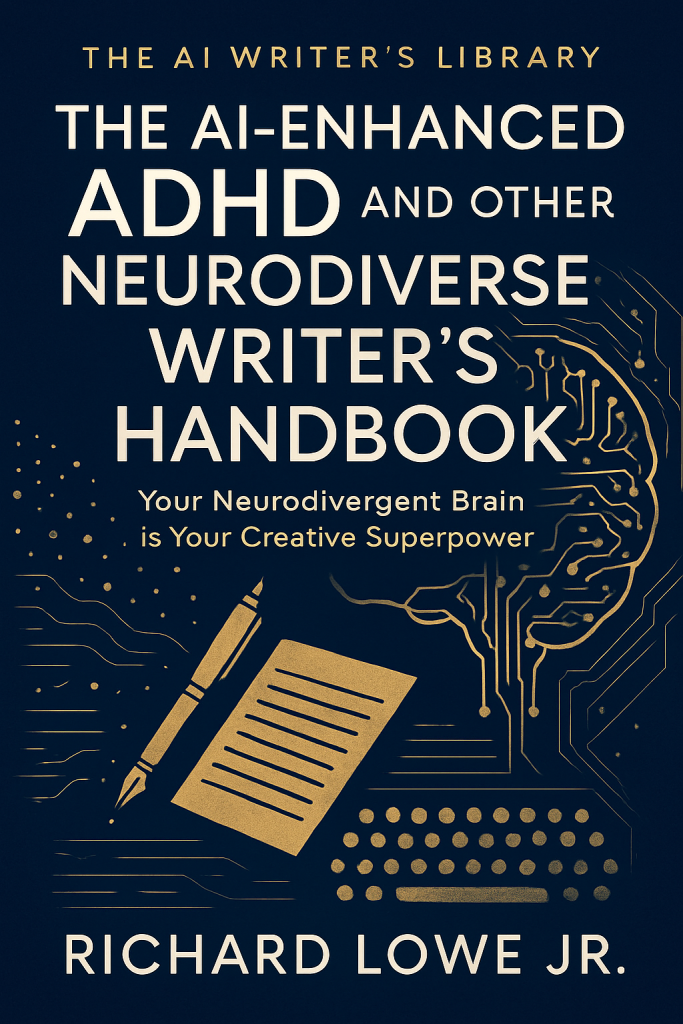
ADHD Writing Handbook: Systems That Work With Your Brain
ADHD writing advice fails because it's neurotypical advice with disability branding. 200+ page handbook with 100+ AI prompts from an AuDHD author with 113+ books. Instant download. -
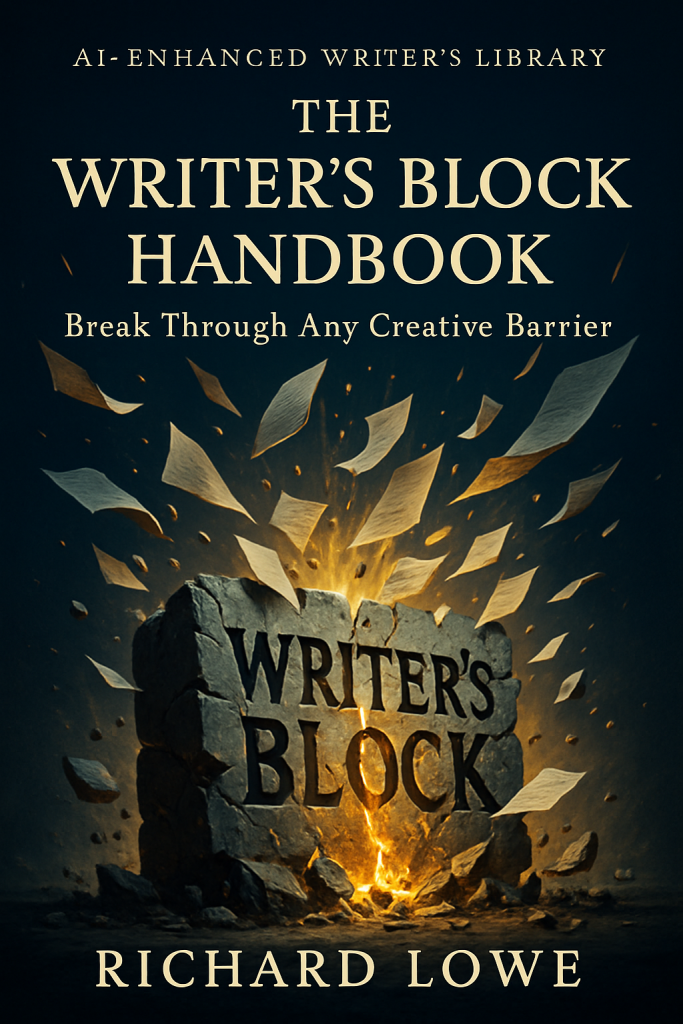
Writers Block Handbook
Neuroscience-based writer's block guide covering four block types (anxious, angry, apathetic, disappointed). Emergency protocols & AI prompts. ADHD chapter. 153 pages. -

Writer’s Productivity Handbook
Psychology-first productivity guide covering completion phobia, perfectionism, and resistance. AI platform comparison (Claude, ChatGPT, Gemini). 131 pages.