

The Synopsis Mistake
You spent two years writing the book. You spent two hours writing the description. That ratio is backwards.
Your description is doing more sales work than any other piece of your marketing. Cover gets them to look. Description gets them to buy. And yours reads like a book report written by someone who’s never sold anything. It lists plot points. It summarizes the story. It tells readers what happens. It does everything except make them want to read it.
A synopsis tells readers what your book is about. A description makes them want to read it. Completely different jobs.
Synopsis: “When Sarah discovers her husband is cheating, she must decide whether to fight for her marriage or start over. Along the way, she reconnects with her estranged sister and learns what she really wants from life.” That’s accurate. It’s also dead. Nothing there makes me need to read this book. I know what happens, and nothing about the summary creates urgency.
Readers don’t buy books to learn what happens. They buy books to feel something. Your description needs to promise a feeling, not summarize a plot.
The Promise Framework
Every effective description makes three promises.
Emotional promise. What will readers feel? Thrilled? Heartbroken? Terrified? Hopeful? Name the emotional experience your book delivers. Don’t name the plot events. Name what those events will make readers feel.
Character promise. Who will readers spend time with? Not a biography. A glimpse of someone interesting enough to follow. A voice. A situation. A contradiction that makes readers curious.
Stakes promise. What happens if the protagonist fails? Not plot consequences. Emotional consequences. What does failure mean for this person readers are starting to care about?
Miss any of the three and your description leaks readers. Hit all three and they click buy before they’ve consciously decided.
Opening Lines That Hook
Your first line carries impossible weight. Readers decide in seconds whether to keep reading.
Bad openings: “In a world where…” — every fantasy description starts this way, and you’ve already lost. Or character name plus occupation plus setting: “Detective Maria Santos has seen it all in twenty years on the Chicago PD.” Boring, generic, could describe a thousand books.
Good openings do one of three things. Create immediate intrigue: “The body in room 319 had been dead for three days. The guest had checked out two days ago.” Now I have questions. I’m reading the next line. Establish voice: “Marriage, I’ve discovered, is mostly about pretending you don’t notice things.” I already hear this character. I want to spend time with her. Promise specific emotion: “This is a book about losing everything and discovering that everything was never the point.” I know what I’m in for. If that’s what I want, I’m in. The same principles that make opening pages work apply here — hook first, context later.
The Middle Section Problem
Most descriptions bloat in the middle. Three paragraphs of plot summary that kill the momentum your opening created.
You don’t need readers to understand the whole plot. You need them to want to discover the plot. The middle of your description should raise questions, not answer them. Hint at complications without explaining them. Introduce tension without resolving it. Leave gaps that can only be filled by reading the book.
“When her sister’s letter arrives twenty years after her supposed death, Elena has to choose: the life she’s built, or the truth she’s buried.” That’s a middle section. I don’t know the plot. I don’t need to. I know there’s a dead sister who isn’t dead and a secret that’s been buried. I want to know more.
The Conflict and Tension Handbook covers how to create urgency in any form, including descriptions.
Closing That Converts
Your last line is your last chance. Don’t waste it on logistics.
Bad closings: “Perfect for fans of [famous author]” — lazy comp titles feel desperate. Or rhetorical questions: “Will she find love? Will she discover the truth?” — feels like a movie trailer from 1987. Readers are numb to this.
Good closings land emotional punches. “Some secrets protect us. Some secrets become us.” That resonates. It promises depth. “The summer that changed everything started with a lie she told herself.” Specific. Intriguing. Makes me want to read the first chapter.
Close on the feeling your book delivers, not the plot mechanics. The feeling is what sells.
Length and Formatting
Amazon truncates descriptions after about 300 characters on mobile. Readers see your first few lines and have to click to read more. Put your hook first. Not background. Not setup. The hook.
Short paragraphs. Single sentences if they punch hard enough. White space matters because walls of text get skipped. Two to four paragraphs total — enough to establish promise, not enough to exhaust attention. If your description runs longer than 200 words, you’re probably over-explaining.
On mobile, your description competes with endless scrolling. You have seconds. Write like you have seconds.
Genre Expectations
Different genres have different description conventions. Ignore them at your peril.
Romance readers expect emotional temperature. Heat level signals matter. Relationship conflict should be front and center, and the obstacle keeping the couple apart better be clear. Thriller readers expect stakes and momentum — something terrible is happening or about to happen, the protagonist is in over their head, the clock is ticking. Mystery readers expect a puzzle worth solving — an intriguing crime, a detective with an angle, hints that the solution will satisfy. Literary readers expect voice and depth — prose style matters, thematic concerns can be named directly, and beautiful language in the description signals beautiful language in the book.
Understanding what readers psychologically need from your genre determines how your description should promise it. The Genre Mastery Handbook maps reader expectations across all major genres, including what they look for in descriptions.
The Comparison Trap
“Perfect for fans of Stephen King and Gillian Flynn.” You’re not Stephen King. Readers know this. Invoking a giant reminds them that your book probably isn’t as good.
Worse, mismatched comps signal that you don’t understand your own book. King and Flynn write very different things. If your book is “both,” you’re confused, and readers sense confusion.
If you must use comps, be specific. “For readers who loved the domestic suspense of Gone Girl but wished it had more humor.” That’s a targeted promise. It tells readers exactly what makes your book different. Better yet, skip comps entirely. Let your description do the selling without leaning on borrowed credibility.
Test Your Description
Show your description to someone unfamiliar with your book. Ask two questions: After reading this, what feeling do you expect from the book? What questions do you have that make you want to read it?
If they can’t name a feeling, your emotional promise is missing. If they have no questions, your intrigue is missing. If they fully understand the plot, you’ve told too much. The goal isn’t comprehension. The goal is desire. Confusion is fine. Boredom is fatal.
Free Stories, Straight to Your Inbox
Start with Nine Doors, nine short stories across nine genres, yours free the moment you sign up. After that, the occasional new collection and a note when there's a new book worth your time. No spam, no daily clutter. Just good stories.
We use MailerLite to manage our list and send these emails. Your address is used only to send you what you signed up for. We will not sell it, share it, or use it for anything else, and you can unsubscribe anytime.
Frequently Asked Questions
How long should my book description be?
Under 200 words. Amazon truncates after about 300 characters on mobile, so your hook must come first. Two to four short paragraphs — enough to establish promises without exhausting attention. If you’re explaining plot, you’re probably too long.
Should I use comparison titles in my description?
Sparingly, if at all. Comparing yourself to giants reminds readers you’re not a giant. If you use comps, be specific about what your book shares and what makes it different. Better to let your description sell on its own merits.
Why isn’t my book description converting even though it’s accurate?
Accuracy isn’t the goal. Desire is. A synopsis tells readers what happens. A description makes them want to feel what your book offers. Shift from summarizing plot to promising emotional experience, and conversion improves.
How do I write a description if my book has a complex plot?
Don’t explain the complexity. Hint at it. Readers don’t need to understand your plot to buy your book. They need questions that can only be answered by reading. Focus on character, emotional promise, and stakes. Let plot complexity reveal itself in the reading.
The AI-Enhanced Writer’s Library
The AI-Enhanced Writer’s Library breaks down character, dialogue, pacing, and two dozen other craft elements the same way. Why things work, not just that they work. Psychology-based instruction with AI prompts built in. 35+ guides and counting.
-
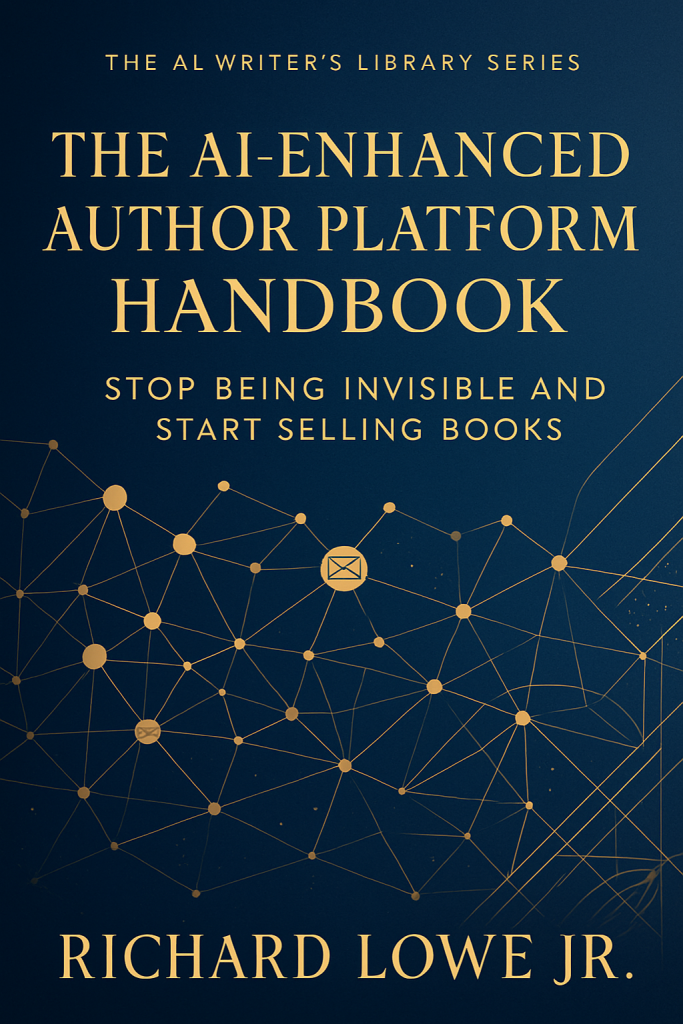
Author Platform Handbook
Author platform handbook: website, email list, Amazon optimization, social media strategy. 90-day implementation plan with AI prompts. From 113-book author.