

The Setup Trap
An agent reads your first page. They stop reading. A reader opens your sample on Amazon. They close the tab. Your beta reader says the book “gets good around chapter four.”
Your opening is failing. Not because it’s badly written. Because it’s doing the wrong job. You’re setting up the story, introducing the world, establishing the character, laying groundwork for what comes later. Meanwhile, readers are already gone.
Writers think readers need context before they can care. Background on the world. Introduction to the protagonist’s normal life. Explanation of the situation before disruption. This instinct is wrong.
Readers don’t need context to care. They need a reason to keep reading. Context can come later, after you’ve earned their attention. Frontloading setup is like explaining the rules of a game nobody has agreed to play yet.
Your first job isn’t establishing anything. Your first job is making readers turn to page two. Then page three. Then chapter two. Everything else, including the setup you think is necessary, can happen after they’re committed.
Start with forward motion. Insert context only when readers need it to understand what’s happening. The setup that felt essential often turns out to be optional once you’ve proven you can tell a story worth following.
The Waking Up Problem
Your protagonist wakes up. Looks in the mirror. Goes through morning routine. Thinks about their life. This opening has been rejected ten thousand times this week.
Waking up openings fail because nothing is happening. A character starting their day is not a story beginning. It’s a person existing. Existence isn’t interesting. Action is interesting. Decisions are interesting. Problems are interesting.
The waking up opening usually exists because writers don’t know where to start. So they start at the beginning of a day, figuring they’ll get to the interesting part eventually. Start at the interesting part. Your story begins when something changes, when a problem emerges, when a question needs answering. Everything before that is backstory, no matter what time of day it occurs.
The Information Dump Problem
Your fantasy world has detailed history. Your protagonist has complex backstory. Your setting requires explanation. None of this belongs on page one.
Information dumps kill openings because they ask readers to learn before they care. Learning is work. Readers do that work only for stories they’re already invested in. Page one has zero investment. Asking for work at zero investment produces abandonment.
Withhold information. Create curiosity instead of satisfying it. Let readers wonder what’s going on. That wondering is engagement. That engagement buys you time to explain things later.
A reader who doesn’t understand your magic system but desperately wants to know what happens next will keep reading. A reader who fully understands your magic system but doesn’t care about anyone will stop. Prioritize accordingly. The same principle applies to world building — the best settings reveal themselves through action, not exposition.
What Hooks Actually Do
A hook creates a question readers need answered. Not a question they’re mildly curious about. A question that nags, that won’t let go, that makes putting down the book feel like leaving a conversation mid-sentence.
“The body in room 319 had been dead for three days. The guest had checked out two days ago.” Two sentences. One impossible situation. Readers need to know how this works.
“The last time I saw my sister, she told me she’d kill me if I followed her. That was seventeen years ago. Yesterday, I got her wedding invitation.” Family drama, long estrangement, and sudden contact. What happened? Why now? Readers need to know.
Hooks work through incompleteness. Something doesn’t add up. Something is unresolved. Something demands explanation that hasn’t been provided. The explanation is coming later, after readers are committed. The hook’s job is to create the need. The story’s job is to satisfy it.
Character First, Situation Second
Many writers hook with situation and forget character. A murder happens. A war begins. A disaster strikes. Situation without character creates spectacle, not investment. Readers watch from a distance. Interesting, maybe. But not urgent.
Hooks work better when they combine situation with character perspective. Not just “a murder happened” but “she found the body and recognized the ring.” Not just “war began” but “he was planting tomatoes when the sirens started.”
The character lens makes situation personal. Readers don’t care about events in the abstract. They care about events happening to someone whose experience they’re sharing. The Deep Character Handbook covers how to establish character presence in minimal space.
Give readers someone to be within the first paragraph. Someone with a perspective, a reaction, a stake in what’s happening. Then the situation lands differently.
Voice as Hook
Sometimes the hook isn’t situation at all. It’s voice.
“If you really want to hear about it, the first thing you’ll probably want to know is where I was born, and what my lousy childhood was like, and how my parents were occupied and all before they had me, and all that David Copperfield kind of crap, but I don’t feel like going into it, if you want to know the truth.”
Nothing has happened. A teenager is refusing to tell his story while telling it. But the voice is so distinctive, so alive, so unlike anything else that readers keep going just to spend more time with this consciousness.
Voice hooks work when the narrator’s personality is itself compelling. The way they see things. The way they phrase things. The attitude they bring to observation. Not every story needs a voice hook. But if your narrative voice is distinctive, leading with voice can work even without dramatic situation. Readers will follow an interesting mind anywhere. Building that kind of distinct character voice is a learnable skill.
The In Medias Res Technique
Start in the middle of action. Not at the beginning of the story’s events. In the middle of something already happening. Readers enter a scene in progress and have to orient themselves while things unfold.
This technique works because it skips setup entirely. There’s no opportunity for slow introduction because introduction would interrupt the action. Context comes through implication. Readers figure out what’s happening as characters deal with it.
In medias res requires confidence. You have to trust readers to catch up without hand-holding. You have to resist the urge to stop and explain. The disorientation is temporary. The engagement is immediate.
Not every story should open in medias res. But if your current opening feels slow, trying an in medias res approach often reveals how much setup was unnecessary.
The Micro-Tension Technique
Big hooks promise big drama. Sometimes you need smaller hooks that work line by line.
Micro-tension means each sentence creates enough curiosity to earn the next sentence. Not dramatic questions. Small ones. Just enough to keep eyes moving down the page.
“She hadn’t expected the letter.” What letter? Keep reading. “Her mother never wrote.” Why not? Keep reading. “The postmark was local, which made no sense.” Why doesn’t it make sense? Keep reading.
Each sentence answers a small question while raising another. Readers progress through cumulative small investments until they’re deep enough to be committed.
Micro-tension works especially well for literary fiction where big situational hooks feel inappropriate. The Conflict and Tension Handbook covers techniques for creating tension at every scale from sentence to scene to story.
What Your Opening Must Establish
By the end of page one, readers need three things.
Someone to follow. Not a biography. Just a presence. A voice. A perspective. Enough of a character that readers know whose experience they’re sharing.
Something happening. Not backstory. Present action. A situation unfolding. Movement of some kind that suggests more movement to come.
A reason to continue. A question. A tension. A curiosity. Something unresolved that can only be resolved by reading more.
Everything else can wait. World-building can wait. Backstory can wait. Supporting characters can wait. The detailed setup you thought was essential can wait. Give readers those three things in the first page and they’ll give you pages to deliver everything else.
The Revision Test
Find your current opening. Read only the first page. Then ask: If I started at chapter two, would readers be lost? Or would they catch up fine?
Most of the time, readers would catch up fine. The first chapter’s setup isn’t load-bearing. It’s comfort-seeking. Writers include it because starting in motion feels risky.
Try cutting your first chapter entirely. Start where chapter two begins. Read that as your new opening. Often it’s better. Often the story actually starts there and everything before was throat-clearing.
If cutting chapter one genuinely loses readers, add back only what’s essential. Usually that’s a paragraph or two, not pages of establishment. Your story begins when something changes. Find that moment. Start there. Trust readers to follow.
Free Stories, Straight to Your Inbox
Start with Nine Doors, nine short stories across nine genres, yours free the moment you sign up. After that, the occasional new collection and a note when there's a new book worth your time. No spam, no daily clutter. Just good stories.
We use MailerLite to manage our list and send these emails. Your address is used only to send you what you signed up for. We will not sell it, share it, or use it for anything else, and you can unsubscribe anytime.
Frequently Asked Questions
How do I know if my opening is working?
Show it to readers unfamiliar with your story. Ask them to stop reading when they lose interest or get bored. Note where they stop. If most stop on page one, your hook is failing. If they push through to chapter two or three, you’ve earned their attention. The stopping point reveals exactly where the problem lives.
Should I start with action or character?
Both. Action without character creates spectacle readers don’t care about. Character without action creates stasis that doesn’t hook. Start with a character in action, even if the action is small. Someone experiencing something in the moment is more engaging than either situation alone or character profile alone.
How much backstory can I include in my opening?
Almost none. Backstory asks readers to learn before they care. They don’t care yet. Earn their investment through present action first. Then slip backstory in only when readers need it to understand what’s happening now. Most openings include ten times more backstory than necessary.
What if my story is a slow burn that needs setup?
Even slow burns need hooks. The hook can be quiet — voice, micro-tension, small mysteries — but something must compel readers forward. “Slow burn” isn’t permission for a boring opening. It’s a pacing style that still requires reasons to keep reading on every page.
The AI-Enhanced Writer’s Library
The AI-Enhanced Writer’s Library breaks down character, dialogue, pacing, and two dozen other craft elements the same way. Why things work, not just that they work. Psychology-based instruction with AI prompts built in. 35+ guides and counting.
-
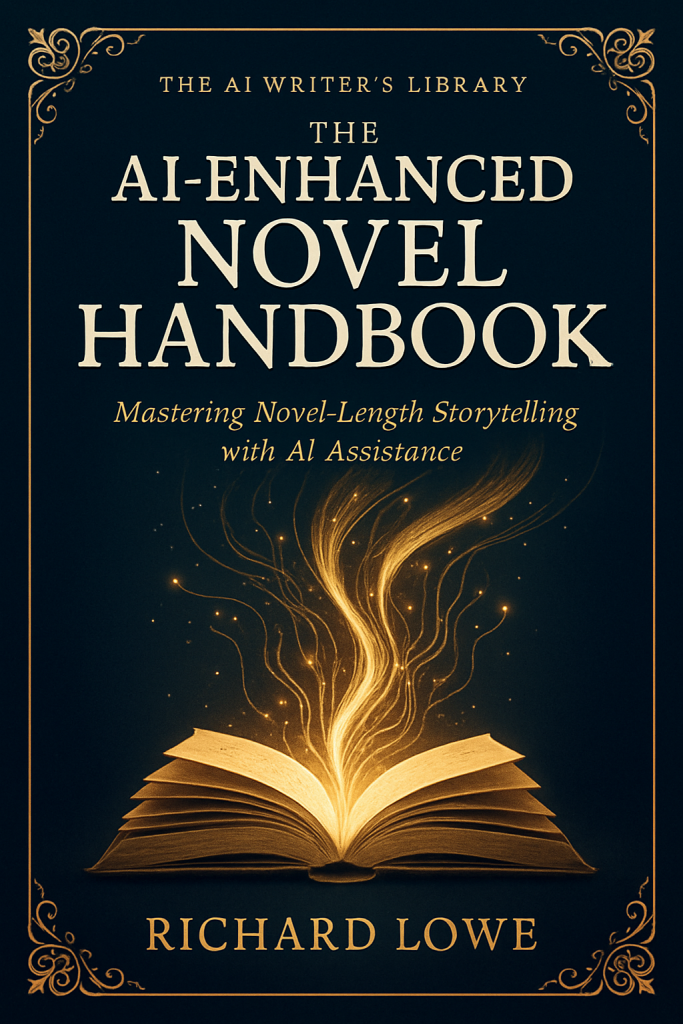
Novel Handbook
Novel-length fiction guide covering architecture, saggy middles, character drift, and series planning. 4 case studies. AI collaboration for 80,000+ words. 247 pages. -

Story ARC Handbook
Psychology-first story structure guide covering opening hooks, rising action, midpoint crisis, and climax. Breaking Bad & Pride and Prejudice case studies. 192 pages. -

Deep Character Handbook
Master character psychology. Wound-Adaptation-Pattern Framework, attachment theory, defense mechanisms, case studies. 503-page guide from 113-book author.