I tried YouTube. It didn’t work.
I’m telling you that upfront because platform advice usually comes packaged as a success story — here’s what I built, here’s how it works, here’s why you should do exactly what I did. That version is cleaner but less useful. The useful version includes the channels that failed, the time spent on activities that didn’t move the needle, and the slow realization that platform building is iterative rather than linear. You try things. Some work. Some don’t. You keep what works and move on from what doesn’t without burning everything else down.
Here’s what I actually built. Two websites with different purposes — thewritingking.com for ghostwriting services, masterofworlds.com for the handbook business — because I understood early that services and books need separate infrastructure and separate audiences. A LinkedIn profile with 16,000 connections built through years of relationship-based networking, which is where 80% of my ghostwriting business actually comes from. Facebook presence for community engagement. Substack and Medium in active development because content marketing at scale requires platforms that distribute as well as publish. YouTube tried and abandoned because the format didn’t match how I work and the return didn’t justify the investment.
That’s a real platform. Not a myth, not a theory — a working infrastructure built across years of iteration that generates real business from multiple directions simultaneously. The ghostwriting pipeline worth $191,000 in high-probability prospects didn’t come from algorithms. It came from relationships built through consistent presence on platforms where those relationships could form.
The lesson that took the longest to learn: platform isn’t one thing. It’s an ecosystem of owned and rented infrastructure, each component serving a different function, all of it pointing toward the work you’re trying to sell. Your website is the hub you own. Social platforms are rented land you use to drive traffic to it. Email is the direct line that survives every algorithm change. When one channel doesn’t work — and some won’t — the rest of the infrastructure keeps functioning. YouTube failed and nothing else burned down with it.
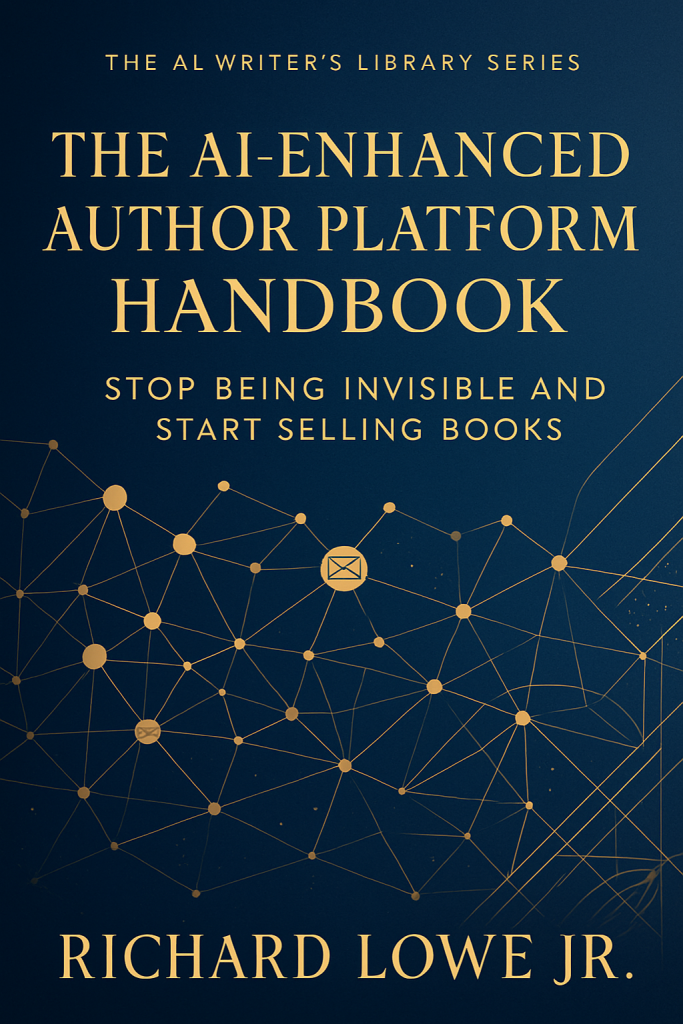
I’m Richard Lowe. 113 published books, ghostwriting clients who’ve secured over $30 million in venture capital, and enough platform iteration to know what the working version actually looks like versus what the success myths say it should look like. This handbook is built on what actually works.
$29.95
One-time investment • Lifetime access • Instant download
Get The Handbook →
14-Day Money-Back Guarantee
If this handbook doesn’t change how you approach author platform, request a full refund. No questions.
The Hub-and-Spoke Model
Most authors build platform backwards — starting with social media because it’s immediately accessible, then discovering years later that they’ve been building on rented land that can change the rules any time. The hub-and-spoke model puts your website at the center. Everything else drives traffic to infrastructure you own.
Component
Role
You Own It?
Website (Hub)
Central command. Captures emails. Showcases books. Works 24/7.
✓ Yes
Email List
Direct access to readers. Highest conversion rates. Launch weapon.
✓ Yes
Amazon
Where most book sales happen. Discovery engine. Must be optimized.
Partial
Social Media
Discovery and engagement. Drives traffic to hub. One platform done well.
✗ Rented
Content Marketing
SEO. Authority building. Attracts new readers over time.
✓ Yes (on your site)
Build the owned infrastructure first. Use rented platforms to drive traffic to it. When Facebook changes its algorithm or a platform implodes, your foundation survives.
Questions
Do I need two separate websites like you have?
Not necessarily, but the principle behind it matters. Services and books attract different audiences with different needs. A Fortune 50 executive considering a $50,000 ghostwriting engagement needs to land on a page that speaks directly to that decision. A writer looking for craft handbooks needs something completely different. If your work spans multiple distinct audiences or business models, separate infrastructure prevents each from undermining the other. If your platform serves one clear audience, a single well-built website works fine. The handbook covers how to make that decision for your specific situation.
What if I try a platform and it doesn’t work?
You move on. This is the part platform advice almost never covers — the abandonment decision. YouTube didn’t work for me. The format didn’t match how I work, the production requirements didn’t justify the return, and the audience I was trying to reach wasn’t finding me there. I stopped. Nothing else burned down with it because the rest of the infrastructure was solid. The handbook covers how to evaluate whether a channel isn’t working yet versus isn’t working for you, and how to make the abandonment decision without guilt or second-guessing.
Why does LinkedIn work for ghostwriting but not necessarily for book sales?
Because ghostwriting clients are executives and business professionals — exactly the people on LinkedIn, actively using it for professional purposes. 16,000 connections built through years of relationship-based networking generates business because the platform matches the audience. Book buyers for fiction and craft handbooks aren’t on LinkedIn looking for those things. Platform selection has to match where your specific buyers actually are and what they’re doing when they’re there. The handbook covers audience-platform matching so you’re not building presence on platforms your actual buyers don’t use.
How long does it take to build a working platform?
The foundation — website, email list, one social presence, optimized Amazon listings — can be built in 90 days with 5-8 hours per week of focused work. That’s not a finished platform. That’s infrastructure that works and can be built on. The rest of platform building is ongoing: content creation, relationship development, channel experimentation, iteration based on what actually produces results. The handbook’s 90-day plan gives you the sequence for building the foundation. What comes after that is maintenance and growth, not starting over.
Should I be on Substack and Medium simultaneously?
Potentially, for different reasons. Substack builds a direct subscriber relationship — people opt in to receive your work, and you own that list. Medium distributes to an existing audience that’s already on the platform looking for content. They serve different functions in the content marketing ecosystem and can complement each other if you have the content production capacity for both. The handbook covers how to evaluate which content platforms make sense for your specific situation and how to integrate them into the hub-and-spoke model without fragmenting your foundation.
How do I build an email list when I’m starting from zero?
A lead magnet that solves a specific problem for your specific reader — prequel novella, bonus content, useful resource — gives people a reason to hand over their email address. The lead magnet has to be genuinely valuable, not a thin excuse to collect emails. Once subscribers are on your list, the welcome sequence builds relationship before you need anything from them. The handbook covers lead magnet creation, placement strategy, welcome sequences, and newsletter approaches that keep subscribers engaged without burning them out.
Refund policy?
14 days. If it doesn’t change how you approach author platform, full refund. No questions.
YouTube failed and I’m still here. The ghostwriting pipeline is full. The handbook business is growing. Substack and Medium are in active development. The platform works because the foundation is solid enough to absorb what doesn’t work without losing what does.
That’s what the handbook teaches. Not the myth. The working version.
$29.95
One-time investment • Lifetime access • Instant download
Get The Handbook →
14-Day Money-Back Guarantee
If this handbook doesn’t change how you approach author platform, request a full refund. No questions.
Part of the AI Writer’s Library Series. See also: Book Promotion Handbook | Lead Magnets Handbook