My friend Bonnie Dillabough carried a story in her head for decades. She finally started writing it at 63, published her first novel two weeks before her 64th birthday, and built an eight-book science fiction series before she passed away on April 5, 2025. The ninth book was unfinished. The arc was mapped. She ran out of time.
Eight books on Amazon. Readers who stopped her in grocery stores asking when the next one was coming out. A beloved series she built from nothing but grit, heart, and a story she’d been waiting her whole life to tell.
And still — not enough people found her books.
That’s what bad book promotion actually costs. Not just sales. Legacy. Bonnie did everything right as a writer. She showed up, she produced, she built a universe. What she — what most authors — never got was a clear system for connecting the right readers to the work that was waiting for them. The discovery problem isn’t solved by writing better books. It’s solved by understanding how readers find books and what makes them buy.
Every client who has ever hired me starts with the same question: how do I promote my book? I’ve heard it from Fortune 50 executives with business books, from coaches with thought leadership projects, from fiction writers who poured years into their manuscripts. Same question, same underlying problem — they’d done the hard part and didn’t know how to make it matter to anyone beyond their immediate circle.
I’ve published 113 books. Promoting them is genuinely hard. Not because the principles are complicated but because most promotion advice focuses on tactics — what to post, when to post, which platform is hot this month — instead of the psychology underneath all of it. Why readers buy. What happens in the seven seconds when someone encounters a book and decides whether to keep scrolling or click purchase. What the cover is actually communicating before a single word of the description gets read.
When you understand the psychology, the tactics become obvious. When you only know the tactics, every algorithm change sends you back to square one.
This handbook is for Bonnie, and for every author who has done the hard work of writing and deserves to have it found.
$29.95
One-time investment • Lifetime access • Instant download
Get The Handbook →
14-Day Money-Back Guarantee
If this handbook doesn’t change how you approach book promotion, request a full refund. No questions.
The Five Sales Killers
Most books fail for one of five reasons. The same problem shows up across genres, price points, and experience levels. The diagnostic below identifies which one is blocking your book — and the fix is different for each.
Sales Killer
What’s Happening
How You Know
Wrong Cover Signals
Cover doesn’t match genre expectations. Readers scroll past before reading anything.
High impressions, low clicks
Weak Description
Description summarizes plot instead of selling experience. Hook buried or missing.
Clicks but no purchases
Broken Trust Signals
Not enough reviews, amateur presentation, no social proof.
Interest but hesitation
Wrong Targeting
Reaching writers instead of readers. Marketing to peers, not customers.
Engagement but no sales
Price Psychology Mismatch
Price signals wrong value. Too cheap screams amateur. Too expensive for unknown author.
Everything else works, still no sales
The handbook walks you through diagnosing which killer is blocking your specific book and exactly how to fix it before spending another dollar on promotion.
Questions
Why do authors with smaller audiences sometimes outsell authors with larger ones?
Because followers aren’t readers. The audience you build through clever content often has zero overlap with the audience who’d love your books. Writers in writing groups are peers looking for advice, not customers looking for stories. The handbook covers the critical difference between audience and readership — and how to build the second one instead of accidentally building only the first. Bonnie’s readers stopped her in grocery stores. They weren’t her social media following. They were people who found her books through discovery channels, read them, and came back for more. That’s readership.
What actually happens in those seven seconds when a reader encounters my book?
Their brain pattern-matches your cover against every book they’ve ever loved or hated and makes a purchase decision before a single word of your description gets evaluated. This is why authors with mediocre writing but professional covers outsell authors with beautiful prose and amateur covers. The second author never gets past the initial filter. Your cover communicates genre, quality, and emotional tone in a fraction of a second. If it sends the wrong signals for your genre — or no recognizable signals at all — readers scroll past without ever encountering your description, your reviews, or your first chapter sample. The handbook covers what professional covers in your genre are actually communicating and how to audit yours against those signals.
How do I write a book description that actually converts?
Stop summarizing the plot and start selling the experience. Most book descriptions fail because they answer “what happens?” instead of “how will this make me feel?” The hook belongs in the first line, not buried after three sentences of setup. Stakes need to be clear within the first fifty words. The voice should match genre expectations so readers recognize this as the kind of book they read. The handbook covers description psychology with specific patterns that work across genres, plus AI prompts for diagnosing and rewriting descriptions that aren’t converting.
Do Amazon ads actually work or are they just burning money?
Amazon ads work when your book page converts and you’ve done the break-even math before spending. Most authors lose money on ads because they’re advertising broken product pages — wrong cover signals, weak descriptions, not enough reviews to establish trust — and no amount of traffic fixes a broken landing page. The second common failure is spending without calculating maximum cost-per-acquisition. The handbook covers when to start ads (after fundamentals are solid), how to test (small budget, specific targeting), and when to stop (when the math doesn’t work regardless of what you do).
Is social media worth the time investment for authors?
Some platforms sell books for some genres. Most just feel productive while generating followers who never buy. The specific platforms that convert depend on where your actual readers congregate — romance readers behave differently than thriller readers, and literary fiction audiences aren’t in the same places as fantasy fans. The handbook covers platform-audience matching for different genres, sustainable maintenance strategies that don’t consume your writing life, and why your email list will always outperform your follower count for actual book sales.
How do I get reviews without begging?
ARC distribution to readers in your genre before launch, consistent reader requests through your email list, and making the review request feel like a service rather than a favor. The handbook covers what reviews actually accomplish at different stages of a book’s life, the threshold where review count starts mattering to purchase decisions, and ethical strategies for building review velocity without violating platform terms or burning reader goodwill.
Why does understanding psychology matter more than knowing the latest tactics?
Because tactics change with every algorithm update and psychology doesn’t. The authors who chase tactics are always starting over — last year’s hack stopped working, this year’s hack hasn’t proven itself yet, and the gap between them produces nothing. The authors who understand why readers buy adapt when platforms change because they know the underlying principle the tactic was serving. Bonnie’s readers found her books through multiple channels across multiple years. That staying power comes from getting the fundamentals right, not from executing any particular tactic perfectly.
Refund policy?
14 days. If it doesn’t change how you approach book promotion, full refund. No questions.
Bonnie’s best compliment, she told me once, was when a reader said they could feel her in every paragraph. Her books are still on Amazon. Her readers are still turning pages. The discovery problem she never fully solved is solvable — and solving it is how her work keeps finding the people it was meant to reach.
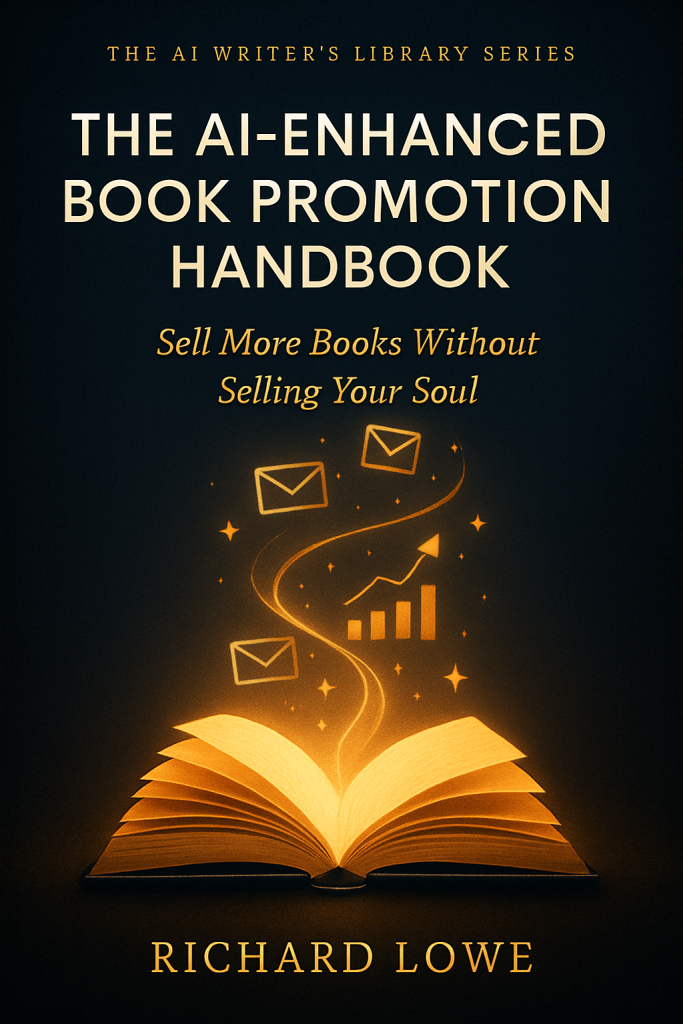
That’s what this handbook is for. The work you’ve done deserves to be found.
$29.95
One-time investment • Lifetime access • Instant download
Get The Handbook →
14-Day Money-Back Guarantee
If this handbook doesn’t change how you approach book promotion, request a full refund. No questions.
Part of the AI Writer’s Library Series. See also: Author Platform Handbook | Lead Magnets Handbook