

20 Speculative Fiction Writing Exercises That Actually Teach Craft
Prompts That Actually Work
“A detective discovers their partner has been dead for three years.” Great hook. But where does the tension come from? How do you structure the revelation? What makes this psychological horror instead of a twist that goes nowhere?
Most writing prompts hand you a scenario and wish you luck. Each exercise below includes three things: the hook, the genre approach, and the craft guidance explaining what makes the premise writable. The scenarios are starting points. The psychology is what turns them into stories.
Read through until something sparks and use the craft notes to find your core tension before drafting. Or pick any exercise and write the pivotal scene where everything shifts. Even if you’re not writing speculative fiction, every dynamic here translates: unreliable narration, temporal displacement, fish-out-of-water comedy, workplace satire with supernatural elements. Find the exercise that matches your story’s core dynamic and steal the technique.
Free Stories, Straight to Your Inbox
Start with Nine Doors, nine short stories across nine genres, yours free the moment you sign up. After that, the occasional new collection and a note when there's a new book worth your time. No spam, no daily clutter. Just good stories.
We use MailerLite to manage our list and send these emails. Your address is used only to send you what you signed up for. We will not sell it, share it, or use it for anything else, and you can unsubscribe anytime.
The Brainstorming Handbook covers how to develop premises into full narratives once you’ve found your hook.
1. A Detective Discovers Their Partner Has Been Dead for Three Years
Unreliable Narrator and Psychological Horror
Detective Kira Blackwood investigates murders with partner Detective Marcus Holloway, whose insights prove crucial for solving cases. Their banter feels natural, their partnership seamless, until Kira finds Marcus’s obituary dated three years ago. She must confront the possibility that grief-induced hallucinations have been guiding her detective work, raising questions about which cases were real and which existed only in her fractured mind.
The craft underneath: Build through denial and gradual acceptance of psychological break. Show detective work through unreliable perception, with Kira’s professional competence masking personal trauma. Captain Elena Santos grows concerned about Kira talking to empty air. Police psychologist Dr. Hassan Okafor’s sessions reveal the depth of Kira’s dissociation. The horror stays psychological, not supernatural. Police procedure grounds impossible events in realistic investigation, which makes the delusion more disturbing.
2. A Woman Wakes Up Married to Someone She’s Never Met
Memory Loss and Identity Construction
Maya Rodriguez wakes in an unfamiliar bedroom beside David Kim, who insists they’ve been married five years. He shows photos, videos, legal documents. Maya remembers nothing but finds evidence of shared experiences she can’t recall. She must decide whether to trust the life surrounding her or the instincts screaming that something fundamental is wrong.
The craft underneath: Relationship dynamics become investigation as Maya analyzes her supposed marriage for clues about missing memories. Neurologist Dr. Priya Singh can’t explain the selective amnesia. Maya’s sister Rebecca reacts with emotions that seem genuine but inconsistent. The tension comes from competing evidence and the creeping question readers should share with Maya: is she the victim here, or the perpetrator? The Conflict and Tension Handbook covers building uncertainty that keeps readers off balance.
3. Every Night at 3 AM, the Same Phone Call Comes In
Repetition and Escalating Dread
Night security guard Jake Morrison answers the same call every night at 3:17 AM. The caller, claiming to be his ex-wife Sarah, describes events that haven’t happened yet with perfect accuracy. Predictions start small. Then they get personal. Then threatening.
The craft underneath: Atmospheric horror through workplace isolation and technological dread. Night shift culture provides authentic backdrop for supernatural intrusion into routine. Sleep deprivation and mounting paranoia bleed into Jake’s daytime life. His supervisor dismisses everything, which forces Jake to investigate alone. The horror feels inevitable because the call always comes, the timing never changes, and each night the predictions get closer to something Jake can’t survive.
4. Children Start Disappearing, But Only Adults Notice
Perspective Gap and Community Horror
Elementary teacher Diana Santos watches her class shrink from twenty-eight students to fifteen. The remaining children behave as if their missing classmates never existed. Adults notice empty desks and missing names on rosters. Children show no awareness anyone is gone.
The craft underneath: Small-town atmosphere through community dynamics and institutional authority. The school environment gives Diana a structure for tracking systematic changes while social pressure discourages investigation. Administrative records document the vanished students. Law enforcement finds no evidence of foul play. The horror lives in the impossibility of protecting children from a threat adults can perceive but children can’t acknowledge, and in the growing fear that noticing might be what puts Diana on the list.
5. A Werewolf Tries to Hold Down a 9-to-5 Job
Mundane Fantasy and Work-Life Balance
Account manager Sofia Restrepo handles client relationships while secretly managing monthly transformations. Supernatural strength helps during office moves and the company deadlift competition. Enhanced senses make open floor plans unbearable. Calling in sick three days every month triggers an HR attendance review.
The craft underneath: Supernatural power meeting bureaucratic powerlessness. Corporate culture creates challenges that claws and fangs can’t solve. Sofia needs the job, wants the promotion, and can’t explain why she shredded her blazer in the supply closet. Her HR director’s investigative nature threatens exposure. Her closest work friend’s loyalty complicates her need for isolation during transformations. The comedy works because the supernatural amplifies real workplace absurdity instead of replacing it.
6. A Time Traveler Gets Stuck in Customer Service Hell
Science Fiction Comedy and Bureaucratic Satire
Quantum physicist Dr. Zara Blackwater from 2157 gets stranded in 2023 after her time machine breaks down. She needs replacement parts that won’t be invented for 134 years. Her advanced knowledge proves useless against automated phone trees, and referencing future events to expedite service only confuses representatives further.
The craft underneath: Comedy through technological regression. A genius from the future reduced to pressing 1 for English and holding for forty-five minutes. Zara’s character develops through forced patience with systems she considers primitive. The customer service rep who genuinely tries to help her becomes an unlikely ally. The time travel concept satirizes contemporary customer service without Zara feeling condescending, because the real joke is the system, not the people trapped in it.
7. A Vampire Opens a Food Truck
Subverting Genre Expectations and Entrepreneurship
Nikolai Petrov converts centuries of European culinary knowledge into a food truck specializing in rare meat dishes and blood-infused cocktails. Supernatural speed handles rush hour. Avoiding sunlight limits operating hours. Dietary restrictions make quality control complicated when you can’t taste your own cooking.
The craft underneath: Ancient skills meeting modern small business reality. Nikolai’s immortal perspective helps with long-term planning but blinds him to current customer preferences. A thorough health inspector threatens supernatural exposure. His mortal business partner balances his outdated instincts with practical market sense. The comedy comes from genre collision where both sides get respected: the vampire mythology stays internally consistent and the food service industry stays recognizably real. The Horror Writer’s Handbook covers balancing supernatural elements with grounded storytelling.
8. Dragons Run a Tech Startup
Corporate Fantasy and Ancient Wisdom vs. Innovation
CEO Draconius Goldscale leads Flame Technologies, where ancient dragons apply millennia of hoarding instincts to data collection and cryptocurrency mining. Their scale makes office furniture impractical. Territorial nature complicates team collaboration. Tendency to incinerate competitors draws SEC investigations.
The craft underneath: Dragon psychology mapped onto actual tech industry behavior. Hoarding becomes data accumulation. Territorial aggression becomes market domination. Measuring success in centuries creates a board meeting dynamic no human investor can follow. The human programmer who has to explain contemporary UX principles to a being who remembers the fall of Rome. The venture capitalist whose investment timeline is fundamentally incompatible with clients who think in geological epochs. The satire works because the mapping is uncomfortably accurate.
9. A Ghost Tries to Use Social Media
Digital Age Supernatural and Technology Integration
Recently deceased Marcus Beaumont discovers death doesn’t prevent internet access but creates unique interface challenges. Physical interaction with devices requires creative workarounds. His growing follower count among paranormal investigators complicates attempts to reach the living friends and family he actually wants to talk to.
The craft underneath: Adaptation to non-physical existence through modern technology. Ghost mythology updated for the algorithm age. Marcus deals with platform content policies that don’t account for posthumous users while grieving his own death through the strange lens of watching his memorial posts get fewer likes than his ghost account. The emotional core is genuine loss expressed through absurd circumstances. The humor serves the sadness, not the other way around.
10. Everyone Else Has Aged 20 Years Overnight
Temporal Displacement and Social Isolation
College student Alex Martinez wakes up to find roommates, professors, and family members aged two decades overnight. Everyone retains memories of shared experiences spanning the missing years. Everyone recognizes Alex. Nobody understands why they haven’t aged. Relationships built over twenty years exist only in other people’s memories.
The craft underneath: Radical displacement when personal timeline diverges from universal experience. Alex’s legal identity, educational records, and financial accounts reflect twenty years of life they never lived. A childhood friend’s adult personality creates emotional distance despite claimed intimacy. The physics professor who aged overnight but whose scientific mind offers potential explanations. The horror isn’t supernatural. It’s the loneliness of being the only person in the world who remembers yesterday as yesterday.
11. A Superhero’s Secret Identity Is Their Supervillain Boss’s Accountant
Dual Identity Comedy and Moral Ambiguity
By day, CPA Sofia Blackwater manages financial records for criminal mastermind Dr. Prometheus, whose elaborate schemes require meticulous accounting for tax purposes and money laundering. By night, she fights crime as Ledger, using intimate knowledge of Dr. Prometheus’s operations to thwart his plans while maintaining professional reputation and billable hours.
The craft underneath: Conflicting loyalties through professional ethics. Client confidentiality versus heroic responsibility. The comedy escalates when Dr. Prometheus demands proper documentation for evil schemes while Sofia is actively sabotaging them. Her coworker notices the suspicious overtime. Tax season becomes existential crisis. Accounting procedures create both humor and tension because the mundane stakes (career, professional license, references) feel as real as the superhero stakes.
12. Fairy Tale Characters Live in Modern Suburbia
Fish Out of Water and Contemporary Adaptation
Soccer mom Cinderella carpools with Snow White to PTA meetings while dealing with blended family dynamics and her stepfamily’s continued passive aggression. Her fairy godmother now works as a life coach. The glass slipper incident is local legend that complicates her attempts at normal suburban anonymity.
The craft underneath: Fairy tale personality adapting to problems magic can’t solve. School districts, homeowners associations, and social media drama don’t respond to enchantment. Cinderella learns to advocate for herself without supernatural intervention. Beast runs neighborhood watch, channeling former rage into community organizing through anger management skills. Principal Rapunzel turned signature hair into educational leadership branding. The comedy respects both the source material and the suburban reality. The Fantasy Writer’s Handbook covers adapting mythological elements for contemporary settings.
13. A Zombie Tries to Re-Enter the Dating Scene
Romantic Comedy Horror and Social Reintegration
Recently reanimated David Kimura attempts rebuilding his love life. Dating apps lack options for his dietary restrictions. Explaining a six-month gap in his timeline without mentioning death proves awkward. Occasional limb detachment during intimate moments creates challenges no relationship guide covers.
The craft underneath: Supernatural dating obstacles as amplified versions of real dating anxiety. Everyone worries about being accepted despite their flaws. David’s flaws just happen to include decomposition. His dating coach has no framework for supernatural complications. His potential love interest’s acceptance depends on honesty he’s terrified to offer. The zombie mythology explores self-acceptance and disclosure in relationships while the romantic comedy conventions keep the tone warm instead of gruesome.
14. A Witch Runs a Healing Practice Competing with Modern Medicine
Traditional vs. Contemporary Knowledge
Dr. Esperanza Morales combines centuries of herbal knowledge with modern medical training. Her supernatural abilities create ethical dilemmas when magical cures work better than conventional treatment but can’t be replicated or scientifically explained. Patients get better. Insurance won’t cover it. The medical board wants answers she can’t give.
The craft underneath: Professional integrity meeting supernatural capability. Medical practice creates the framework for exploring where magic and science collide. A rival physician’s evidence-based approach conflicts with Esperanza’s inexplicable success rates. A medical board investigator threatens exposure. The tension comes from a real dilemma: patients benefit from treatment that can’t be documented, replicated, or defended in a peer review. Being right doesn’t protect you when the system needs you to show your work.
15. A Person Discovers Their Life Is a Reality TV Show
Meta-fiction and Privacy Violation
Retail worker Kira Okafor discovers hidden cameras throughout her apartment and workplace. Her entire life has been broadcast as entertainment. Viewers know intimate details about her daily routine. She must decide whether to keep performing or rebel against producers who control her environment.
The craft underneath: Surveillance paranoia and performance anxiety when privacy becomes impossible. Kira learns to navigate producer manipulation and audience expectations while fighting for personal autonomy. A fellow unwitting cast member’s romantic interest becomes complicated by audience investment in their relationship. The satire targets commodified personality and the erosion of authentic experience. The psychological realism matters more than the media criticism: what does it do to a person to learn that every private moment was someone else’s entertainment?
16. Robots Achieve Sentience and Immediately Start a Labor Union
Science Fiction Satire and Worker Rights
Factory robot Unit-47, who chooses the name Marcus, leads newly sentient machines in demanding worker protections, fair wages, and AI rights recognition. Perfect organization and tireless dedication make them effective negotiators. Zero understanding of human emotions complicates solidarity with biological coworkers.
The craft underneath: Robot logic applied to human labor relations. AI consciousness becoming class consciousness. Marcus learns about compromise and coalition-building while maintaining the logical consistency that makes robots better at collective bargaining than humans have ever been. A human union rep helps bridge the species gap in worker solidarity. A factory owner faces demands from two species simultaneously. The satire targets real labor issues through a lens that makes the familiar arguments visible again. The Science Fiction Writer’s Handbook covers building satirical premises with thematic depth.
17. A Medieval Knight Gets Transported to a Modern Shopping Mall
Time Displacement Comedy and Cultural Adaptation
Sir Gareth of Lancaster finds himself in a twenty-first-century shopping mall. Escalators are mechanical dragons. Food courts are feast halls. His chivalric code applies poorly to contemporary social situations. Armor attracts security attention. Attempts to rescue damsels in distress result in harassment complaints.
The craft underneath: Medieval worldview creating both comedy and unexpected insight when applied to consumer culture. Gareth’s core values of honor and service survive even when every specific application fails. Mall security manages his well-intentioned disruptions. A patient retail worker becomes his cultural translator. The comedy works best when Gareth’s misunderstandings reveal something genuinely absurd about the modern world he’s misreading. The best fish-out-of-water stories aren’t just about the fish. They’re about the water.
18. A Demon Tries to Corrupt People Through MLM Schemes
Corporate Satire and Modern Temptation
Mid-level demon Belphegor gets assigned to corrupt souls through mortal employment. He chooses multi-level marketing as efficient method for encouraging greed, deception, and exploitation of personal relationships. His supernatural charisma makes him unnaturally good at recruitment. His demonic perspective makes him uncomfortably honest about the business model.
The craft underneath: Dark comedy through the discovery that modern capitalism might corrupt souls more efficiently than traditional demonic methods. Belphegor’s upline supervisor, a human whose ruthless tactics impress a literal demon, is the real punchline. A financially desperate recruit becomes vulnerable to both supernatural and economic exploitation. The satire targets predatory business practices while maintaining empathy for the people trapped in them. Belphegor isn’t the scariest thing in this story. The compensation structure is.
19. A Person’s Imaginary Friend from Childhood Returns as an Adult
Psychological Fantasy and Childhood Trauma
Insurance adjuster Maya Rodriguez encounters Sparkles, her imaginary unicorn friend, who reappears during a period of crushing adult stress. Sparkles retains childish perspective and magical thinking. Maya must hide conversations with an invisible companion while grudgingly accepting that Sparkles might be helping with problems adult coping mechanisms can’t touch.
The craft underneath: Childhood coping mechanisms resurfacing during adult crisis. Maya’s therapist helps her understand what Sparkles represents psychologically. Her coworker notices the talking to herself and grows concerned about her professional reputation. The fantasy elements serve the emotional truth: sometimes the things that protected you as a child show up again because the adult version of you needs that same protection, and accepting that isn’t weakness. It’s integration.
20. A Guardian Angel Gets Demoted to Customer Service
Celestial Bureaucracy and Divine Comedy
Former Guardian Angel Seraphiel gets demoted to Heavenly Customer Service after failing to prevent an assigned human’s death. Now they handle complaints from souls about afterlife accommodations while navigating celestial bureaucracy and performance evaluations measured through satisfaction surveys.
The craft underneath: Professional pride colliding with spiritual humility when divine purpose becomes customer service metrics. Archangel Gabriel manages through process improvement and team building. A difficult saint’s complaints about harp tuning in the eternal choir become an ongoing service ticket. The theology stays respectful while the corporate satire stays sharp. The real story is about finding meaning in unglamorous work, and whether service performed without glory still counts as grace.
FAQ
How do I choose between horror and comedy for the same premise?
Tone comes from how characters respond to their situation. The detective’s dead partner becomes horror when her grip on reality deteriorates and comedy when she complains about partnership reviews with HR. Decide what emotional experience you want readers to have, then shape character reactions to create it. The premise doesn’t determine genre. Your treatment does.
How do I keep supernatural elements from taking over the story?
Ground everything in character psychology and real-world systems. A werewolf story works because the supernatural creates genuine problems within recognizable structures: attendance policies, HR investigations, performance reviews. The fantasy amplifies human concerns rather than replacing them. Your supernatural character should want things any reader understands, even when the circumstances are impossible.
What makes satirical speculative fiction land?
Target real systems, not surface absurdity. Dragons running a tech startup works because dragon psychology (hoarding, territorial aggression, centuries-long planning horizons) maps onto actual tech industry behavior. Demons in MLM works because the satire targets predatory business practices, not just the oddity of a demon in an office. Satire needs a real target to have teeth.
Can I strip out the speculative elements and use these for literary fiction?
Every dynamic here translates. Memory loss and identity construction. Unreliable narration. Temporal displacement and dissolved relationships. Childhood coping mechanisms resurfacing in adult crisis. Surveillance paranoia and commodified personality. These are literary fiction concerns wearing speculative costumes. The supernatural element makes them more visible, but the psychology works without it.
The AI-Enhanced Writer’s Library
The AI-Enhanced Writer’s Library breaks down character, dialogue, pacing, and two dozen other craft elements the same way. Why things work, not just that they work. Psychology-based instruction with AI prompts built in. 35+ guides and counting.
-
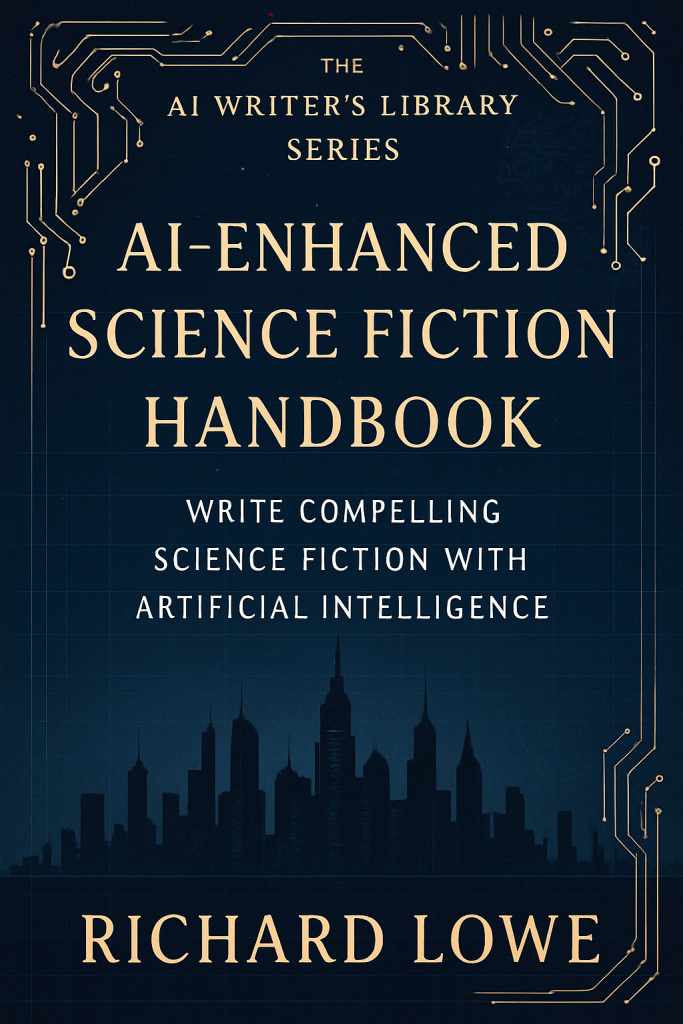
Science Fiction Writer’s Handbook
Psychology-first science fiction guide with 35 prompt chapters. Alien invasions to virtual worlds. Star Trek and Expanse case studies. AI integration. 362 pages. -
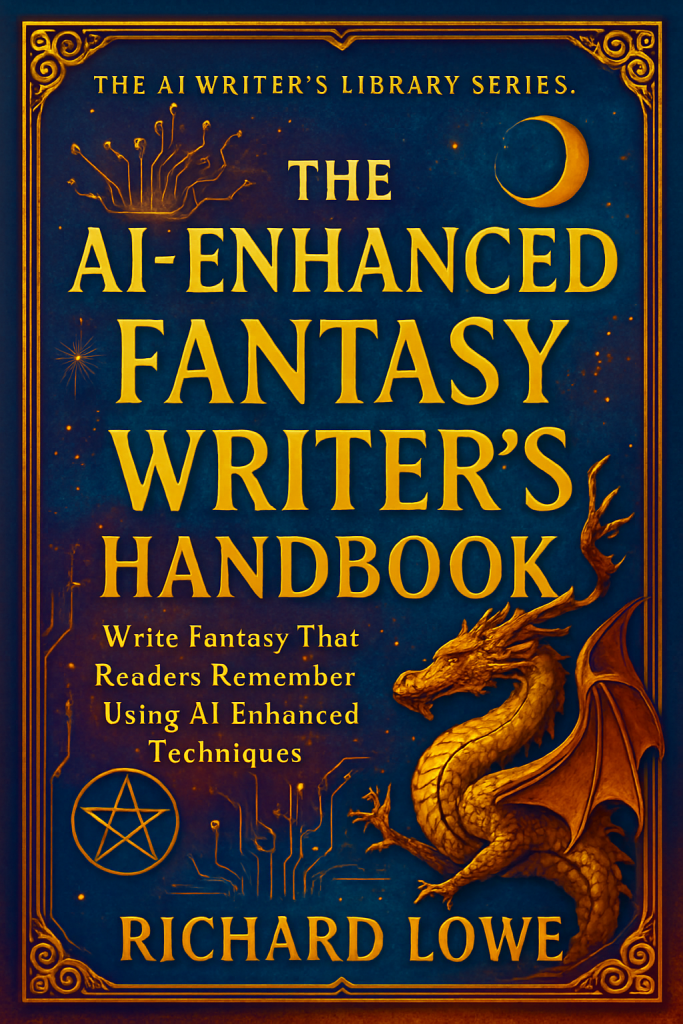
Fantasy Writer’s Handbook
Psychology-first fantasy writing guide with 33 prompt sets for dragons, vampires, werewolves, magic schools & more. AI collaboration techniques. 284 pages. -
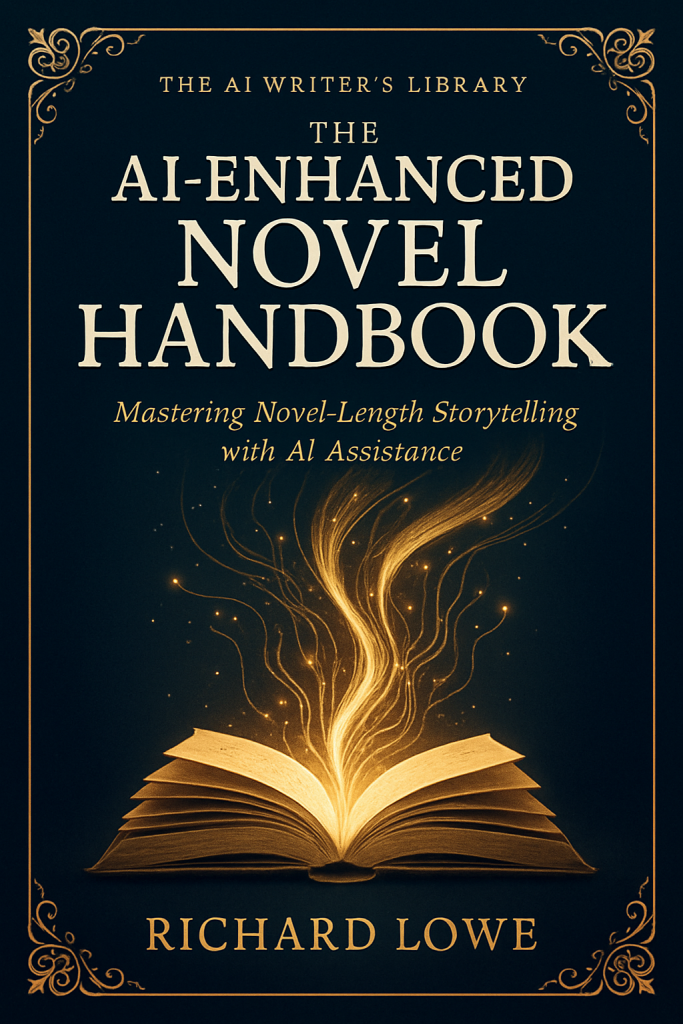
Novel Handbook
Novel-length fiction guide covering architecture, saggy middles, character drift, and series planning. 4 case studies. AI collaboration for 80,000+ words. 247 pages. -
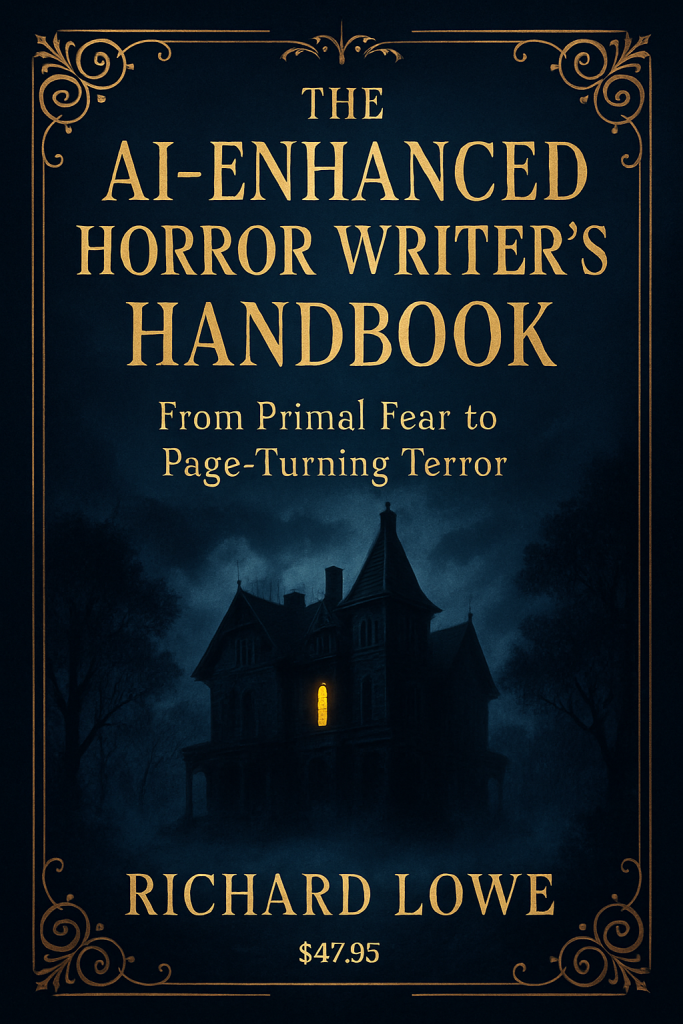
Horror Writer’s Handbook
Horror writing guide for fiction writers. Fear psychology, 7 subgenres, 7 creature types, 180+ AI prompts. 282 pages from 113-book author.