My first serious fantasy story was two wizards fighting in an arena.
I was proud of it. The magic was inventive, the battle was kinetic, the spells had internal logic and escalating stakes. I submitted it to The Space Gamer, which was the right market for exactly that kind of story. They rejected it — but the editor marked it up, which is the kind of rejection that’s actually worth more than an acceptance. He took the time to show me why it didn’t work.
The magic was spectacle. Nothing underneath it. Two characters throwing elaborate spells at each other with nothing psychological at stake. The arena battle was exciting in the way a fireworks show is exciting — visually compelling, emotionally empty, forgotten the moment it ends. The editor didn’t say it that directly. But that’s what the markup showed me when I read it honestly.
I spent years after that understanding the difference between magic as spectacle and magic as psychological pressure. Tolkien’s ring doesn’t solve problems. It creates them — externalizing the corrupting nature of power in a way that makes the story about something that matters to every reader who has ever wanted something they shouldn’t have. Le Guin’s magic in Earthsea has costs that force characters to confront consequences. Pratchett uses absurdity to reveal truths about the world we actually live in. None of them built magic systems first and added characters later. They built characters with psychological wounds and then designed magical circumstances to make those wounds impossible to avoid.
That rejected wizard story taught me the whole thing. Magic that doesn’t complicate psychology is just fireworks. Impressive while it’s happening, gone the moment it stops.
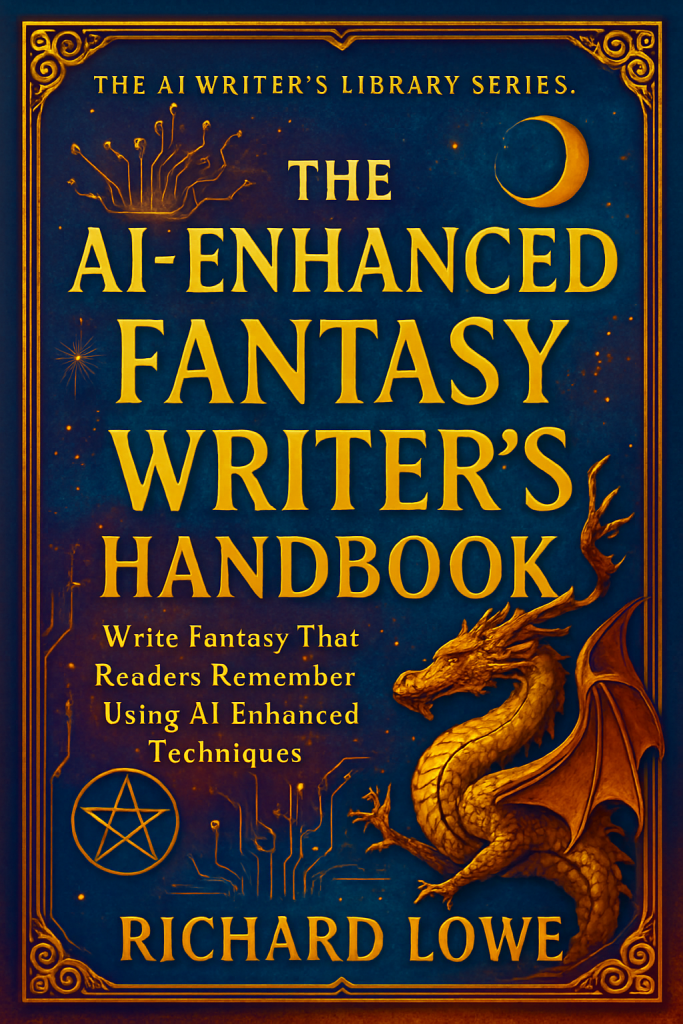
I’m Richard Lowe. 113 published books, ghostwriting clients who’ve secured over $30 million in venture capital, and one formative rejection from a role-playing magazine that turned out to be the most useful feedback I ever received. This handbook is built on what that markup taught me — and on everything I’ve learned since about using magical circumstances to illuminate human psychology instead of replace it.
$29.95
One-time investment • Lifetime access • Instant download
Get The Handbook →
14-Day Money-Back Guarantee
If this handbook doesn’t change how you approach fantasy writing, request a full refund. No questions.
World-Building First vs. Psychology First
Two approaches. Completely different results.
World-Building First
Psychology First
Magic system created, then characters added to use it
Character psychology established, then magic designed to complicate it
Dragon provides transportation or firepower
Dragon bond forces character to confront fear of intimacy or loss
Magic school teaches cool spells
Magic school intensifies adolescent identity struggles
Prophecy drives plot forward
Prophecy creates psychological prison character must escape or accept
Readers skim to get back to character drama
Magic and character drama are inseparable
Questions
What’s wrong with building the magic system first?
Nothing is wrong with it as a starting point — the problem is when it stays the organizing principle. Magic built independently of character psychology tends to become spectacle: inventive, visually compelling, emotionally empty. Readers engage with it the way they engage with a fireworks show. Impressive while it’s happening, gone the moment it stops. When you build character psychology first — the specific wounds, fears, and behavioral patterns that define who your character is — then design magical circumstances to make those patterns impossible to avoid, the magic and the character drama become inseparable. Readers can’t skim the magic to get back to the story because the magic is the story.
How do I make magic complicate psychology instead of solve problems?
Ask what your character most wants to avoid confronting — then design magic that makes avoidance impossible. A character who avoids intimacy because of abandonment trauma doesn’t need a magic system that lets them fight from a distance. They need a dragon bond that requires genuine emotional vulnerability to function. A character who avoids accountability doesn’t need time travel that fixes mistakes. They need time travel that forces them to watch consequences play out in full. The magic should target the wound specifically and deny the character their usual escape routes. That’s when magical circumstances start illuminating psychology instead of replacing it.
What do the 33 prompt sets actually include?
Each set is a full development framework, not a one-line starter. You get multiple story starters with character psychology already embedded, frameworks for how that specific magical element — dragons, vampires, magic schools, portals, shapeshifting, and so on — tends to map to particular psychological wounds and conflicts, AI prompts for developing the premise into a complete narrative, and guidance on the common pitfalls for that element. The dragon prompts address the specific psychology of bonding and loss. The magic school prompts address identity formation under pressure. The vampire prompts address predation, consent, and the psychology of immortality. Each set is built around what that element does psychologically, not just what it does narratively.
I write epic fantasy with extensive world-building. Does this still apply?
Yes — and your world-building becomes more valuable, not less. The goal isn’t to abandon the elaborateness. It’s to make the elaborateness serve character psychology instead of existing alongside it. Your detailed magic system becomes more interesting when every rule has psychological implications for specific characters. Your world map becomes more meaningful when geography creates pressure rather than just providing backdrop. Writers who’ve done extensive world-building often find the psychology-first reframe deepens their existing work rather than replacing it.
How does AI fit into psychology-first fantasy writing?
“Write me a fantasy story about dragons” produces generic fantasy. AI needs psychological frameworks to generate anything worth editing. When you prompt with specific character wounds, specific magical constraints designed to target those wounds, and specific instructions about how the magic should complicate rather than solve, you get drafts that are actually useful starting points. The handbook includes a complete prompt library built around psychological specificity — not just “here’s a dragon story” but “here’s how this specific character’s specific psychology interacts with this specific magical element in ways that illuminate this specific human truth.” AI is a drafting accelerator. The psychology-first framework is what makes the output worth accelerating.
My readers want exciting magic, not psychology lessons.
Your readers want to feel something. Tolkien wasn’t boring. Le Guin wasn’t boring. Pratchett wasn’t boring. They were unforgettable because the magic mattered psychologically — the excitement and the emotional stakes were the same thing, not separate elements in tension. Psychology-first doesn’t mean slow or internal or literary in the pejorative sense. It means the exciting magic creates emotional pressure that makes readers desperate to keep reading instead of reading to find out what spell gets cast next. The wizard arena battle is exciting. The wizard arena battle where the outcome determines whether the character finally confronts what they’ve been running from their entire life is unforgettable.
Refund policy?
14 days. If it doesn’t change how you approach fantasy writing, full refund. No questions.
That Space Gamer rejection is still the most useful feedback I ever got. Not because it told me I was wrong — because it showed me specifically how. Two wizards throwing spells with nothing psychological at stake. Fireworks. The markup made visible what I couldn’t see on my own.
Everything in this handbook comes from understanding what was missing in that arena. Magic without psychology is spectacle. Magic that targets psychology is story. The difference is learnable.
$29.95
One-time investment • Lifetime access • Instant download
Get The Handbook →
14-Day Money-Back Guarantee
If it doesn’t change how you approach fantasy writing, request a full refund. No questions.
Part of the AI Writer’s Library Series. See also: World Builder’s Handbook | Character Handbook