

The Lie About Consistency
Every productivity guru sells the same advice: write every day, hit your word count, build the habit.
Meanwhile, you’re staring at a blinking cursor wondering why 500 words feels like pulling teeth when yesterday you knocked out 2,000 without breaking a sweat.
Here’s what nobody tells you: consistency isn’t about willpower. It’s about knowing how your brain actually works and setting up conditions that let it do what it already wants to do.
My best sessions produce 1,500 to 5,000 words. Not by grinding through resistance. By triggering the state where words flow faster than I can second-guess them.
That’s not discipline. That’s hyperfocus. And you can learn to trigger it on purpose.
Scattered Mode Versus Locked-In Mode
Your brain has two settings. Scattered mode is checking email, scrolling social media, rereading the same paragraph six times, getting up for snacks. You know this mode. You live in it.
Locked-in mode is when hours vanish. When you look up and realize you’ve written an entire chapter. When your coffee goes cold because you forgot it existed.
Most writing advice assumes you can willpower your way from scattered to locked-in. You can’t. Willpower is a finite resource, and you’re burning it on the wrong problem. Trying harder to focus is like trying harder to fall asleep. The effort itself is the obstacle.
Hyperfocus isn’t about trying harder. It’s about removing friction so your brain engages on its own.
Kill the Decisions Before You Sit Down
Every decision you make before writing drains the tank you need for writing. What should I work on? Where’s that research file? What happens next in this scene? Should I outline first?
By the time you’ve answered all of that, you’ve burned through the cognitive resources that would have powered your session. You sit down already exhausted, and you haven’t typed a word.
The fix: make every decision the night before. Know exactly what you’re writing. Not “my novel.” The specific scene. Have your document open. Have your notes visible. Have your research pulled up. When you sit down, the only remaining action is typing.
Prep your sessions like a surgeon preps an operating room. Everything you need within reach. Everything you don’t need gone. No decisions left. Only execution. The difference between a session that produces 200 frustrated words and one that produces 2,000 flowing ones is almost always what happened in the ten minutes before you started.
Make Writing the Path of Least Resistance
Your brain is wired to conserve energy. Given a choice between hard creative work and easy distraction, it picks distraction every time. This isn’t weakness. It’s biology. Every brain does this. Yours isn’t broken for doing it too.
You need a forcing function: something that makes writing easier than not writing.
Phone in another room. Internet blocker engaged. Nothing on the desk except the project. When the effort required to distract yourself exceeds the effort required to keep writing, your brain does the math and chooses writing. Not because you’re disciplined. Because you rigged the equation.
Other forcing functions that work: an accountability partner expecting pages by a specific time, a physical location where you only write and do nothing else, timed sprints where the clock creates urgency. The specific function matters less than having one. Your brain needs to understand that right now, in this moment, writing is the easiest available option.
The Warmup Nobody Warns You About
Hyperfocus has a warmup period. The first ten to fifteen minutes almost always feel like garbage. Your brain is still context-switching from whatever you were doing before. It’s still looking for escape routes. The words come slow. They feel wrong. Everything you type sounds stupid.
Most writers quit during warmup. They interpret the friction as evidence that today isn’t a writing day. They close the laptop and try again tomorrow, where the same warmup friction will send them running again.
Push through the first fifteen minutes without judging a single word you produce. Write garbage if you have to. The goal isn’t quality. It’s reaching the momentum window where hyperfocus locks in and the words start coming faster than you can question them.
Once you’re there, protect it like it’s the most valuable thing you own, because it is. No bathroom breaks for “just a second.” No quick email checks. No answering texts. Every interruption resets the warmup clock and forces you to fight through those fifteen minutes again. Sometimes the second warmup doesn’t catch. The session is dead. One text message killed an hour of production. The Writer’s Block Handbook covers techniques for pushing through resistance when your brain wants to bail.
Find Your Window and Defend It
Here’s what took me years to figure out: hyperfocus isn’t available on demand. It’s available when your brain has the resources for it.
Writing at 6 AM works for some people because their cognitive tank is full. Writing at 6 AM destroys other people because they’re not actually awake yet and they’re forcing a warmup on a brain that hasn’t booted up. Neither person is wrong. They just have different windows.
Track your actual output for two weeks. Note when you write, how much you produce, and how hard it felt. Don’t track when you think you should be productive. Track when you actually are. Patterns will emerge. Maybe you have one big window in the morning. Maybe you have two smaller ones, mid-morning and late evening. Maybe your best work happens at 11 PM and everything you’ve been told about morning routines is irrelevant to your brain.
Once you find the window, defend it. Stop scheduling calls during your best creative hours. Stop letting admin work bleed into production time. Stop treating your writing window as the thing that flexes when everything else needs space. Your window is when the real work happens. Everything else fits around it.
The Neurodivergent Edge
I have AuDHD. For decades, I thought my brain was broken because I couldn’t write consistently the way productivity books described. Turns out my brain wasn’t broken. It was different. And different can be an advantage once you stop fighting it.
Neurodivergent brains often have deeper hyperfocus capacity than neurotypical ones. The same attention regulation differences that make scattered mode so scattered also make locked-in mode so locked-in. When hyperfocus engages, it engages hard. Sessions that run four, six, twelve hours. Entire chapters emerging in single sittings. Production that looks impossible from the outside because neurotypical brains don’t have access to the same depth of lock-in.
The catch: you can’t force it through willpower. You have to set conditions and let it happen. Everything above works because it stops fighting neurodivergent attention patterns and starts working with them.
If traditional productivity advice has never worked for you, if “write every day” feels like a punishment and “just sit down and do it” produces nothing but frustration, your brain might not be the problem. The advice might be designed for a brain you don’t have. The ADHD and Neurodiverse Writer’s Handbook covers specific strategies for writers whose brains don’t follow the standard productivity playbook.
Free Stories, Straight to Your Inbox
Start with Nine Doors, nine short stories across nine genres, yours free the moment you sign up. After that, the occasional new collection and a note when there's a new book worth your time. No spam, no daily clutter. Just good stories.
We use MailerLite to manage our list and send these emails. Your address is used only to send you what you signed up for. We will not sell it, share it, or use it for anything else, and you can unsubscribe anytime.
FAQ
Why can’t I write consistently even when I want to?
Because wanting isn’t enough. Your brain needs conditions, not willpower. Eliminate decisions before you sit down so you’re not burning cognitive resources before you type a word. Create a forcing function that makes writing easier than distraction. Find your energy window when your brain actually has resources for deep work. Consistency comes from setup, not from trying harder.
How long does the warmup take before hyperfocus kicks in?
Ten to fifteen minutes of friction is normal. Your brain is still switching contexts, still hunting for escape routes. The words will feel wrong. Everything you type will sound bad. Push through without judging. Most writers quit during warmup and never reach the locked-in state that was waiting on the other side. Once it kicks in, guard it. One interruption can reset the entire clock.
What if my schedule is too chaotic for a consistent writing window?
Track what actually happens for two weeks instead of what you think should happen. Note when you write, how much you produce, and how hard it felt. Patterns show up even in chaos. Maybe you have two thirty-minute windows instead of one big one. Maybe your best window is one you’ve been giving away to email. Once you see the pattern, protect it.
Does this approach work differently for neurodivergent writers?
It works better for many neurodivergent writers because it’s built around how attention regulation actually functions instead of assuming neurotypical patterns. ADHD and autistic brains often have deeper hyperfocus capacity, but they can’t access it through willpower. These triggers remove the friction that blocks engagement, which is exactly what neurodivergent brains need. If “just write every day” has never worked for you, the problem probably isn’t motivation. It’s method.
The AI-Enhanced Writer’s Library
The AI-Enhanced Writer’s Library breaks down character, dialogue, pacing, and two dozen other craft elements the same way. Why things work, not just that they work. Psychology-based instruction with AI prompts built in. 35+ guides and counting.
-
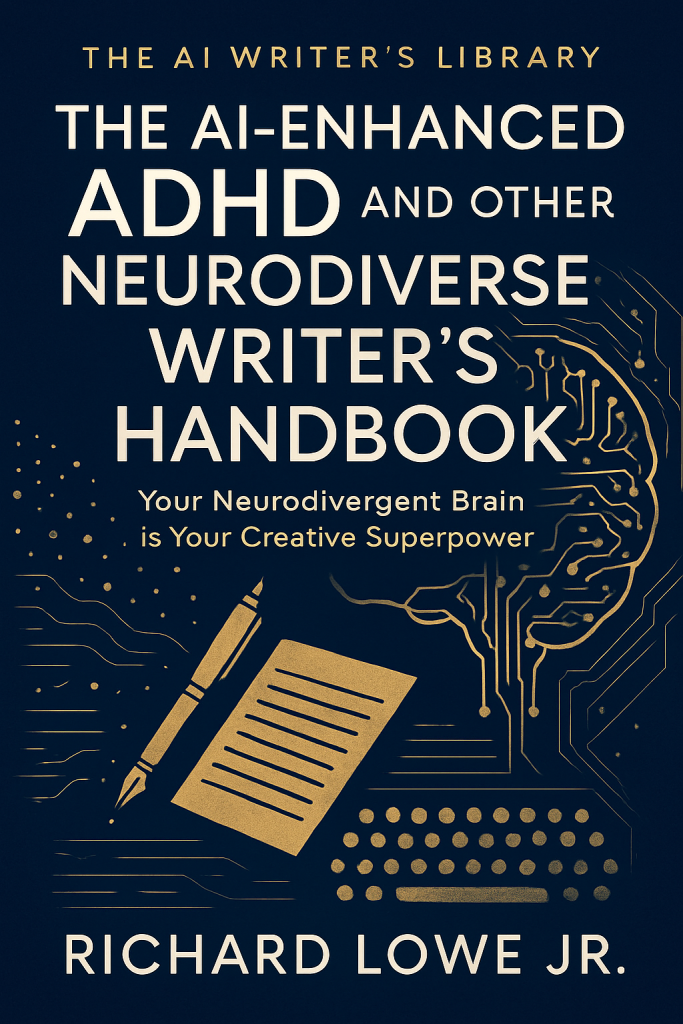
ADHD Writing Handbook: Systems That Work With Your Brain
ADHD writing advice fails because it's neurotypical advice with disability branding. 200+ page handbook with 100+ AI prompts from an AuDHD author with 113+ books. Instant download.