
The Rule That’s Making Your Book Longer and Worse
“Show don’t tell.” You’ve heard it a thousand times. So you tried to show everything.
Every emotion became a physical sensation. Every piece of information became a dramatized scene. Your character can’t just be nervous. No, his heart races, his palms sweat, his mouth goes dry, his stomach churns.
Your manuscript is now 40% longer and somehow less engaging. Readers skim. The pacing drags. Something is wrong but you can’t name it.
Here’s what’s wrong: “show don’t tell” is half a rule. The other half, the part nobody finishes, is what separates bloated manuscripts from clean ones.
The Complete Rule
Show what you want readers to FEEL. Tell what you need them to KNOW.
That’s the whole thing. Two sentences that would’ve saved you a year of revision.
“He was furious” is weak. The reader doesn’t feel his anger. Show it. Let him throw the phone against the wall. Let him say something he can’t take back. Let the fury land in the reader’s body.
“He drove to Chicago” is fine. The reader doesn’t need to experience the highway. Tell it. Move on.
“Three weeks passed.” Tell. Nobody needs twenty-one sunrises.
“She spent the week avoiding him.” Tell. Seven scenes of avoidance will put your reader in a coma.
“She picked up the letter, and her hands wouldn’t stop shaking long enough to unfold it.” Show. That moment matters. The reader needs to be inside it.
The rule was never “show everything.” It was “show what matters.” Nobody bothered to finish the sentence.
Triage: The Skill Nobody Teaches
Every scene in your manuscript contains moments that matter and moments that just move things forward. Your job is sorting them.
Emotional peaks get the full treatment. The argument. The kiss. The betrayal. The revelation. The moment your character’s world shifts. These are the scenes readers remember. These get shown in full, dramatized, experienced in real time.
Everything between those peaks gets told. The drive to the meeting. The week of unanswered calls. The afternoon spent packing boxes. The transition from Tuesday to Friday. This is connective tissue. It needs to exist. It doesn’t need to be experienced.
Professional novelists make this decision hundreds of times per manuscript and readers never notice because the pacing feels right. The emotional peaks land hard because they aren’t competing with dramatized logistics for the reader’s attention. The Pacing Handbook covers how showing and telling decisions directly shape your story’s momentum.
Over-Showing Is Just as Amateur as Over-Telling
Nobody warns you about this part.
Manuscripts drowning in clenched jaws and quickened pulses. Every glance loaded with meaning. Every pause pregnant with tension. Every room described down to the crown molding.
When you dramatize everything with equal intensity, nothing stands out. The betrayal scene hits with the same force as the scene where your character orders coffee, because both got the full showing treatment. The reader’s brain can’t distinguish between “this matters” and “the writer just shows everything” so it starts treating everything as background noise.
That’s how important moments get buried. Not because they’re badly written. Because they’re surrounded by equally dramatized moments that didn’t deserve the effort.
Telling isn’t lazy. Telling is what makes showing powerful. A page of efficient summary followed by a fully dramatized scene tells the reader “pay attention now.” Five consecutive pages of dramatized everything tells the reader nothing because the signal never changes.
Your “Showing” Is Probably Telling in Disguise
Most attempts at showing just add words without adding experience.
“His heart raced and his palms sweated.” That’s not showing. It’s a cliché wearing a costume. You’ve added words but the reader still doesn’t feel anything specific. Any character in any book could have racing hearts and sweaty palms. It’s generic. It means nothing.
“She felt a knot in her stomach.” Generic.
“His blood ran cold.” Generic.
“Her breath caught in her throat.” Generic.
These are physical symptoms listed on a chart, not moments lived inside a character. They tell the reader “this person is having an emotion” without proving which emotion or making the reader feel it.
Real showing is behavior specific to this character in this moment. What does this person do when nervous? A former military officer straightens objects on the desk until they’re perfectly aligned, then adjusts them again. A teenager rehearses what he’s going to say under his breath, hears how stupid it sounds, and almost walks away. A surgeon keeps reaching for instruments that aren’t there.
If you could swap any other character into the moment and the behavior wouldn’t change, you’re not showing. You’re listing symptoms. The Character Writer’s Handbook covers how to build characters whose behavior is specific enough that showing actually reveals who they are.
The Practical Test
Open your current project. Find a scene where the prose is thick. Physical sensations everywhere. Meaningful glances. Detailed descriptions of rooms and weather and body language.
Ask one question: what does the reader need to FEEL in this scene? Not know. Feel.
Keep the showing for that one thing. Everything else, summarize it, tell it, compress it into a sentence or cut it entirely.
Watch the scene get faster. Watch the emotional peak rise because it’s no longer competing with the wallpaper for attention. Watch the reader’s experience sharpen because you’ve told them where to look by choosing what to dramatize and what to skip.
That’s the skill. Not showing. Not telling. Choosing.
After 113+ books, I can tell you that the writers who struggle with “show don’t tell” aren’t struggling with technique. They’re struggling with triage. They treat every moment as equally important, so nothing feels important. The moment you start choosing, your manuscripts change. The showing gets more powerful because there’s less of it. The telling gets invisible because it’s doing its job quietly between the moments that matter.
Free Stories, Straight to Your Inbox
Start with Nine Doors, nine short stories across nine genres, yours free the moment you sign up. After that, the occasional new collection and a note when there's a new book worth your time. No spam, no daily clutter. Just good stories.
We use MailerLite to manage our list and send these emails. Your address is used only to send you what you signed up for. We will not sell it, share it, or use it for anything else, and you can unsubscribe anytime.
FAQ
If showing is so important, why would I ever tell?
Because showing everything buries the moments that matter. Telling handles transitions, logistics, and minor beats efficiently so your reader’s attention is available when you need it. A page of clean summary followed by a fully dramatized scene tells the reader “this is important.” Five pages of equally dramatized everything tells them nothing.
How do I decide what deserves showing versus telling?
Ask what the reader needs to FEEL versus what they need to KNOW. Emotional peaks get shown: arguments, revelations, betrayals, the moments that change your character. Everything between those peaks gets told: the drive there, the week that passed, the afternoon of packing. Your job is triage, and the sorting is what separates professional pacing from amateur bloat.
Why does my showing still feel flat?
Probably because it’s generic. Racing hearts and sweaty palms could belong to any character in any scene. Real showing is behavior specific to one person in one moment. What does this character, with their specific history and habits, do under this specific pressure? If any character could do it, it’s a symptom list, not showing.
Is “show don’t tell” bad advice?
It’s incomplete advice. “Show what you want readers to feel, tell what you need them to know” is the complete version. The half-rule produces bloated manuscripts because writers dramatize everything equally. The full rule produces clean, paced fiction because writers choose what deserves the spotlight.
The AI-Enhanced Writer’s Library
The AI-Enhanced Writer’s Library breaks down character, dialogue, pacing, and two dozen other craft elements the same way. Why things work, not just that they work. Psychology-based instruction with AI prompts built in. 35+ guides and counting.
-
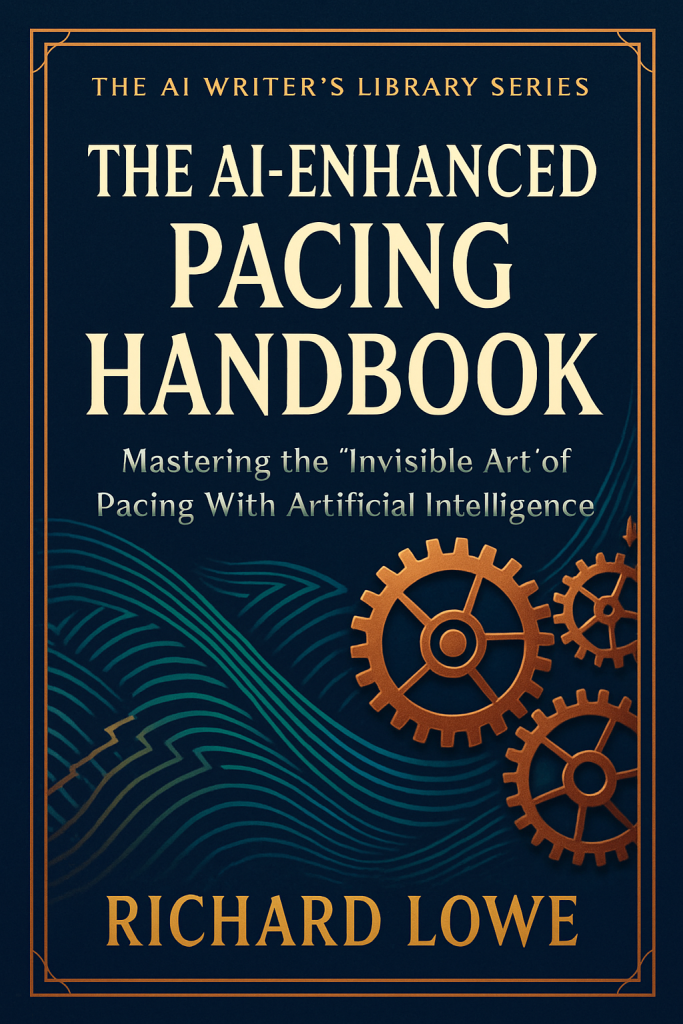
Pacing Handbook
Psychology-first pacing guide covering reader attention, scene mechanics, chapter architecture, and genre patterns. Case studies included. AI prompts. 127 pages. -
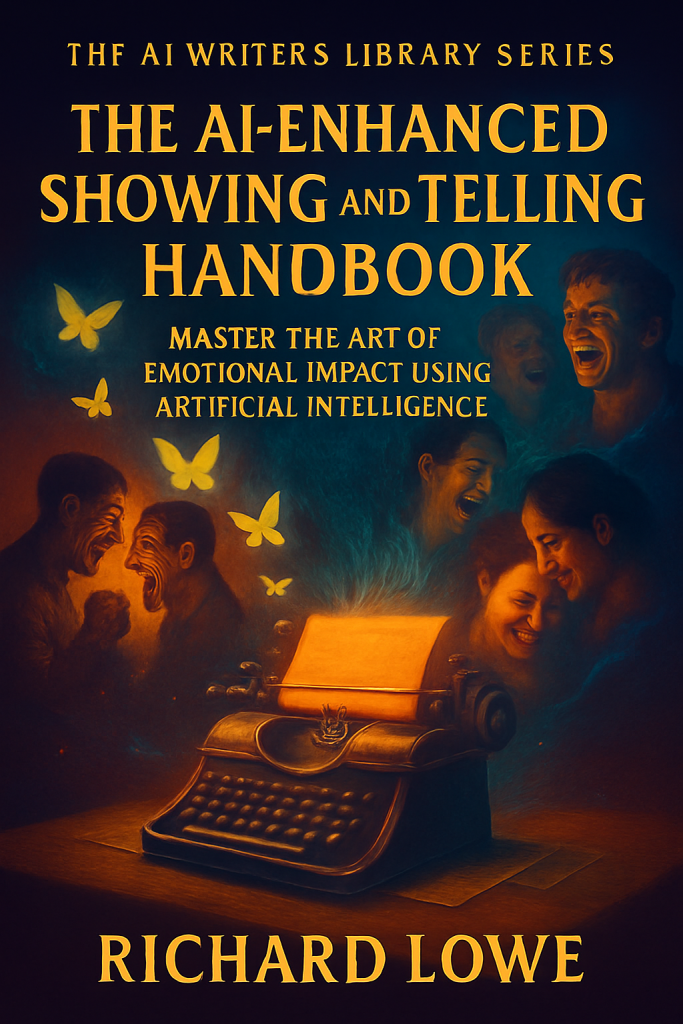
Showing and Telling Handbook
Neuroscience-based showing guide covering embodied simulation, mirror neurons, and sensory gateway technique. AI prompts for testing immersion. 281 pages + 2 bonuses.