

35 Alternate History and Parallel Universe Writing Exercises That Actually Teach
Beyond “What If”
“What if the South won the Civil War?” Interesting hook. But a changed timeline isn’t a story. You still need characters who want things, conflicts that cost something, and narrative momentum that keeps pages turning. The premise is your setting. The craft is everything else.
Each exercise below includes three things: the premise, the genre approach, and the craft guidance explaining where the real story lives inside that change. For alternate history, the key is identifying the divergence point and tracing its consequences through character experience. Your protagonist shouldn’t lecture readers about how history changed. They should live in a world where that change is normal, revealing differences through daily life.
For parallel universes, the key is using multiple realities to explore identity, choice, and consequence. What does it mean to meet yourself? To see the life you could have lived? To discover your choices matter less than you thought, or more?
Free Stories, Straight to Your Inbox
Start with Nine Doors, nine short stories across nine genres, yours free the moment you sign up. After that, the occasional new collection and a note when there's a new book worth your time. No spam, no daily clutter. Just good stories.
We use MailerLite to manage our list and send these emails. Your address is used only to send you what you signed up for. We will not sell it, share it, or use it for anything else, and you can unsubscribe anytime.
For both: ground impossible premises in authentic human psychology. The World Builder’s Handbook covers how to make speculative settings feel lived-in rather than explained.
PART ONE: ALTERNATE HISTORY
1. Germany Won WWII and a US Spy Must Sabotage Their Nuke Project
Espionage Under Authoritarian Rule
Commander Sofia Restrepo surfaces her submarine off occupied Britain, knowing this is likely one-way. Nazi Germany has consolidated Europe and is nearing completion of atomic weapons that would make their empire permanent. Restrepo must infiltrate the Kaiser Wilhelm Institute while maintaining her cover as a Swedish physicist, navigating a world where resistance networks are crushed and collaboration is the price of breathing.
The craft underneath: Espionage requires becoming someone else so convincingly you risk losing yourself. Restrepo adopts the mannerisms and beliefs of her cover identity while the real her erodes underneath. Her supposed colleague Dr. Henrik Larsson has loyalties that stay unclear until the worst possible moment. Oberführer Klaus Weber’s dedication to his research creates vulnerabilities a pure ideologue wouldn’t have. The tension isn’t just getting caught. It’s disappearing into the role.
2. A Soldier’s Story as He Is Evacuated from the Failed Omaha Beach Invasion
Defeat and Trauma Processing
Private First Class Joaquín Morales clings to debris in blood-red surf as the greatest military operation in history collapses around him. The Atlantic Wall held. German reinforcements arrived faster than expected. Allied forces face evacuation under devastating fire. Morales must shepherd wounded comrades to rescue boats while processing that his friends died for nothing.
The craft underneath: Heroism within defeat. Small acts of courage when grand strategies fail. Morales applies combat medicine and small-unit tactics to save individual lives when the larger mission is gone. He takes charge of scattered survivors without formal authority because somebody has to. The story finds meaning not in the operation but in the people trying to get each other home alive. Military dialogue under stress should sound functional and clipped, with personality leaking through the cracks. The Conflict and Tension Handbook covers maintaining stakes when the outcome is already determined.
3. Julius Caesar Was Not Murdered and Became Emperor
Power Consolidation and Political Evolution
Emperor Gaius Julius Caesar faces the challenge of turning a republic into a sustainable empire without triggering civil war. The conspiracy’s failure proved that opposition must be managed, not eliminated. Caesar must balance traditional Roman values with imperial necessity while building institutions that outlast his personal rule.
The craft underneath: The transition from revolutionary to institution-builder. Conquest requires one skill set. Governance requires a completely different one. Marcus Brutus’s loyalty creates different political dynamics when it isn’t pushed to assassination. Cleopatra’s alliance takes new forms when Caesar lives to implement long-term plans. The drama lives in competing visions of governance where personal relationships shape policy and ancient politics become accessible through human motivations that haven’t changed in two thousand years.
4. Napoleon Didn’t Lose When He Attacked Russia
Strategic Success and Unintended Consequences
Napoleon watches Moscow burn as Tsar Alexander signs surrender terms. Conquest of Russia proved easier than governing it. With continental Europe united under French rule, Napoleon faces administrative challenges that make military campaigns look simple. Managing diverse populations, competing languages, and regional traditions requires skills the battlefield never taught him.
The craft underneath: Success demanding evolution. Conqueror becoming administrator. Napoleon learning to delegate authority while his instincts scream to control everything personally. Subordinates who excelled at war struggling with governance because destroying things and building things require opposite temperaments. Marshal Davout adapting military efficiency to civilian administration. Princess Bagration representing Russian nobility navigating occupation. The tension comes from bureaucratic decisions carrying life-and-death weight through human consequences.
5. Washington Became a King Instead of a President
Character vs. Historical Momentum
King George Washington faces opposition from former allies who supported independence, not monarchy. Accepting a crown alters American development fundamentally, creating aristocratic structures that contradict revolutionary ideals. Washington must justify his choice while managing the practical problem of establishing royal authority in a nation founded on rejecting kings.
The craft underneath: Power changing people regardless of intentions. Washington adapting his personal style to royal requirements while former equals become subjects who remember being equals. Thomas Jefferson leading republican opposition from Virginia. Martha Washington adapting to queenly duties while trying to keep her husband’s moral compass pointed where it used to point. Familiar American values made foreign through institutional changes. The question driving everything: does the person make the office, or does the office make the person?
6. Abraham Lincoln Was Not Assassinated
Reconstruction and Long-term Consequences
Lincoln survives Booth’s attack and faces reuniting a nation where half the population views him as a tyrant. Reconstruction under his direct supervision takes different forms. His political skills get applied to peace rather than war. He must balance punishment of Confederate leaders with reconciliation of ordinary Southerners while radical Republicans demand harsher measures than he’s willing to deliver.
The craft underneath: Peacetime leadership requiring different skills than wartime crisis management. Building consensus in peace is harder than wartime unity against a common enemy. Lincoln applying empathy and strategic thinking to healing rather than fighting. Frederick Douglass pushing for racial equality faster than politics allows. Robert E. Lee representing Southern attempts at honorable surrender. Legislative battles and social change made as dramatic as military campaigns through their impact on communities trying to rebuild from ash.
7. Apollo 13 Never Returned to Earth
Heroic Failure and Technological Limits
NASA Flight Director Esperanza Restrepo watches as Apollo 13’s damaged life support fails faster than ground solutions can be implemented. Commander Lovell’s final transmission confirms what the mathematics already showed: they won’t make it home. Restrepo must manage the aftermath of America’s first space program fatalities while preserving public support for continued exploration despite the human cost.
The craft underneath: Professional competence meeting its limits. Restrepo exhausting every possible solution while maintaining leadership during institutional crisis. The story isn’t about the failure. It’s about what people do when expertise isn’t enough. Marilyn Lovell dealing with widowhood in public view. Wernher von Braun redesigning systems to prevent future failures while carrying guilt for the ones that already happened. How societies process the cost of progress, and whether they keep going.
8. Instead of Abandoning the Moon, the US Built a Lunar Colony
Long-term Vision and Frontier Life
Commander Yuki Tanaka oversees Armstrong Base as it transitions from research outpost to permanent settlement. Maintaining lunar presence beyond Apollo creates different technological paths. Tanaka must manage personnel who signed up for adventure but face the reality of living in artificial environments indefinitely, dealing with births, deaths, and relationship conflicts where evacuation is impossible.
The craft underneath: Building society rather than completing missions. Frontier isolation and resource constraints balanced against scientific optimism. A community growing from dozens to hundreds of residents with all the friction that implies. Dr. Priya Singh developing closed-loop life support. Jake Morrison adapting Earth construction techniques to lunar conditions. Space settlement that feels both romantic and gritty through the practical reality of building civilization somewhere that wants to kill you. The Science Fiction Writer’s Handbook covers grounding speculative technology in authentic human experience.
9. Russia Beat the US to the Moon
National Pride and Technological Competition
Cosmonaut Colonel Aleksei Volkov plants the Soviet flag on the lunar surface while NASA administrators watch their program become second place. The successful Soviet mission alters global perception of technological superiority, forcing American space policy to find new objectives while managing national humiliation.
The craft underneath: Institutional response to unexpected defeat. Volkov representing national achievement while maintaining personal humility in a system that theoretically doesn’t recognize individual accomplishment. NASA Director Thomas Paine restructuring American goals after losing the primary race. Chief Designer Korolev managing success while navigating political pressures that don’t care about engineering. Technological achievements becoming political symbols where engineering decisions feel like geopolitical chess.
10. Genghis Khan Conquered Europe
Cultural Collision and Adaptation Under Conquest
Brother Thomas of Canterbury watches Mongol horsemen ride through the gates of Paris as the last Crusader army dissolves. Genghis Khan’s European campaign succeeds, bringing steppe culture into direct conflict with feudalism and Christianity. Thomas must adapt Benedictine monastery practices to Mongol religious tolerance while preserving Christian scholarship under pagan rule.
The craft underneath: Survival under foreign conquest. Medieval European society encountering nomadic organization that views written law and permanent settlements with suspicion. Thomas navigating Mongol administrative systems. Boroldai, a Mongol administrator, adapting steppe governance to European agriculture. Lady Marguerite, French nobility, learning to function within Mongol hierarchy. Cultural contact changing both conqueror and conquered through the practical necessities of governing people who eat, pray, and think differently than you do. The Historical Writer’s Handbook covers research approaches for period-accurate fiction.
11. Columbus Was Defeated by the Native Americans
First Contact from Indigenous Perspective
War Chief Kanerahí leads the Taíno confederation’s response when strange boats arrive carrying pale men with metal weapons and unknown diseases. Quick thinking and tactical adaptation turn potential conquest into military defeat. Kanerahí must decide whether to eliminate all traces of European contact or learn from captured technology while preventing future invasions.
The craft underneath: Indigenous agency and strategic capability. Complex political and military decision-making through non-European frameworks. Tribal leadership through consensus and spiritual guidance. Kanerahí balancing warrior culture against shamanic advice while managing alliances between groups that don’t always agree. Anacaona, a cacique whose diplomatic skills prove crucial. Mairení, a young warrior who captures European weapons and figures out how to use them. Cultural misunderstanding and technological disparity where the people with the disadvantage are the ones thinking strategically.
12. The Aztecs Mount an Invasion of Spain
Reverse Colonization and Naval Innovation
Admiral Nezahualcóyotl commands the obsidian-hulled war fleet that emerges from Atlantic mists to assault Andalusia. Aztec technological development followed different paths after contact with captured Spanish shipbuilding techniques. The Great Speaker Moctezuma decided European diseases and metal weapons represent existential threats requiring preemptive response.
The craft underneath: Hybrid warfare doctrine combining Spanish tactical innovations with traditional Aztec combat adapted for European conditions. Nezahualcóyotl commanding warriors trained for mountain and jungle combat who must learn coastal siege operations. Priestess Itzpapalotl maintaining morale during overseas campaigns far from everything sacred. Captain Diego Velázquez, whose experience fighting Aztecs in Mexico, now defending his homeland against them. Military innovation and cultural adaptation where the premise sounds impossible until the tactical details make it plausible.
13. Britain Doesn’t Fight in WWI
Neutrality and Moral Isolation
Prime Minister Asquith maintains British neutrality when German armies march through Belgium, calculating that continental wars shouldn’t cost British lives. His decision preserves the Empire’s strength while France and Germany bleed each other across the Channel. Britain prospers from arms sales while watching civilization destroy itself from a safe distance.
The craft underneath: Competing definitions of national interest and moral responsibility. Parliamentary democracy handling crisis through debate instead of action. Churchill advocating intervention from the Admiralty. Shaw representing intellectual arguments for non-involvement. The tension lives in neutrality as moral action with consequences equal to engagement. Diplomatic decisions carrying as much weight as military ones through their long-term impact on a world order that Britain chose not to defend.
14. The Russians Won in Afghanistan Instead of Withdrawing
Successful Counter-insurgency and Imperial Consolidation
General Gromov commands Soviet forces that successfully pacify Afghan resistance through superior firepower and propaganda that splits tribal alliances. Successful completion provides the Red Army with proven counter-insurgency doctrine while demonstrating Soviet capability to Western observers, potentially extending the Cold War through renewed confidence.
The craft underneath: Victory requiring different leadership than defeat. Gromov adapting conventional training to guerrilla conditions while balancing political commissar oversight with tactical reality. Successful occupation creating administrative challenges that test officers trained for combat, not governance. Colonel Rajab Masoud, Afghan communist whose local knowledge proves crucial. Captain Viktor Suvorov, helicopter pilot whose mountain warfare innovation becomes doctrine. The human cost of successful imperialism, where military efficiency feels both impressive and morally claustrophobic.
15. The South Wins the American Civil War
Alternative Constitutional Development
President Jefferson Davis faces building a sustainable nation founded on states’ rights and agricultural economy while managing international pressure to modernize slavery for foreign investment. Confederate victory requires institutions that balance state autonomy with national defense while maintaining the economic system that justified secession.
The craft underneath: Contradictions between individual morality and systemic participation in oppression. Davis navigating between plantation aristocracy demanding preservation and European business interests requiring modified practices for trade. Alexander Stephens representing Georgia’s constitutional interpretation. Judah Benjamin managing foreign relations with powers that officially oppose slavery while wanting Confederate cotton. Constitutional questions made personally urgent through their impact on individual lives.
16. In the Civil War, the North Builds an Atomic Bomb
Technological Acceleration Under Warfare Pressure
Dr. Maria Vásquez oversees the Manhattan Laboratory in Philadelphia as Union scientists race to create decisive weapons before European intervention tips the balance. Wartime urgency and unlimited funding produce advances decades ahead of schedule. Vásquez must decide whether atomic weapons should be used against American cities populated by fellow citizens.
The craft underneath: Scientific achievement colliding with moral responsibility. Vásquez balancing curiosity against humanitarian horror while managing researchers whose enthusiasm for theoretical physics doesn’t extend to thinking about what happens when theory hits a city. General Grant providing strategic perspective on deployment. Confederate physicist Dr. Thompson, whose intelligence about Union research creates pressure for rapid completion. Nuclear physics made accessible through character expertise while the ethical implications keep the tension human-scaled even when the destruction isn’t.
17. Mammoths Never Go Extinct
Ecosystem Impact and Human-Animal Relationships
Dr. Aiyana Blackhorse studies mammoth migration across Siberian tundra, where herds of thousands still follow ancient routes. Human civilization developed differently with large herbivore populations maintaining grassland ecosystems, affecting agriculture, climate, and settlement patterns. Blackhorse advocates for preservation while managing conflicts with indigenous herders whose traditional lifestyle depends on sustainable hunting.
The craft underneath: Conservation as action. Blackhorse applying ecological science to practical problems of coexistence between species that have been living together for millennia. Ranger Nikolai Petrov, whose family has managed mammoth populations for generations. Climate scientist Dr. Keiko Nakamura studying how megafauna grazing affects carbon sequestration. Competing human needs versus environmental protection where the stakes feel urgent because the consequences are concrete and immediate, not abstract and distant.
18. Persia Conquered Greece and Alexander the Great Was Never Born
Alternative Cultural Development
Persian victory at Marathon and Salamis ends Greek independence, incorporating city-states into the Persian administrative system. Persian tolerance preserves some Greek culture, but philosophical schools develop within Persian intellectual frameworks, creating different approaches to logic, ethics, and natural philosophy.
The craft underneath: Cultural fusion creating new philosophical synthesis. Zoroaster of Athens adapting Platonic idealism to Persian dualistic theology. Satrap Artaxerxes balancing imperial policy with local traditions. Aspasia of Miletos running a salon where Persian-Greek intellectual exchange produces ideas neither culture would have reached alone. Ancient philosophy made accessible through personal relationships and political pressure, showing how ideas develop through cultural collision and institutional influence rather than individual genius operating in a vacuum.
PART TWO: PARALLEL UNIVERSES
19. The Military Finds a Portal to Alternate Universes
First Contact Protocols and Interdimensional Diplomacy
Colonel Sarah Blackwater leads the first recon team through the dimensional rift beneath Cheyenne Mountain, finding an Earth where the Cold War never ended and nuclear conflict devastated most major cities. Military protocols must adapt to situations involving alternate versions of real people and familiar institutions operating under completely different history.
The craft underneath: Military training providing frameworks for analyzing impossible situations while personal relationships get complicated across dimensions. First contact procedures take new meaning when you’re meeting alternate versions of people you know. Blackwater separating mission objectives from emotional reactions to familiar faces in unfamiliar uniforms. Physicist Dr. Rajesh Patel’s theories becoming practical applications. Major Diana Santos, an alternate-universe counterpart whose knowledge of parallel Earth proves crucial but whose existence raises questions nobody trained for. The Plot Handbook covers structuring discovery narratives that maintain momentum.
20. Explorers from an Alternate Universe Visit Earth
Perspective Shift and Cultural Exchange
Dr. Kenji Nakamura-7 leads the survey team from Universe-7, where technological development followed different paths and social organization evolved through cooperative frameworks. His mission to catalog alternate civilizations gets complicated when he discovers Earth-Prime’s history of warfare, environmental destruction, and inequality that seems incomprehensible from his perspective.
The craft underneath: An outsider’s genuine confusion at things we take for granted. Nakamura-7 applying anthropological research techniques to civilization that’s familiar yet alien. Sociologist Dr. Elena Vásquez-7 trying to interpret competitive social structures that don’t exist in her reality. Military liaison Captain Tanaka whose worldview challenges the visitors’ assumptions about human nature. Neither civilization should feel superior. Different development creating different but equally valid approaches, with the friction between them generating the story.
21. A Man Looks for Girlfriends in Alternate Universes, But It Goes Wrong
Personal Relationships and Ethical Consequences
Marcus Beaumont discovers his experimental device accesses universes where alternate versions of women he knows are single, interested, or different enough to seem like better romantic partners. His interdimensional dating strategy creates increasingly complex situations when the women discover his deception about where he came from and why he’s really there.
The craft underneath: Romantic comedy with teeth. Dating people who are genetically identical but culturally different from people you know, and learning that different life experiences make them fundamentally different people despite looking the same. Marcus discovering that technology doesn’t solve character problems. Sarah-4, a scientist whose expertise exceeds Marcus’s, figuring out what he’s doing before he figures out he’s been caught. The premise stays funny while the consequences stay real: consent matters across dimensional boundaries too.
22. Animals from an Alternate Universe Come Through a Portal
Ecosystem Disruption and Evolutionary Biology
Conservation biologist Dr. Amara Singh responds to reports of impossible animals in Yellowstone. The creatures resemble familiar species but demonstrate behaviors that don’t match terrestrial evolution. Singh must study them fast enough to prevent ecological disruption while physicists argue about how the portal opened and whether it can be closed.
The craft underneath: Scientific expertise meeting unprecedented phenomena. Biological knowledge providing frameworks for creatures that violate known physical laws. Park ranger Miguel Santos whose field experience proves more useful than anyone’s PhD. Physicist Dr. Rebecca Kim explaining dimensional mechanics but unable to predict biological consequences. Time pressure and competing priorities where environmental protection feels urgent through species interactions that are already happening while the scientists are still debating.
23. A Person Went Through a Portal and Must Find a Way Home
Survival and Adaptation in Alien Environment
Engineer Hassan Okafor gets trapped in a universe where Earth’s continents never separated, creating one massive supercontinent with different weather, geography, and political divisions. His technical knowledge helps navigate industrial technology that developed along parallel lines, but cultural differences make integration difficult while he searches for resources to rebuild the portal.
The craft underneath: Professional skills translating to unfamiliar situations while emotional resilience maintains hope during extended isolation. Engineering becoming survival skill as Okafor works with alternative technological standards. Professor Elena Vasquez, alternate-universe physicist whose research parallels his own world’s dimensional theory. Factory supervisor David Kimura providing employment and friendship. Technical problem-solving made dramatic through personal stakes and the growing possibility that home might be permanently unreachable despite theoretical solutions.
24. An Uninhabited City Appears in the Desert
Mystery and Archaeological Investigation
Archaeologist Dr. Esperanza Morales leads the first expedition into the city that materialized overnight in the Nevada desert. Architecture follows human proportions but uses materials and design unknown to Earth engineering. The city appears recently abandoned. Personal belongings everywhere. No signs of struggle. No signs of anyone.
The craft underneath: Detective work through archaeological methodology. Morales analyzing cultural artifacts suggesting parallel human development with different priorities and technology. Materials scientist Dr. Kofi Asante finding construction materials that shouldn’t exist. Military liaison Captain Hartwell adapting security protocols to a scientific site that violates physics. Gradual revelation and growing understanding where the mystery deepens with every room explored and every artifact cataloged.
25. A Car Mechanic Builds a Car That Can Go to Other Universes
Blue-Collar Innovation and Practical Problem-Solving
Jake Morrison, small-town mechanic, accidentally creates interdimensional travel while experimenting with alternative fuel systems in his garage. His practical approach leads to breakthroughs university researchers missed because they were too busy being theoretical about it. Morrison navigates interdimensional exploration using automotive repair skills and common sense.
The craft underneath: Working-class technical expertise as genuine intelligence. Mechanical knowledge becoming the foundation for complex physics through the same troubleshooting instinct that diagnoses a bad alternator. Morrison gaining confidence while learning to communicate with scientists who initially dismiss his work as impossible. Physicist Dr. Priya Singh whose theoretical knowledge combines with his hands-on expertise. Sheriff Diana Santos managing legal complications of interdimensional travel invented in a private garage. Formal education and shop experience complementing each other when neither alone would be enough.
26. Undersea Explorers Find a Dimensional Portal in the Deep Ocean
Deep Sea Exploration and Pressure Dynamics
Submersible pilot Captain Marina Petrov discovers the dimensional anomaly at 4,000 meters while conducting mineral surveys. The portal appears as a spherical distortion surrounded by marine life drawn to its energy. Petrov must manage the limitations of deep-sea equipment while investigating phenomena that challenge physics and biology simultaneously.
The craft underneath: Claustrophobia and technical precision. Submarine training providing skills for extreme environments where one mechanical failure means death. Petrov applying oceanographic technique to interdimensional physics while keeping her crew alive. Marine biologist Dr. Yuki Tanaka interpreting unusual biological activity. Engineer Roberto Silva whose maintenance skills become critical when portal interactions fry electrical systems. The ocean is already trying to kill them. The portal just added a new way.
27. The Barriers Between Universes Loosen and People Can Walk Between Them
Social Disruption and Identity Crisis
Social psychologist Dr. Zara Okafor studies the impact as meeting alternate versions of yourself becomes routine. Some people obsess over “better” versions of themselves. Others experience identity crisis when faced with evidence that life circumstances result from chance. Legal and social structures scramble to handle questions of identity and responsibility when alternate selves interact freely.
The craft underneath: Philosophical questions made personally devastating through practical consequences. Marcus Beaumont-3’s successful career creating identity crisis for unemployed Marcus Beaumont-Prime. Judge Elena Santos adapting law to cases involving crimes committed by alternate selves. What happens to motivation when you can see the version of you who made the right choice at every fork? What happens to guilt when you meet the version who made the wrong ones? Easy access to alternate lives changing human behavior in ways nobody predicted. The Deep Character Handbook covers building psychology complex enough to sustain existential themes.
28. There’s a Plan to Dump Garbage and Radioactive Waste into Portals
Environmental Ethics and Unintended Consequences
Environmental lawyer Patricia Williams discovers Quantum Disposal Corporation plans to solve Earth’s waste crisis by dumping toxic materials into uninhabited alternate universes. The corporation argues dimensional storage poses no risk. Williams must build legal and scientific arguments against interdimensional pollution while fighting corporate interests that view other realities as unlimited landfill.
The craft underneath: Environmental law adapting to unprecedented jurisdiction questions. Williams working with scientists to demonstrate potential for interdimensional contamination feedback. Physicist Dr. Kofi Asante proving the danger is real. Community organizer Maria Santos whose neighborhood faces toxic exposure from dimensional waste facilities. Corporate power versus regulatory capacity where the stakes feel personal through specific communities affected. The same fight environmentalists always fight, with the same opponent, in a new arena.
29. A Tunnel Under the Earth Leads to Another World Beneath the Crust
Underground Exploration and Geological Mystery
Geologist Dr. Kiran Blackwater leads the expedition into caverns beneath the Appalachians, finding tunnels extending far deeper than any known system while maintaining breathable atmosphere and impossible structural stability. The passages lead to an underground world with its own ecosystem operating under different physical laws.
The craft underneath: Scientific wonder meeting claustrophobic danger. Earth science training providing tools for understanding impossible formations while spelunking experience navigates lethal conditions. Biologist Dr. Elena Vásquez studying cave-adapted species unlike anything in the fossil record. Cave rescue specialist Jake Morrison keeping the team alive in passages where standard rescue would be impossible. Resource limitations and environmental hazards where every step deeper makes the return trip less certain.
30. Someone Finds a Portal Between Earth and Barsoom
Literary Homage and Scientific Innovation
Astrophysicist Dr. Rebecca Kim discovers her gravitational field generator has opened a stable portal to Mars. Not the Mars space probes photographed. The Mars of Burroughs’s planetary romance: Martian princesses, six-limbed warriors, a parallel dimension where planetary evolution went somewhere impossible and wonderful.
The craft underneath: Classic science fiction made fresh through contemporary character. Kim applying real astrophysics to fantastic situations while navigating Martian culture that operates on adventure-story logic. Tars Tarkas, Green Martian warrior whose methods clash with Kim’s scientific approach. Princess Dejah Thoris whose Martian science provides different frameworks for the same physical laws. Respect for the source material meeting modern character agency, where Kim isn’t a damsel and Barsoom isn’t just backdrop.
31. A Child Can Travel Between Universes, Freaking Out Their Parents
Family Dynamics and Childhood Development
Eight-year-old Alex Martinez discovers they can step between dimensions as easily as walking through doors. Visiting alternate families. Exploring worlds where different choices led to different outcomes. Parents Sofia and Diego must navigate protection instincts against their child’s natural curiosity, especially when Alex starts preferring alternate versions of their family.
The craft underneath: Real family dynamics amplified by impossible circumstances. Child development taking unique forms when comparison between family structures is literally available through the next doorway. Sofia and Diego learning to balance protection with independence when normal childhood dangers now include dimensional hazards and the specific heartbreak of your kid choosing a different version of you. Child psychologist Dr. Amara Singh adapting expertise to situations no textbook covers. Alex-7, alternate version whose different personality helps Alex understand that environment shapes who you become.
32. A Woman Is Framed for Murder by Her Look-alike from Another Universe
Crime Thriller and Identity Confusion
Detective Blackwater investigates the murder of businessman Marcus Beaumont. Overwhelming evidence points to accountant Diana Santos. Video. Witnesses. Santos maintains innocence, claiming her alternate-universe counterpart committed the crime and returned to a reality where no consequences exist.
The craft underneath: Criminal investigation adapting to unprecedented identity problems. Police work needing new methodology when suspects might be alternate versions of innocent people. Santos maintaining innocence while helping investigate her own apparent crimes. Defense attorney Miguel Santos building a legal strategy around an interdimensional alibi that sounds insane and might be true. Physicist Dr. Nakamura providing the scientific framework that makes the impossible defense plausible. Procedural tension through evidence evaluation where the facts are clear and the truth is anything but.
33. An Expedition Brings Dragons to Earth from Another Universe
Creature Integration and Ecological Impact
Dr. Amara Singh leads the biological assessment when the interdimensional expedition returns from Universe-47 with three juvenile dragons. The creatures demonstrate controlled fire production and limited flight despite their mass, requiring complete revision of understanding about biological energy systems.
The craft underneath: Scientific methodology meeting impossible animals. Singh developing protocols for housing creatures whose needs include massive caloric intake and psychological complexity exceeding most mammals. Veterinarian Dr. Hassan Okafor adapting medical expertise to physiology that shouldn’t work. Animal behaviorist Professor Vásquez studying intelligence and communication that suggests the dragons understand more than anyone’s comfortable with. Creature care made realistic through biological needs and ethical questions, maintaining wonder without losing the practical reality that three fire-breathing juveniles need to eat something. The Fantasy Writer’s Handbook covers grounding impossible elements in authentic detail.
34. Earth in Its Entirety Is Transported to an Alternate Universe
Global Displacement and Astronomical Crisis
Astrophysicist Dr. Yuki Tanaka monitors impossible readings as Earth’s solar system translates into dimensional space where physical constants differ and familiar constellations have vanished. The displacement affects gravity, electromagnetic fields, and biological processes, requiring immediate adaptation to prevent civilization collapse.
The craft underneath: Global crisis through a single scientist’s perspective. Tanaka applying space science to planetary habitability while working with world leaders whose political experience must adapt to problems that make geopolitics irrelevant. Secretary-General Maria Santos coordinating international response. Engineer Roberto Silva adapting infrastructure to different physical laws. Global cooperation made urgent through the reality that national borders don’t matter when the constants of physics have changed and nobody knows if they’re changing back.
35. The World Is Actually Flat
Alternative Physics and Scientific Discovery
Physicist Dr. Kenji Nakamura’s measurements confirm what ancient maps suggested: Earth is flat, with gravity operating through unknown mechanisms creating the illusion of spherical curvature. His discovery challenges every assumption about physics, astronomy, and planetary science while raising questions about why previous scientists missed it.
The craft underneath: Professional integrity when evidence contradicts training. A real scientist responding to data that shouldn’t exist by doing what real scientists do: testing it again, then publishing anyway. Astronomer Dr. Patricia Williams verifying flat-Earth measurements through space observation. Science historian Professor Vásquez explaining how spherical theory became accepted despite contradictory evidence. Institutional resistance to paradigm-shifting discovery where the tension is between what the data says and what everyone knows, and the growing realization that what everyone knows might be the problem.
FAQ
How do I make alternate history feel believable?
Ground changes in character experience. Your protagonist shouldn’t explain how history diverged. They should live in a world where that divergence is normal, revealing differences through daily life. Not just “Germany won WWII” but what that means for one spy’s cover identity, one civilian’s food rations, the technology in one person’s pocket. Changed history affects everything. Show those effects through one person living in them.
What makes parallel universe stories work?
Identity and choice. Multiple realities explore what it means to be you. Meeting alternate selves forces characters to confront whether their choices matter, what makes identity stable across different circumstances, and whether the version of you who made better decisions is actually a better person or just a luckier one. The premise asks philosophical questions through dramatic action, not just plot convenience.
How do I research alternate history without drowning in worldbuilding?
Research the divergence point and its immediate consequences, then trust your imagination. You need to know what actually happened to understand what might have changed. But once you’ve traced the logical effects, you’re writing fiction, not history. Character psychology matters more than getting every alternate-timeline detail technically defensible.
Can I combine alternate history and parallel universes?
Parallel universes can contain alternate histories. A portal might lead to a world where Napoleon won Russia. The key is clarity about your rules: does the multiverse contain every possible timeline or specific ones? Can characters affect history in parallel worlds or are timelines fixed? Establish mechanics early and stay consistent. Readers will forgive impossible premises. They won’t forgive inconsistent ones.
The AI-Enhanced Writer’s Library
The AI-Enhanced Writer’s Library breaks down character, dialogue, pacing, and two dozen other craft elements the same way. Why things work, not just that they work. Psychology-based instruction with AI prompts built in. 35+ guides and counting.
-
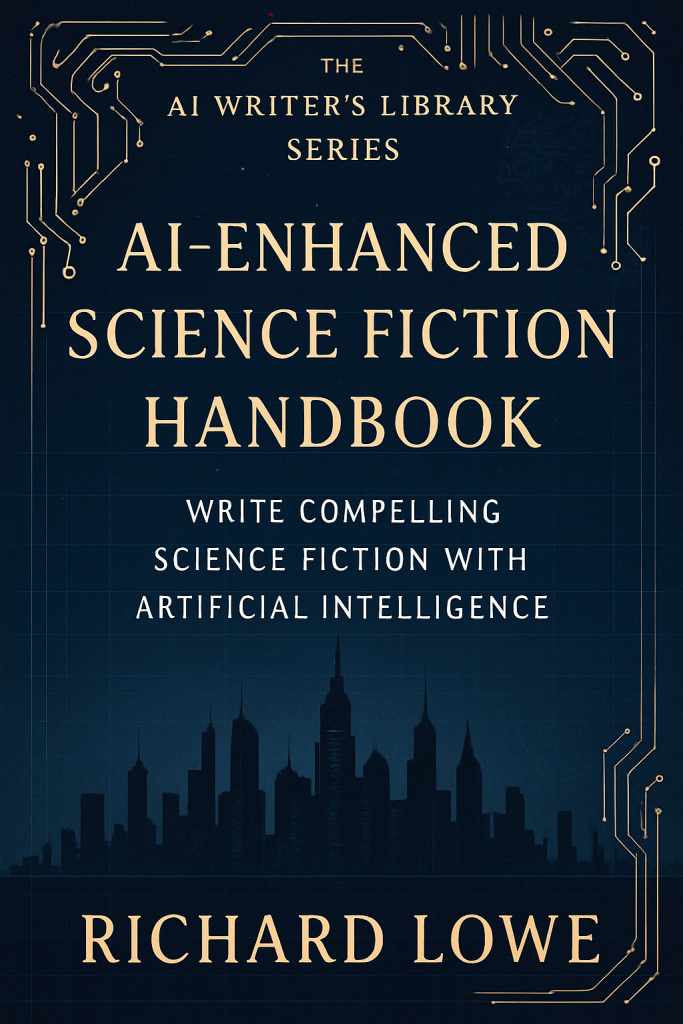
Science Fiction Writer’s Handbook
Psychology-first science fiction guide with 35 prompt chapters. Alien invasions to virtual worlds. Star Trek and Expanse case studies. AI integration. 362 pages. -
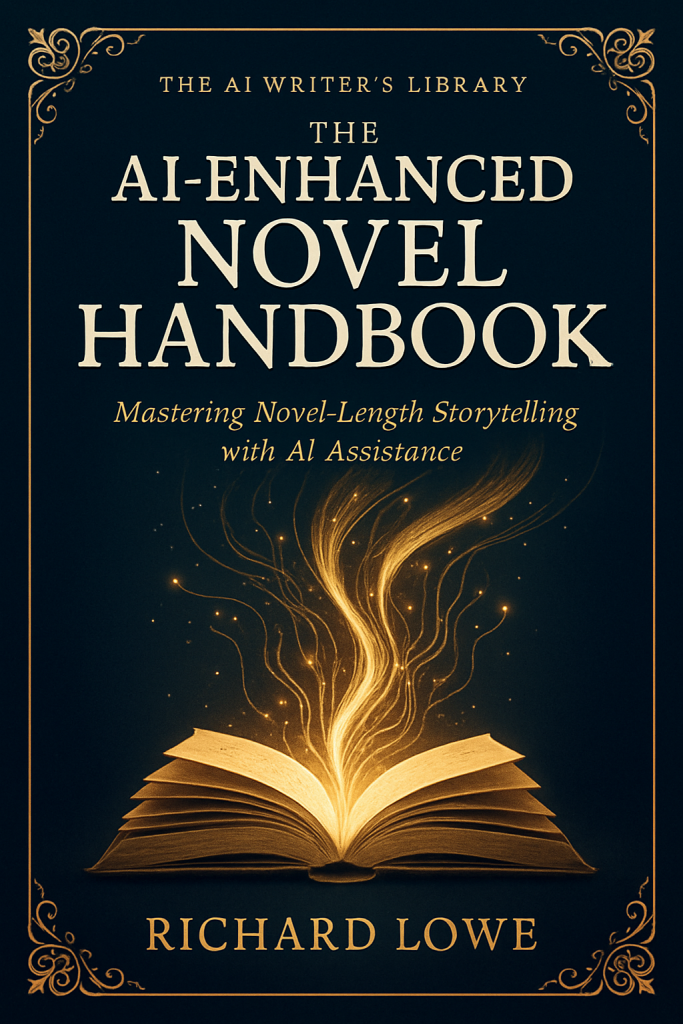
Novel Handbook
Novel-length fiction guide covering architecture, saggy middles, character drift, and series planning. 4 case studies. AI collaboration for 80,000+ words. 247 pages.