

19 Alien Romance Writing Exercises That Actually Teach Craft
More Than “What If”
Most writing prompts hand you a scenario and wish you luck. “An alien and a human fall in love.” Great. Where does the tension come from? How do you build believable connection between beings with nothing in common? What makes readers invest in a relationship that shouldn’t work?
Each exercise below includes three things: the scenario, the relationship dynamic, and the craft psychology explaining where the real story lives. The scenarios are starting points. The psychology is what makes them writable.
You can use these however fits your process. Read through until something sparks, then use the craft notes to find your story’s core tension before you start drafting. Or pick any exercise and draft the pivotal scene where the relationship shifts, focusing on the psychological element in the notes. Even if you’re not writing alien romance, every dynamic here translates: forced proximity, shared trauma, professional boundaries, forbidden connection. Find the exercise that matches your relationship type and apply the psychology to your human characters.
Free Stories, Straight to Your Inbox
Start with Nine Doors, nine short stories across nine genres, yours free the moment you sign up. After that, the occasional new collection and a note when there's a new book worth your time. No spam, no daily clutter. Just good stories.
We use MailerLite to manage our list and send these emails. Your address is used only to send you what you signed up for. We will not sell it, share it, or use it for anything else, and you can unsubscribe anytime.
The Science Fiction and Fantasy Romance Handbook covers these dynamics in depth, including how to balance speculative elements with emotional beats.
1. An Alien Unjustly Accused Must Trust a Human to Protect Them
Legal Drama Meets First Contact
Public defender Paloma Restrepo takes the most impossible case of her career when Zeph, a crystalline being from the Andromeda Council, gets framed for destroying a human research station. Zeph’s physiology makes violent acts impossible, but human courts don’t grasp alien biology. Restrepo must communicate with a client who experiences time differently and whose presence causes electronic interference that wipes out her legal research.
The real story: Trust builds through competence, not emotional connection. Restrepo’s legal expertise navigates intergalactic law while Zeph’s cultural knowledge reveals the real perpetrators. Tension comes from language barriers, incompatible thought processes, and ticking extradition deadlines. Both overcome species prejudice through professional respect that slowly becomes personal loyalty.
2. Two Abductees Return Changed and Only Understand Each Other
Shared Trauma Creates Connection
Dr. Isadora Voss returned from her alien encounter with enhanced perception that makes normal human interaction overwhelming. Family and colleagues treat her like a victim or a curiosity. When rancher Bodhi Crow Feather disappears for three weeks and returns with similar changes, Isadora becomes the only person who understands his disorientation and the way reality now feels wrong.
The real story: Intimacy grows through shared alienation from their own species. Both struggle with enhanced abilities that function as disabilities in human society. Isadora’s medical background helps her analyze their physiological changes while Bodhi’s practical nature grounds their experience in everyday survival. Connection grows from necessity into genuine affection as they help each other navigate a world that no longer fits.
3. A Teen Discovers Their Alien Nature During a First Kiss
Identity Crisis and Coming of Age
Seventeen-year-old River Okafor’s first kiss with longtime crush Sam triggers a bioluminescent reaction that reveals their true nature as a hybrid sleeper agent. The kiss activates dormant alien DNA, giving River telepathic abilities that overwhelm them with Sam’s thoughts and emotions. River must navigate teenage relationship drama while discovering their entire identity was a carefully constructed lie.
The real story: Authentic teenage voice handling extraordinary circumstances. River’s confusion about their changing body takes on literal alien significance while maintaining relatable adolescent stakes: fitting in, first love, figuring out who you are. Sam’s reaction to the revelation tests the relationship while River learns to control abilities they never asked for. Identity, belonging, and self-acceptance working through science fiction metaphor that stays grounded in genuine teenage experience.
4. After Hiding for Years, an Alien Must Reveal Their Origins to a Partner
Long-term Deception and Relationship Foundation
Kai has lived on Earth for fifteen years, building a successful career as a marine biologist while maintaining a careful human facade. Their relationship with marine veterinarian Dr. Tamsin Laurent has grown into genuine love, but Kai’s need to return to their home world for a critical mission forces the confession. The revelation risks destroying not just the romance but Tamsin’s entire sense of what’s real.
The real story: Relationship drama through the practical implications of deception, not just the betrayal itself. Kai’s alien nature explains unusual work habits, dietary restrictions, and emotional patterns that Tamsin chalked up to cultural differences. Tamsin’s scientific training wars with emotional shock as she reconciles the person she loves with the reality of their species. The question isn’t whether love survives the truth. It’s whether a relationship built partly on lies has a foundation worth saving.
5. Enemy Generals Discover Their Races Could Get Along
Political Romance and Forbidden Connection
General Zara of the Crystalline Empire meets General Torven of the Silicon Collective during prisoner exchange negotiations. They discover their races’ fundamental incompatibility might be political propaganda, not biological reality. Secret communications during ceasefire talks reveal that both generals question the war’s necessity while developing a personal connection that could end the conflict or get them both executed as traitors.
The real story: Romance carrying political consequences beyond personal stakes. Both characters’ military backgrounds create strategic thinkers whose leadership positions give them real power to influence policy. The relationship grows through shared professional respect and moral doubt about orders they’ve followed for years. Choosing love over duty isn’t free. The cost is real for both of them, and for the people under their command. The Conflict and Tension Handbook covers building stakes that operate on multiple levels at once.
6. An Alien Professor Becomes Captivated by a Graduate Student
Power Dynamics and Educational Ethics
Philosophy professor Dr. Ren has spent five years studying human ethics before graduate student Alex Kim’s thesis on interspecies communication theory challenges everything Ren thought they understood about human moral development. Ren’s attraction to Alex’s mind conflicts with academic ethics and their secret mission, while Alex’s research unknowingly approaches dangerous truths about Ren’s nature.
The real story: Intellectual connection that respects educational boundaries while building toward something personal. Alex’s philosophical insights force Ren to question assumptions about humanity. Ren’s guidance helps Alex develop revolutionary ideas about communication and consciousness. The romance grows through mutual respect for each other’s thinking, and the ethical complexity of relationships between people in unequal positions adds tension that has nothing to do with species.
7. Aliens Arrive Expecting to Meet Their Favorite TV Characters
Reality Versus Fiction Expectations
When the Vega Commonwealth intercepts decades of Earth television signals, they become obsessed with human “historical documents” like Star Trek and Doctor Who. Ambassador Lyrix arrives expecting to meet Captain Kirk or negotiate with the Time Lords. Instead they get confused NASA scientist Dr. Keiko Sato, who must somehow explain the concept of fiction to beings who don’t distinguish between entertainment and documentary.
The real story: Comedy through genuine cultural misunderstanding. Lyrix’s disappointment at meeting ordinary humans transforms into fascination with Keiko’s explanations of imagination, creativity, and the human need for narrative. Keiko’s astrophysics background helps her bridge the gap between alien expectations and reality. Connection builds through shared laughter and mutual education, even when initial expectations are completely wrong. Some of the best relationships start with one person being baffled by the other.
8. An Alien Botanist Bonds with a Human Greenhouse Keeper
Professional Partnership to Personal Connection
Alien researcher Fern arrives on Earth to catalog plant species before their planet’s ecological collapse, working alone until they meet Marisol Reyes, the greenhouse keeper whose intuitive understanding of plant care challenges Fern’s purely scientific approach. Marisol’s ability to nurture struggling plants back to health fascinates Fern, who sees her techniques as almost magical despite their own advanced training.
The real story: Different approaches to the same passion. Fern’s advanced botanical knowledge combines with Marisol’s practical experience and emotional connection to living things. Partnership solving plant diseases leads to personal conversations about loss, hope, and what it means to nurture something fragile. Professional respect becomes personal affection when two people discover they care about the same things for completely different reasons.
9. An Alien Time Traveler Stranded in the Present Needs a Historian’s Help
Culture Clash and Mutual Teaching
Time-displaced alien Chronos gets stuck in 21st-century Earth with technology that won’t function for another 200 years. History professor Dr. Anya Petrov becomes their guide to contemporary human culture, explaining everything from social media to coffee shops while Chronos shares glimpses of Earth’s future that both fascinate and terrify her.
The real story: Role reversal and knowledge exchange. Chronos’s advanced perspective on human civilization provides Anya with research insights she couldn’t get anywhere else. Her deep understanding of historical patterns helps Chronos navigate social customs that look absurd from 200 years ahead. The growing affection between them runs headfirst into the possibility that Chronos might eventually leave. The relationship’s expiration date is what gives every moment together its weight.
10. A Kidnapped Woman Escapes an Alien Ship with a Cyborg’s Help
Partnership Under Duress and Identity Questions
Engineer Zahra Oduya awakens aboard an alien vessel imprisoned alongside Unit-7, a cyborg created from a previous human captive. Unit-7 retains human consciousness but carries alien-enhanced capabilities, and their loyalty remains divided between human identity and alien programming.
The real story: Trust between characters whose identities are in flux. Zahra’s technical knowledge complements Unit-7’s enhanced abilities while both wrestle with what makes someone human. Unit-7’s internal conflict between programming and emerging feelings for Zahra creates tension that no external threat can match. The question driving the relationship isn’t whether they escape. It’s whether Unit-7 is the person Zahra is falling for, or the machine their captors built.
11. An Alien Researcher Becomes Fascinated by One Human Subject
Observer Versus Participant
Cultural anthropologist Yuki works at the university where alien researcher Nil has been conducting social observation studies for three years. Nil’s scientific detachment cracks as they become fascinated by Yuki’s research into human ritual and meaning-making. Their growing desire to participate in human social connections, not just catalog them, threatens to compromise everything they came here to study.
The real story: Professional boundaries and the cost of crossing them. Yuki’s anthropological training helps her recognize Nil’s observation techniques, while her human insight reveals the gaps in alien understanding of emotional nuance. The tension between Nil’s scientific objectivity and personal involvement mirrors a question every researcher faces: can you study something you love without changing it? Can you love something you’re studying without losing your ability to see it clearly?
12. An Alien Fugitive Seeks Shelter with a Homeowner
Sanctuary and Trust Building
Retired teacher Grace Okafor finds injured alien Kess hiding in her garden shed. Her instinct to help overrides her fear of the unknown. Kess is fleeing political persecution from their own people, and Grace’s decision to provide sanctuary creates a bond built on trust, shared meals, and slow communication despite language barriers.
The real story: Romance through domesticity, not drama. Grace’s nurturing nature and teaching background help her communicate with Kess. Her practical approach to problems provides stability when everything else is chaos. The relationship grows through daily routines, shared household tasks, and slow learning about each other’s worlds. Ordinary kindness creating extraordinary connection across impossible differences. The most intimate moments aren’t the dramatic ones. They’re breakfast. The Deep Character Handbook covers how character reveals through small actions rather than big moments.
13. An Alien Must Pose as a Small Town’s New Doctor
Professional Deception and Small Town Dynamics
When alien healer Senna’s ship crashes near rural Millbrook, they must impersonate the new doctor the town has been expecting while their vessel repairs itself. Local nurse practitioner Miguel Santos grows suspicious of Senna’s techniques that heal patients impossibly fast. Senna has to balance helping people with maintaining a cover that gets harder to hold every day.
The real story: Professional partnership and slow revelation. Miguel’s medical knowledge tells him Senna’s treatments work even when they violate everything he learned in school. His protective instincts toward the town conflict with his growing attraction to Senna and his ethical obligation to investigate. Trust builds when someone chooses to believe in you despite evidence that says they shouldn’t.
14. An Alien Diplomat’s Objectivity Is Compromised by Their Human Liaison
Professional Duties Versus Personal Feelings
Ambassador Kaelen has spent months evaluating whether humanity deserves membership in the Galactic Council, working closely with UN liaison Dr. Isabella Restrepo. Their growing personal connection compromises Kaelen’s ability to make an objective recommendation, especially when they discover humanity’s violent history should disqualify the species entirely.
The real story: Professional ethics versus personal experience. Isabella’s diplomatic skills and passionate advocacy challenge Kaelen’s preconceptions about aggressive species. Her intelligence and humor make them question whether the Council’s standards truly measure a species’ worth, or just its conformity. One relationship forcing someone to reconsider everything they thought they knew about an entire civilization. That’s a lot of weight for two people to carry.
15. An Alien Child Raised by Humans Reconnects with Their Kind as an Adult
Identity Discovery and Cultural Displacement
Dr. Phoenix Chen was raised by human parents after being found as a child with no memory of their origins. They lived their entire life believing they were human until alien refugees arrive seeking other survivors. Translator Sage Okafor recognizes Phoenix’s heritage and must help them reconnect with an alien culture they never knew while maintaining relationships with the human family who raised them.
The real story: Cultural bridging and identity exploration. Phoenix’s human upbringing gives them insight into Earth that no other member of their species has. Sage’s knowledge of their shared heritage opens a door Phoenix didn’t know existed. The relationship grows as Phoenix learns to hold two identities at once, and the emotional stakes come through a choice nobody should have to make: the family who raised you or the people you were born to.
16. An Archaeologist Discovers an Alien in Stasis at an Ancient Dig Site
Moral Responsibility and Historical Discovery
Archaeologist Dr. River Blackwood uncovers what appears to be an alien in suspended animation buried in Egyptian ruins, challenging everything known about human history. The being shows signs of life after millennia in stasis. Waking them risks exposing humanity to unknown technology or diseases. Not waking them means leaving a sentient being trapped.
The real story: Caretaking and cultural exchange across millennia. When River revives the alien, Ankhef awakens to find their civilization gone and Earth populated by the species they once observed from a distance. River’s knowledge of ancient history helps Ankhef understand what happened to their people. Ankhef’s firsthand accounts rewrite everything River thought she knew. Connection grows through shared loss: River lost her certainty about the past, and Ankhef lost everything else.
17. An Astronaut Discovers a Stranded Alien Who Appears Human
Isolation and Survival Partnership
Commander Elena Rodriguez’s emergency landing strands her on uncharted planet Kepler-442b. She discovers Jace, apparently the sole survivor of a colony ship that crashed decades earlier. Jace’s knowledge of the planet’s dangers keeps Elena alive, but their too-perfect human appearance and impossible longevity slowly reveal a more complicated truth about who and what they are.
The real story: Survival partnership and mystery. Elena’s astronaut training provides technical knowledge while Jace offers practical survival experience on a planet that wants to kill them both. Isolation intensifies everything: trust builds faster, attraction burns hotter, and the slow revelation of Jace’s true nature threatens to destroy a bond that both of them need to stay alive. The question isn’t what Jace is. It’s whether what they are changes what they mean to Elena.
18. An Alien Refugee Joins a Human Resistance Movement
Parallel Struggles and Shared Cause
Alien refugee Tara escapes their war-torn homeworld and crash-lands in territory controlled by an authoritarian human government that captures and experiments on extraterrestrials. Resistance fighter Diego Santos rescues Tara from a detention facility. Both their peoples face oppression from their own leaders. The parallel is impossible to ignore.
The real story: Shared values creating bonds that species can’t. Tara’s advanced tactical knowledge helps the resistance while Diego’s guerrilla warfare experience proves valuable for Tara’s own survival. The relationship grows through facing danger together and discovering that the fight for freedom looks the same regardless of who’s fighting or what they look like. Moral conviction connects people more deeply than cultural similarity ever could.
19. An Alien and Human Fall in Love in Virtual Reality Before Learning Each Other’s Species
Identity Revelation and Stripped-Down Connection
In the virtual world of Nexus Prime, avatars Nova and Storm collaborate on complex engineering projects and develop a deep intellectual and emotional connection over months. Neither knows the other’s species. When a system glitch strips their avatars and reveals Nova’s alien nature and Storm’s human identity, both confront their species’ mutual prejudices while trying to preserve something genuine they built without bodies getting in the way.
The real story: What happens when prejudice meets proof of compatibility. Their virtual collaboration showed complementary skills and compatible personalities without the bias of physical appearance or cultural expectation. Meeting in reality forces a harder question than whether they’re compatible. They already know they are. The question is whether knowing what the other person looks like is enough to override what they already know about who the other person is.
FAQ
How do I make alien romance believable?
Build connection through psychology, not biology. Shared trauma, professional respect that becomes personal, intellectual attraction, trust built through adversity. These dynamics create intimacy between any two beings. Focus on what your characters share emotionally and let the physical differences generate tension rather than barriers.
What makes interspecies relationships work in fiction?
Specificity. Generic alien romance fails for the same reason generic human romance fails. Your alien character needs psychology as developed as your human one. What do they want? What do they fear? How do their assumptions clash with their partner’s? The relationship becomes compelling when both characters are fully realized individuals, not when one is human and the other is exotic scenery.
How do I avoid making the alien character just an exotic prop?
Give them interiority. Let readers experience their perspective, their confusion about human behavior, their own cultural assumptions getting challenged. The relationship should change both characters. Both grow. Both compromise. Both get transformed by the connection. If only the human character has an arc, your alien is a plot device, not a person.
Can I use these exercises for human romance?
Every dynamic here translates. Shared trauma bonding, professional boundaries becoming personal, forbidden connection across enemy lines, identity revelation that reshapes a relationship, deception that tests a foundation. The alien element amplifies the psychology, but the psychology works for any two people navigating difference and building trust.
The AI-Enhanced Writer’s Library
The AI-Enhanced Writer’s Library breaks down character, dialogue, pacing, and two dozen other craft elements the same way. Why things work, not just that they work. Psychology-based instruction with AI prompts built in. 35+ guides and counting.
-
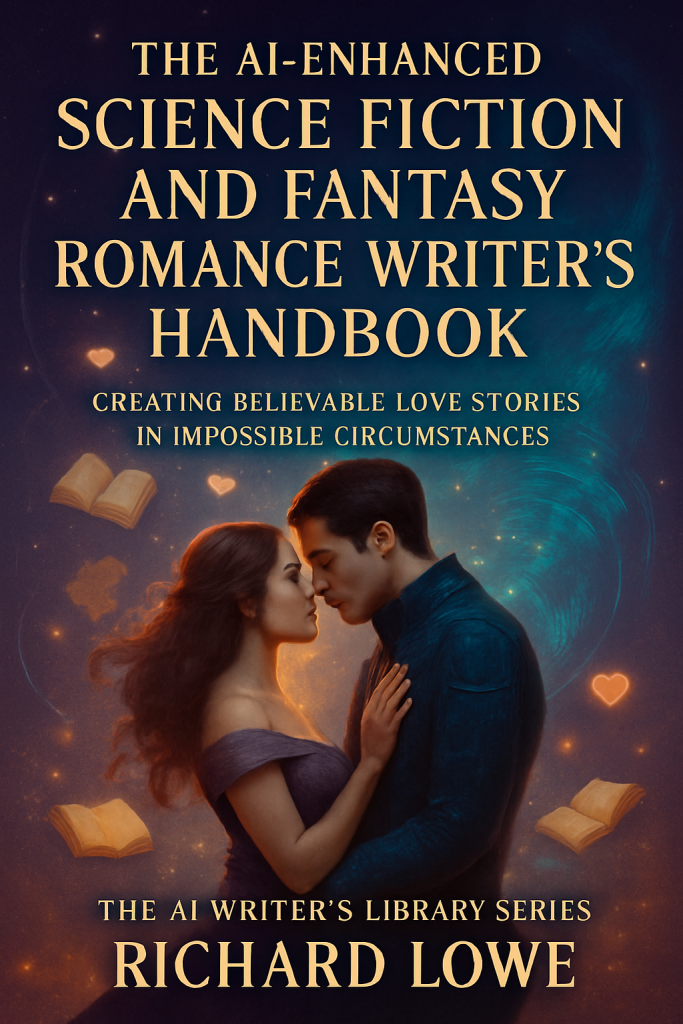
Science Fiction and Fantasy Romance Writer’s Handbook
Complete revision methodology from structural surgery to line editing. AI guardrails, feedback integration, genre-specific requirements. Case studies. 307 pages. -
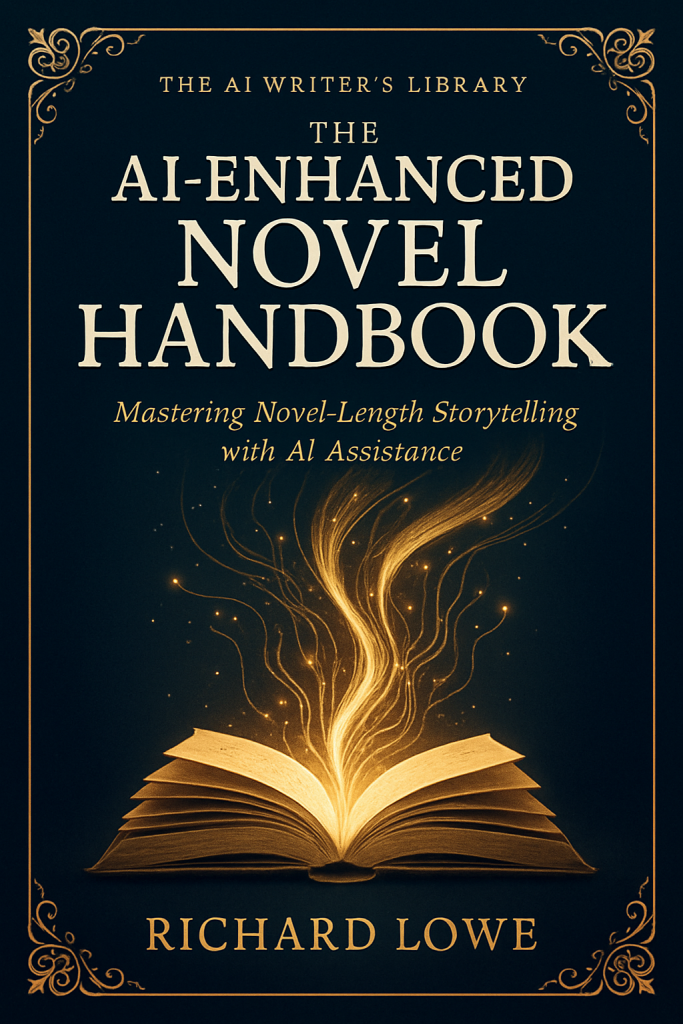
Novel Handbook
Novel-length fiction guide covering architecture, saggy middles, character drift, and series planning. 4 case studies. AI collaboration for 80,000+ words. 247 pages.