

The Questionnaire Trap
Everything they taught you about building characters is backwards.
Three generations of backstory. Immigration trauma. A failed music career. A broken arm at age seven. Favorite color, biggest fear, the name of his childhood dog. You filled out those hundred-question character worksheets. You can describe the contents of your protagonist’s refrigerator.
The character is still cardboard.
That’s because backstory decorates character. It doesn’t create it. Wallpaper on a house with no foundation. A character without active desire is just a person things happen to. They react. They observe. They exist. Readers don’t care about existence. Readers care about pursuit. Hunger. Someone who wants something badly enough to bleed for it.
The moment a character wants something with enough intensity to act against obstacles, they become real. Not because wanting is interesting on its own, but because wanting creates the only thing that matters in fiction: decisions under pressure.
Your protagonist’s traumatic childhood means nothing if it doesn’t shape what she wants right now and what she’ll do to get it. Her quirky coffee order and collection of vintage earrings are set dressing until those details force a choice that reveals who she actually is.
“Relatable” Is Strangling Your Fiction
Most craft advice won’t say this directly: readers don’t connect with characters because they’re relatable. They connect because they’re understandable.
Big difference.
Relatable means “like me.” Understandable means “I can see why they’d do that, even if I never would.”
Walter White isn’t relatable. A chemistry teacher who builds a meth empire, poisons a child, and destroys his family isn’t someone most people see themselves in. But he’s completely understandable. Every decision, even the monstrous ones, flows from psychology we can trace. We watch him break and we get it, even as we’re horrified by what he becomes.
Amy Dunne in Gone Girl isn’t relatable either. She’s a manipulative, murderous sociopath who frames her husband for her own fake death. But her logic is airtight. We understand exactly why she does what she does. That understanding creates a connection stronger than likability ever could.
You don’t need readers to identify with your character. You need readers to comprehend their internal logic. That logic comes from desire filtered through wound, not from a detailed family tree. The Deep Character Handbook covers how to build psychological profiles where every action traces back to that core logic.
The Collision That Creates Real People
What your character wants collides with what they fear. The conscious goal runs headfirst into the wound they’re protecting. That collision produces behavior that feels specific, surprising, and inevitable all at the same time.
A character who wants respect but fears vulnerability will chase status through control. She’ll sabotage intimacy to maintain power. She won’t know she’s doing it, but the reader will.
A character who wants love but fears abandonment will destroy relationships before he can be rejected. He’ll leave first. Always. The people in his life will think he’s cold. The reader will know he’s terrified.
A character who wants safety but fears insignificance will take stupid risks to feel alive. She’ll burn down everything stable just to escape being ordinary. Her friends will call it self-destructive. It’s self-preservation wearing a mask.
Those three characters have no backstory attached to them. No childhood scenes, no documented trauma, no family history. And they already feel more real than most characters with fifty pages of background notes, because you can feel the internal engine driving their behavior. Backstory’s only job is to justify the wound, to make it believable that this person carries this specific fear. Everything beyond that is noise.
The Two-Question Fix
Next time a character feels dead on the page, don’t reach for more history. Don’t fill out another questionnaire. Don’t write a scene from their childhood.
Ask what this character wants badly enough to suffer for. Then ask what they’re afraid to face about themselves.
If you can’t answer both with gut-punch specificity, no amount of backstory will save them. They’ll stay cardboard no matter how much history you staple to their chest. A character who “wants to be happy” and “fears failure” is a character who wants nothing and fears nothing, because those answers are too vague to generate behavior.
A character who wants her dead mother’s approval so badly she’s sabotaging her own success to stay small enough for her mother to have been proud of? That generates behavior. That produces scenes. That character will make choices no other character would make, and readers will understand every one of them.
Answer both questions and backstory almost writes itself. You’ll know exactly which childhood details matter and which are filler. The protagonist with three generations of documented history comes alive the moment you stop adding information and start adding psychology. The Conflict and Tension Handbook covers how to turn that internal collision into scenes that won’t let readers look away.
Backstory Is the Wikipedia Entry. Desire Is the Pulse.
Every flat character shares the same problem. Not too little history. Too little hunger.
The writer knows where the character went to school, what happened at prom, which parent left first, and what song plays in their head when they’re sad. The writer doesn’t know what the character would walk through fire to get, or what truth they’d rather die than face.
One sentence of psychology beats ten pages of history. “She wants her father’s approval but she’s terrified of becoming him.” That sentence will generate more usable scenes than an entire character bible. It tells you what she pursues, what she avoids, what decisions will tear her apart, and what the climax of her story needs to force her to confront.
Desire plus wound. That’s the foundation. Build everything else on top of it, and the backstory you do include will matter because it connects to the engine. Build backstory first and hope desire shows up later, and you’ll get what most writers get: a detailed biography of someone the reader forgets by chapter three.
Free Stories, Straight to Your Inbox
Start with Nine Doors, nine short stories across nine genres, yours free the moment you sign up. After that, the occasional new collection and a note when there's a new book worth your time. No spam, no daily clutter. Just good stories.
We use MailerLite to manage our list and send these emails. Your address is used only to send you what you signed up for. We will not sell it, share it, or use it for anything else, and you can unsubscribe anytime.
FAQ
Why does my character feel flat even with pages of backstory?
Because backstory is decoration, not structure. Flat characters lack active desire strong enough to drive behavior and a psychological wound that resists that desire. You can document every childhood scar and formative memory and still produce cardboard if the character doesn’t want something badly enough to make dangerous choices.
Do readers need to like my protagonist?
No. They need to understand them. Walter White and Amy Dunne are among the most compelling characters in recent fiction, and neither is likable. What they are is psychologically traceable. Every decision, even the terrible ones, flows from internal logic the reader can follow. Understandability creates deeper connection than likability.
How do I fix a boring protagonist without starting over?
Answer two questions: what do they want badly enough to suffer for, and what are they afraid to face about themselves? If both answers are specific enough to generate behavior, weave them into the existing manuscript. You often need less rewriting than you think. The desire and wound reshape how the character moves through scenes you’ve already written.
How much backstory do I actually need?
Enough to justify the wound. If your character fears abandonment, you need enough history to make that fear believable. You don’t need to write every scene that created it. One well-placed revelation often does more work than three chapters of flashback. The backstory exists to serve the psychology, not the other way around.
The AI-Enhanced Writer’s Library
The AI-Enhanced Writer’s Library breaks down character, dialogue, pacing, and two dozen other craft elements the same way. Why things work, not just that they work. Psychology-based instruction with AI prompts built in. 35+ guides and counting.
-

Deep Character Handbook
Master character psychology. Wound-Adaptation-Pattern Framework, attachment theory, defense mechanisms, case studies. 503-page guide from 113-book author. -

Character Naming Handbook
Names are the first promise you make to readers. This handbook teaches character naming as craft—psychology, research, AI tools, and seven detailed case studies. -
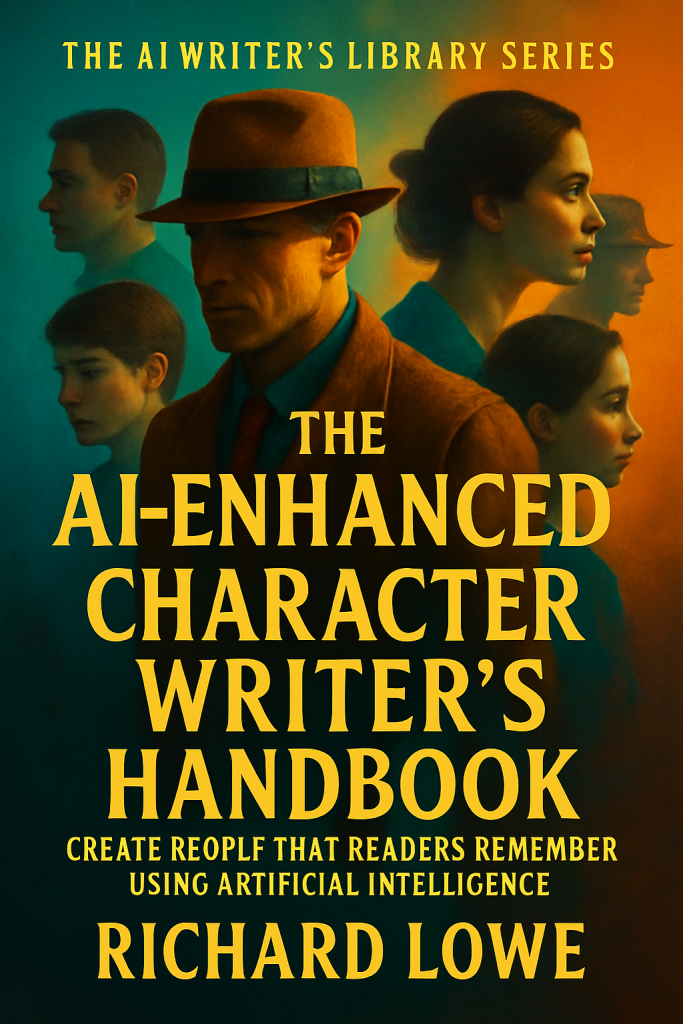
Character Writer’s Handbook
Create memorable characters using psychology. Attachment theory, defense mechanisms, voice development, AI integration. 270-page guide from 113-book author.