

The Moment It Clicked
I was photographing belly dancers when I finally understood what I’d been doing my whole life.
Watch a belly dancer long enough, really watch, and you’ll catch the moment she stops fighting the music and starts having a conversation with it. The shimmy flows into the hip drop. The arm movements aren’t add-ons. Everything radiates from a center that’s both controlled and surrendered at once.
One dancer I photographed had a slight tremor in her hands. Most photographers would crop it out or blur it away. She’d done something smarter. She’d woven it into her finger work, turning the flutter into something hypnotic, intentional. She’d spent years learning to dance with the thing that made her different.
I recognized myself in her immediately.
The Brain That Wouldn’t Sit Still
The AuDHD diagnosis came later in life, but the reality had always been there. A mind that hyperfocused with terrifying intensity. Pattern recognition that made small talk exhausting but systems architecture feel like play. Twenty years running technology operations at Trader Joe’s, solving problems other people couldn’t see. My brain just refused to work the way the manuals said it should.
For decades, I thought I was compensating. Managing. Overcoming.
I had it backwards.
I wasn’t fighting my neurology. I was dancing with it. I just hadn’t given myself credit for the choreography.
Those hyperfocus sessions that look alarming from the outside? They became marathon manuscript sprints that produced chapter after chapter. The pattern recognition that exhausts me at cocktail parties? That became my systematic approach to story structure, the one that cuts through the mystical nonsense most writing teachers peddle. The obsessive need to understand why things work, not just that they work? That became the psychology-first methodology running through every book I write.
113+ books. 54+ ghostwriting projects. Clients who’ve raised over $30 million in venture capital. 45 years solving puzzles across technology, business, and creative industries. The AI-Enhanced Writer’s Library, with its 35+ handbooks treating writing craft as learnable skill instead of divine mystery.
None of this happened despite how my brain works. It happened because of it.
Pain Is Just Information
The writing industry loves gatekeepers. You can’t write that fast. You can’t use AI and still be a “real” writer. You can’t systematize creativity. You can’t teach craft without an MFA.
I hear those voices the way that belly dancer heard her tremor: raw material, not limitation.
One of the dancers I photographed told me something that stuck: “The audience thinks they’re watching me move. They’re really watching me listen.”
That’s what I do now. I listen to patterns. I listen to what stories need. I listen to what my brain excels at instead of mourning what it doesn’t.
AI collaboration works the same way. Most writers fight the technology, try to force it into roles it can’t fill, then declare it useless when it fails to perform like a human co-author. I learned to dance with it instead. AI handles pattern analysis, consistency checking, brainstorming at scale. I handle authentic voice, emotional truth, creative authority. I lead where I’m strong. It supports where it’s strong.
That’s not compromise. That’s choreography.
Turning Limitation into Liberation
Every belly dancer figures this out eventually: your body is your instrument, even the parts you’d trade in if you could. Dancers who fight their bodies look stiff, mechanical, frustrated. Dancers who learn their bodies, limitations and all, look like magic made visible.
I spent too many years thinking my brain was broken. That I was compensating for deficits instead of leveraging differences. That real success would arrive once I finally fixed what was wrong with me.
The fix never came. The dancing did.
Now I teach other writers to find their own choreography. To stop following beat sheets like they’re holy scripture and start understanding why stories work at a psychological level. To use AI as a brilliant assistant instead of fighting it or worshipping it. To write from character psychology instead of mechanical formula. The ADHD and Neurodiverse Writer’s Handbook is where I put everything I’ve learned about building a writing process that works with a brain like mine instead of pretending it’s someone else’s.
The obstacle isn’t something to overcome. It’s something to choreograph.
Free Stories, Straight to Your Inbox
Start with Nine Doors, nine short stories across nine genres, yours free the moment you sign up. After that, the occasional new collection and a note when there's a new book worth your time. No spam, no daily clutter. Just good stories.
We use MailerLite to manage our list and send these emails. Your address is used only to send you what you signed up for. We will not sell it, share it, or use it for anything else, and you can unsubscribe anytime.
FAQ
How does ADHD hyperfocus actually help with writing?
Hyperfocus turns into marathon drafting sessions where entire chapters emerge in single sittings. The key is learning to trigger it intentionally instead of waiting for it to strike. Remove distractions, start with momentum-building tasks, and let the focus lock in. What looks alarming from the outside becomes your most productive tool once you stop fighting it and start directing it.
Can you systematize creativity without killing it?
Systems don’t replace creativity. They channel it. Understanding why story structures work frees you to break rules intentionally instead of accidentally. Working with how human minds process narrative isn’t following a formula. It’s understanding the instrument you’re playing. That’s not limitation. That’s leverage.
How do you use AI without losing your voice?
AI handles what it’s good at: pattern analysis, consistency checking, brainstorming variations at volume. You handle what you’re good at: authentic voice, emotional truth, creative decisions. The mistake is expecting AI to be a co-author. It’s an assistant. A brilliant one with amnesia who needs direction every single session. Lead where you’re strong. Let it support where it’s strong.
What if my brain doesn’t work the way writing advice assumes?
Most writing advice assumes a neurotypical brain. If that’s not yours, the advice will feel wrong because it is wrong for you. Find what your brain actually does well and build your process around that. The dancer with the tremor didn’t cure it. She choreographed it. Your neurology isn’t a bug to patch. It’s the instrument you’ve got, and it plays music nothing else can.
The AI-Enhanced Writer’s Library
The AI-Enhanced Writer’s Library breaks down character, dialogue, pacing, and two dozen other craft elements the same way. Why things work, not just that they work. Psychology-based instruction with AI prompts built in. 35+ guides and counting.
-
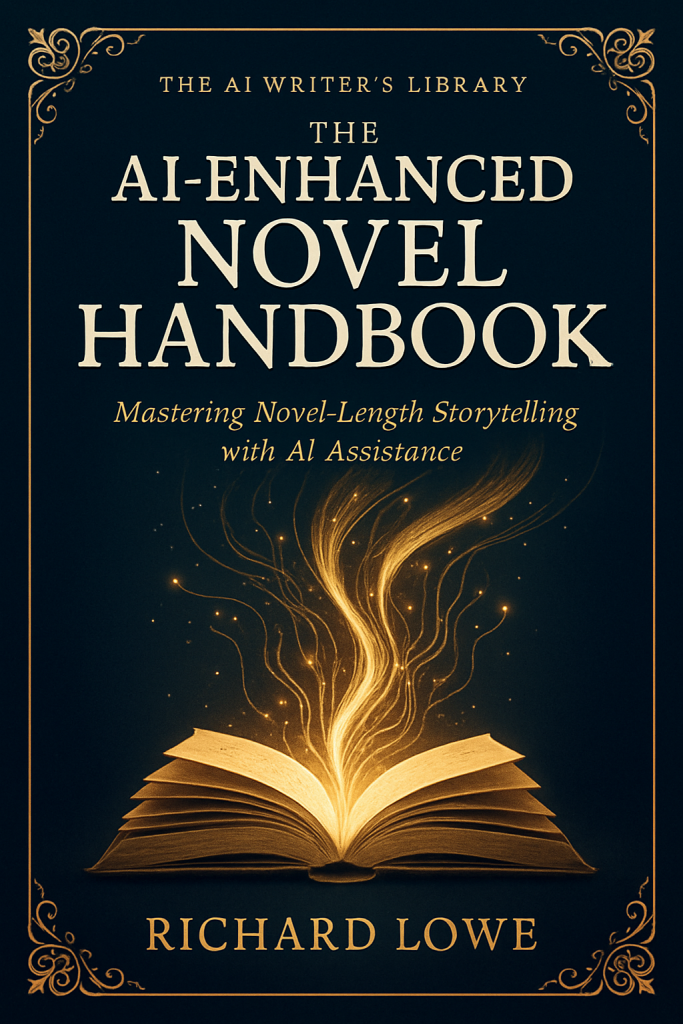
Novel Handbook
Novel-length fiction guide covering architecture, saggy middles, character drift, and series planning. 4 case studies. AI collaboration for 80,000+ words. 247 pages. -
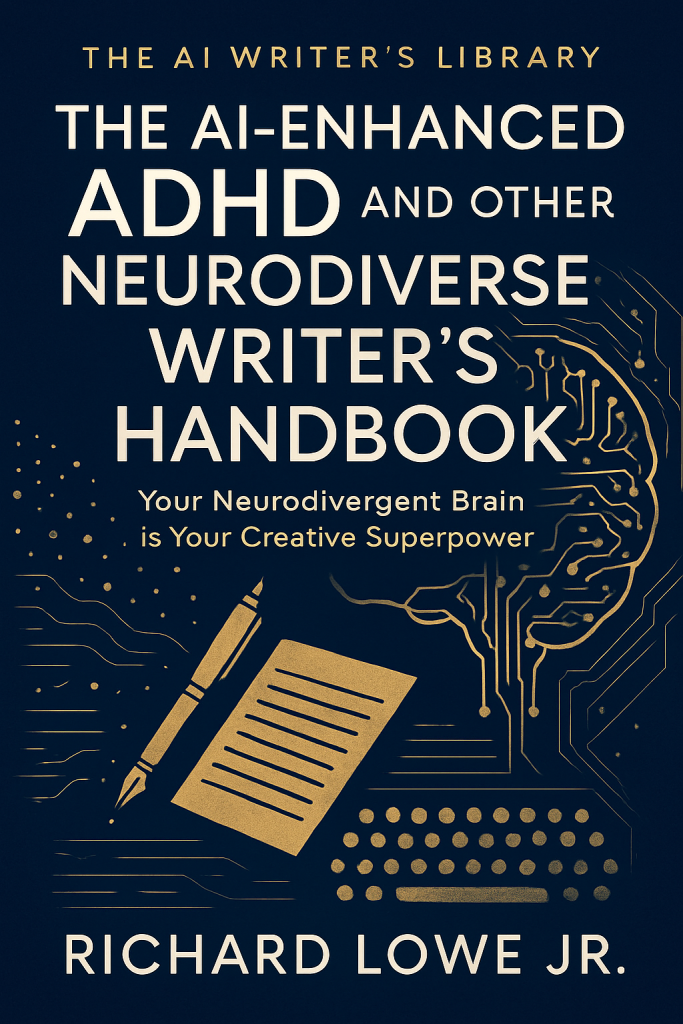
ADHD Writing Handbook: Systems That Work With Your Brain
ADHD writing advice fails because it's neurotypical advice with disability branding. 200+ page handbook with 100+ AI prompts from an AuDHD author with 113+ books. Instant download.