

The War You Can’t Win
You’ve spent hours in Facebook groups arguing about whether AI is ethical. You’ve read think pieces about the death of creativity. You’ve taken firm positions, defended them against strangers, and felt righteous about your stance. Meanwhile, your book isn’t finished.
I’m not here to tell you AI is good or bad. I’m here to point out that the energy you’re spending on this fight could be spent writing. And that trade is costing you more than you realize.
AI isn’t going away. Doesn’t matter how you feel about it. Doesn’t matter how many petitions get signed. Doesn’t matter what position the literary establishment takes. The technology exists. It’s improving. Writers are using it — some openly, many quietly. The market is adapting whether you adapt with it or not.
You can spend the next five years fighting this reality. You’ll lose. Not because you’re wrong. Because you’re fighting physics. You might as well argue against the tide. Or you can accept that AI is part of the landscape now, figure out what it means for your work, and get back to the thing that actually matters: writing books readers want to read.
The fight feels meaningful. The fight feels like doing something. But the fight produces nothing except exhaustion and distraction.
The Purity Test Trap
Some writers have decided that using AI at all makes you a fraud. Not a writer. A cheater. These purity tests accomplish nothing except making writers feel bad about using spell-check’s smarter cousin.
Did you use a thesaurus? A writing craft book? A beta reader? A developmental editor? An online name generator? Research compiled by someone else? All of these are external inputs that shape your work. The line between “legitimate help” and “cheating” is arbitrary and shifts based on who’s drawing it.
There is no purity. There never was. Writing has always involved tools, assistance, and collaboration. The tools change. The fundamental act of creation doesn’t. You’re still the one making decisions. You’re still the one with the vision. You’re still the one who cares whether the book is good.
What You’re Actually Afraid Of
Strip away the ethical arguments and most AI resistance comes down to fear.
Fear of being replaced — if AI can write, what am I for? This fear ignores that AI produces competent averages, not distinctive voices. Readers don’t want averages. They want you. Your weird, specific, human perspective that no algorithm can replicate.
Fear of losing status — if anyone can produce text quickly, writing skill becomes less rare, less special. This fear treats writing as a gatekeeping exercise rather than communication. The goal was never scarcity. The goal was connecting with readers.
Fear of change — the rules are shifting and nobody knows where they’ll settle. Uncertainty is uncomfortable. Fighting against change feels like control. But fighting what you can’t control isn’t strength. It’s exhaustion.
Fear of being judged — other writers might look down on you for using AI. This fear outsources your creative decisions to people who don’t know your situation, don’t understand your process, and won’t help you finish your book.
Name your fear. Look at it honestly. Then ask whether that fear is serving your writing or sabotaging it.
The Opportunity Cost Nobody Calculates
Every hour spent arguing about AI is an hour not spent writing. Every emotional investment in online debates is energy not available for your manuscript. Every identity wrapped up in anti-AI positions is rigidity that prevents learning.
I’m not saying those hours and energy and positions are wrong. I’m saying they have costs. Real costs measured in words not written, books not finished, craft not developed.
You have finite creative resources. How are you spending them? On arguments with strangers that change nothing? Or on the work that actually matters to you? The math isn’t complicated. It’s just uncomfortable. For a deeper look at why writers are so angry about AI and whether that anger is serving them, that article maps the full landscape of legitimate grievances.
The Tool Doesn’t Care About Your Feelings
A hammer doesn’t know whether you approve of hammers. It drives nails regardless of your philosophical position on hammer ethics. AI is the same. It exists. It does certain things well and certain things poorly. Your feelings about it don’t change what it can or can’t do.
Writers who approach AI as a tool to be evaluated, tested, and used selectively will find ways it helps their work. Writers who approach AI as an enemy to be fought will find nothing except reasons to keep fighting. Both groups will produce books. But one group will have wasted enormous energy on a battle that was never winnable. The Productivity Handbook covers how to evaluate tools based on results rather than ideology.
A Practical Middle Path
You don’t have to love AI. You don’t have to use it for everything. You don’t have to pretend it’s better than it is. You just have to stop spending creative energy on resistance that produces nothing.
Try this instead. Test AI for specific tasks — not “writing” generically, but specific tasks like brainstorming names, checking continuity, researching historical details, analyzing your chapter for pacing issues. See what’s useful for your process. Keep what helps. Discard what doesn’t. No ideology. No identity. Just practical evaluation of whether something improves your work.
Draw your own lines. Maybe you’ll use AI for research but not drafting. Maybe you’ll use it for brainstorming but not revision. Maybe you’ll use it extensively or barely at all. Your choice. Based on what serves your writing.
Stop performing your position. You don’t need to announce your AI stance to anyone. You don’t need to defend it. You don’t need to convince others. Just do your work.
The Writer’s Job Hasn’t Changed
Tools change constantly. The writer’s job stays the same. Tell stories that move people. Create characters readers remember. Build worlds that feel real. Write prose that carries your distinctive voice.
AI doesn’t do any of this. AI generates text. The writer turns text into story.
The writers who thrive will be the ones who focus on what only humans can do: vision, voice, emotional truth, creative decisions that carry weight because a person made them.
Fight AI and you’re fighting a distraction. Focus on craft and you’re building something that matters regardless of what tools you use. Your book is waiting. Is the culture war really more important?
Free Stories, Straight to Your Inbox
Start with Nine Doors, nine short stories across nine genres, yours free the moment you sign up. After that, the occasional new collection and a note when there's a new book worth your time. No spam, no daily clutter. Just good stories.
We use MailerLite to manage our list and send these emails. Your address is used only to send you what you signed up for. We will not sell it, share it, or use it for anything else, and you can unsubscribe anytime.
Frequently Asked Questions
Isn’t it important to have ethical positions on AI?
Having positions is fine. Spending your creative energy performing and defending those positions instead of writing is the problem. The AI debate will continue with or without you. Your book won’t write itself while you argue online.
What if using AI makes me a less authentic writer?
Authenticity comes from your creative decisions, your voice, and your vision. Using research doesn’t make you inauthentic. Using beta readers doesn’t make you inauthentic. Using any tool that supports your creative authority doesn’t make you inauthentic. What matters is that you remain in charge of what the work becomes.
How do I know if I’m spending too much energy on AI resistance?
Count the hours. How much time last month did you spend reading about AI, arguing about AI, or worrying about AI? How much time did you spend writing? If the first number is anywhere close to the second, you’ve identified the problem.
What if other writers judge me for using AI?
They might. Their judgment doesn’t write your book, pay your bills, or determine whether readers connect with your story. Outsourcing your creative decisions to people who don’t know your work or your goals is a bad trade no matter what those decisions concern.
The AI-Enhanced Writer’s Library
The AI-Enhanced Writer’s Library breaks down character, dialogue, pacing, and two dozen other craft elements the same way. Why things work, not just that they work. Psychology-based instruction with AI prompts built in. 35+ guides and counting.
-

AI-Enhanced Series: AI Shortcomings
Free guide to AI failure modes. Hallucinations, context drift, AI language patterns, the cleanup checklist, and using Claude to catch Claude's mistakes. -
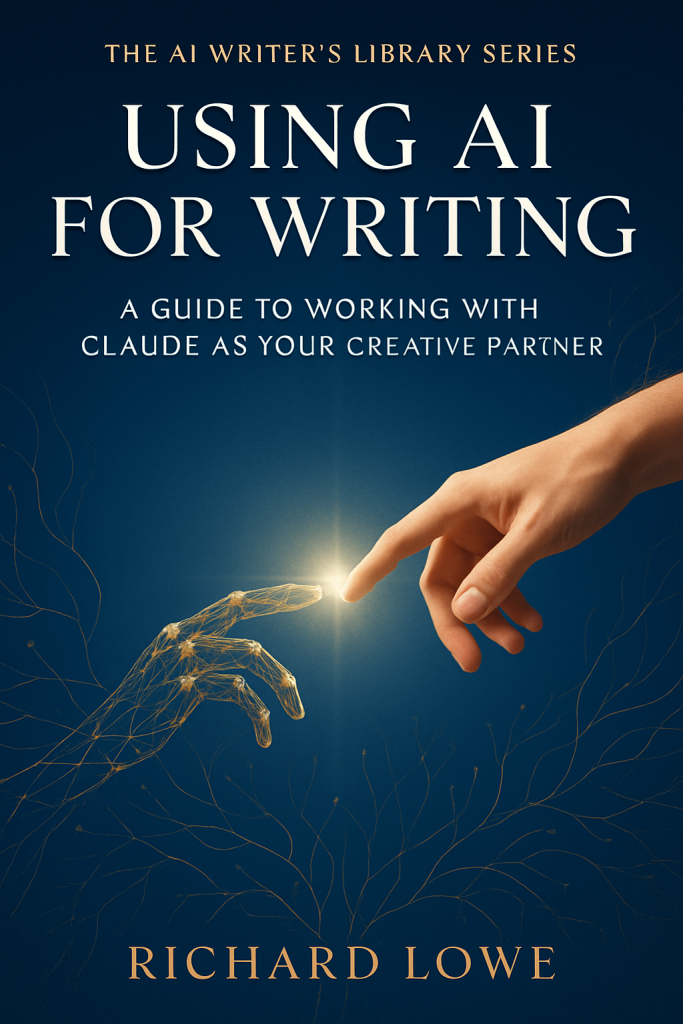
AI-Enhanced Series: Using AI for Writing
Free guide to using Claude for fiction writing. What AI does well, what it does poorly, the art of the prompt, and how to maintain your voice. Practical, not hype.