My first client wanted to name names.
He had a story worth telling — a business dispute involving specific people who had done specific things that were genuinely damaging and demonstrably true. He wanted the names in the book. He wanted the situations described exactly as they happened. He wanted readers to know who did what to whom. I understood the impulse completely. What he didn’t understand was that “it’s true” is not a complete legal defense, that identifiable people in unflattering portrayals have options regardless of accuracy, and that the book he wanted to write would have generated a lawsuit before it generated readers.
We spent several sessions working through what the book actually needed to accomplish versus what the names and identifying details would add. The answer was that the names added nothing to the argument and everything to the exposure. He changed the names. He changed enough situational details to make the characters legally distinct from the real people while keeping everything that made the story worth reading. The book said everything he needed to say. It just didn’t come with a defendant’s filing attached.
The second situation I didn’t see coming. A client handed me his original manuscript — background material, he said, for the book we were developing together. I worked with it for weeks. Then I started checking sources and found that 105 sections had been copied directly from other publications. No attribution. No paraphrasing. No flagging that any of it had come from somewhere else. He hadn’t thought of it as copying. He’d thought of it as research notes, as source material, as the raw ingredients I’d be working with. The distinction didn’t matter legally. We had a manuscript full of unattributed direct copies from copyrighted sources, and we had to go back through every one of them — tracing origins, rewriting what could be paraphrased, adding citations where direct reference was necessary, removing what couldn’t be saved.
Neither client was trying to create legal problems. The first one thought truth was protection. The second one didn’t recognize the line between research and reproduction. That’s the pattern behind every legal problem in publishing: not malice, not recklessness, but not knowing where the landmines are buried until you’re standing on one.
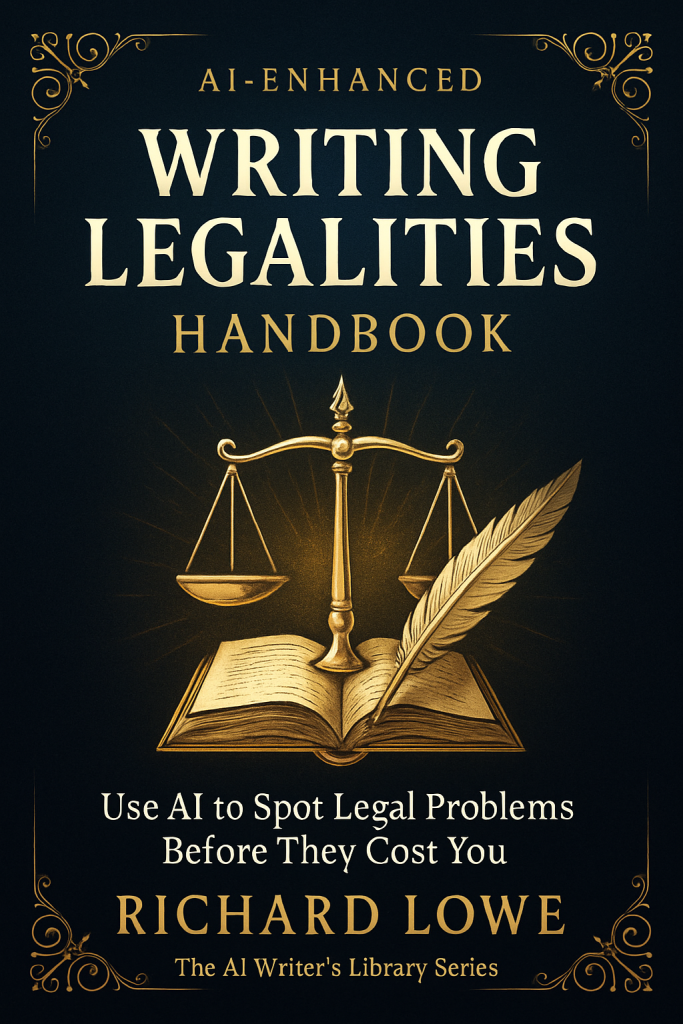
I’m Richard Lowe. 113 published books, ghostwriting clients who’ve secured over $30 million in venture capital, and enough close calls to understand that legal review isn’t paranoia. It’s the two hours of work that prevents the two years of consequences. This handbook is everything I learned about finding problems while fixing them is still free.
$25.95
One-time investment • Lifetime access • Instant download
Protect Your Books →
14-Day Money-Back Guarantee
If this handbook doesn’t change how you approach legal review, request a full refund. No questions.
Questions
If everything I’m writing is true, am I protected?
Truth is a defense to defamation but not a complete shield against all legal claims. Invasion of privacy claims exist independently of truth. Right of publicity claims exist. And in defamation cases, “of and concerning” analysis means the question isn’t whether your account is accurate — it’s whether identifiable people would recognize themselves in an unflattering portrayal. The Red Hat Club verdict was $100,000 against an author who changed names, profession, location, and physical description. The friend’s other friends still recognized her. The handbook covers what effective fictionalization actually requires and how to analyze identifiability before publication.
What if someone gives me material that turns out to be copied from other sources?
This is more common than writers realize and the legal exposure lands on whoever publishes the work, not just whoever copied it originally. The handbook covers how to audit source material before you build on it — running systematic checks on passages that read too smoothly, tracing origins of unusual phrases, and identifying the difference between paraphrased research notes and unattributed direct copies. It also covers the cleanup process when you find problems: what can be cited, what needs to be rewritten, and what has to come out entirely. Catching this before publication costs revision time. Catching it after costs everything else.
Can I use song lyrics in my novel?
Almost never worth the risk. Music publishers are aggressive, licensing fees are expensive, and fair use arguments for song lyrics fail more often than writers expect. Two lines from a copyrighted song can generate a demand letter. The handbook covers why this is consistently true, how to describe music’s emotional impact without quoting lyrics, and the rare circumstances where short quotations might survive fair use analysis — along with why you should still get a lawyer’s opinion before relying on it.
What contract red flags should I watch for?
Non-compete clauses that block your pen name or entire genre for years after publication. Option clauses with no time limits that give a publisher right of first refusal on your next book indefinitely. Life-of-copyright terms with no reversion triggers, meaning rights never return to you even if the book goes out of print. Rights grabs for formats that don’t exist yet, written broadly enough to cover technology nobody has invented. The handbook covers each red flag with prompts for analyzing specific contract language and identifying what’s negotiable versus what’s standard.
Is AI-assisted writing copyrightable?
The Copyright Office requires human authorship. Pure AI output without human creative decisions isn’t registrable. AI-assisted work where humans make the creative choices — selecting, arranging, revising, directing — can be registered if you document your human contribution accurately. The key is knowing what the Copyright Office wants to see in your registration application and how to describe AI involvement without triggering rejection. The handbook covers current Copyright Office guidance and documentation practices for AI-assisted manuscripts.
When do I actually need a lawyer instead of AI review?
When you’re writing about identifiable living people in ways that could damage their reputation and you’re not certain the fictionalization is sufficient. When you’ve received any legal communication about your work — don’t respond without counsel. When you’re signing a contract with significant money or career implications. When you’re uncertain about fair use for substantial quotations from protected works. AI review catches the obvious problems and helps you think through issues. It doesn’t replace professional judgment for high-stakes situations. The handbook includes a decision framework for recognizing which category you’re in.
What if someone is copying my work?
Start with DMCA takedown notices for online infringement — the handbook includes templates and platform-specific procedures. For more serious infringement, the decision about whether enforcement is worth the cost depends on factors including registration status, extent of copying, and your capacity for a prolonged process. Registered works have significantly more enforcement options than unregistered ones, which is one reason the handbook covers registration as part of standard publication workflow.
Refund policy?
14 days. If it doesn’t change how you approach legal review, full refund. No questions.
The client who wanted to name names published a better book because he didn’t. The argument was stronger without the targets attached to it — cleaner, harder to dismiss, focused on what actually happened rather than who did it. The legal constraint produced a better manuscript.
The client with 105 copied sections published a cleaner book because we caught it before it went to press. The cleanup was tedious and added weeks to the project. It was still cheaper than the alternative.
Legal review isn’t about fear. It’s about catching problems while fixing them costs nothing but time.
$25.95
One-time investment • Lifetime access • Instant download
Protect Your Books →
14-Day Money-Back Guarantee
If this handbook doesn’t change how you approach legal review, request a full refund. No questions.
Part of the AI Writer’s Library Series. See also: Book Promotion Handbook | Productivity Handbook