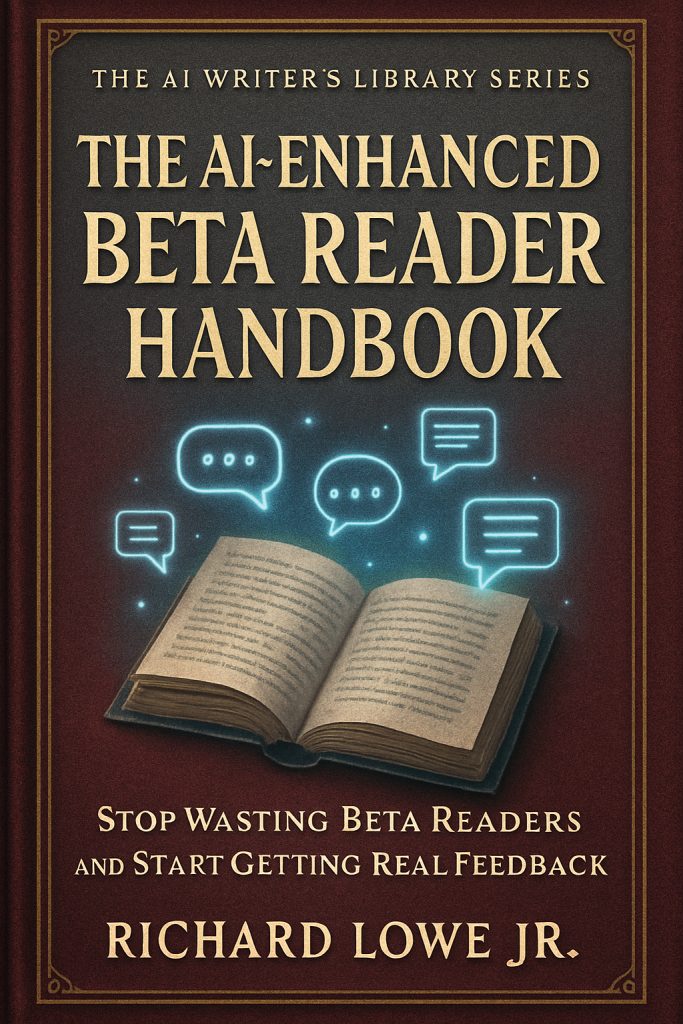
I ran a writing critique group for years. The feedback split into two useless categories.
Half the group marked proofreading errors — comma placement, word choice, the kind of thing any editor catches in an afternoon. Useful for nothing except confirming my manuscript had typos, which I already knew. The other half told me what they loved. Warm, encouraging, completely unactionable. I left every session with marked-up pages and no idea whether my story was working.
Then I sent a novel to a beta reader. He told me to burn it, bury it, and forget it ever existed.
Between those two experiences — proofreaders who couldn’t tell me what was broken and a reader who told me to incinerate the manuscript without explaining why — I understood the real problem. It wasn’t the readers. It was me. I had given people a job without giving them the tools to do it. The critique group defaulted to what they could do: proofreading is concrete, praise is safe. The beta reader had a strong reaction and no framework for turning that reaction into something I could use. “Burn it” is noise with emotional weight. What scene broke for him? What expectation did the book violate? Which character lost him and when? Without those answers, I had nothing.
The right questions change everything. Give a reader who “just felt something was off in chapter twelve” a specific framework for what they’re sensing, and they can tell you exactly which scene broke their investment and why. The reader didn’t get smarter. You gave them vocabulary for what they already knew. The proofreader in my critique group, asked the right questions, becomes someone who can identify where a scene’s logic breaks down. The “burn it” reader, properly debriefed, becomes a data point about a specific expectation your book violated for a specific kind of reader — which is either crucial information or a profile mismatch you can confidently ignore.
I’ve published 113+ books and ghostwritten 54+ more. My clients have secured over $30 million in venture capital. I’m AuDHD, which means when I hit a system that wasn’t working, I didn’t accept it — I rebuilt it. This handbook is the rebuilt system. Everything I learned from years of critique groups, beta readers who couldn’t articulate their reactions, and one memorable instruction to commit arson on my own manuscript.
The feedback doesn’t change. Your ability to use it does.
$29.95
One-time investment • Lifetime access • Instant download
Get The Handbook →
14-Day Money-Back Guarantee
If this handbook doesn’t transform your beta reading process, request a full refund. No questions.
Questions
Why do beta readers give such useless feedback?
Because you gave them a job without giving them the tools to do it. Readers default to what they can do — proofreading is concrete, praise is safe, strong reactions produce “I loved it” or “this didn’t work” without diagnosis. The problem isn’t the readers. It’s the questions. Vague questions produce vague responses. “What did you think?” gets you “I loved it.” “Where did you want to stop reading?” gets you the scene that lost them. The handbook covers exactly which questions produce actionable answers across every aspect of manuscript evaluation.
How do I handle a beta reader who just says everything is terrible?
That’s the lone wolf problem — one reader with a strong reaction and zero diagnostic value. “Burn it” tells you nothing without knowing which scene broke for them, which expectation the book violated, what kind of reader they are and whether that reader is your audience. The handbook teaches you to debrief strong reactions into useful information: what specifically triggered the response, whether it reflects a real problem or a profile mismatch, and how to weight it against other feedback. Sometimes the lone wolf is right. Usually they’re a data point about one reader’s specific expectations, not a verdict on your book.
How do I stop critique groups from just marking typos?
Give them a framework that redirects their attention. Proofreaders mark typos because typos are visible and concrete — they have vocabulary for that. They don’t have vocabulary for structural problems, pacing issues, or character inconsistencies. The handbook provides question frameworks that give critique group members specific things to look for at the structural level, turning proofreaders into analysts without requiring them to become editors. The reader who spots every comma error can also tell you where they lost the thread of a scene — they just need to be asked in a way that makes the answer accessible.
How do I find beta readers who match my actual audience?
Start with genre match — readers who don’t read your genre give feedback shaped by wrong expectations. Then vet for reading habits and feedback quality before you commit your full manuscript. The handbook covers where to find qualified readers, qualifying questions that reveal whether someone will provide useful feedback, and sample chapter tests that show you what a reader’s feedback looks like before you hand them 400 pages. Your mom loved it. Your target audience is different people with different expectations.
How do I handle contradictory feedback?
First determine whether the contradiction is a real problem or a preference mismatch. When multiple readers flag the same scene differently — one says too slow, another says confusing, another says something felt off — that’s usually a real problem being sensed from different angles. When one reader wants more romance and another wants less, that’s readers wanting different books. The handbook covers how to identify which kind of contradiction you’re dealing with and how to weight feedback based on reader qualifications and profile match to your target audience.
What does the AI review board do that human readers can’t?
AI can screen your manuscript before humans see it, catching continuity errors, pacing problems, and timeline inconsistencies so your beta readers can focus on what only humans can evaluate. It can synthesize feedback from multiple readers, finding patterns across thousands of words of response. It can test your revisions before you burn fresh readers on a version that might have introduced new problems. The 12-member review board in the handbook creates AI personas for structural analysis, dialogue, pacing, emotional resonance, genre expertise, and more — giving you multiple analytical perspectives before human readers ever see the manuscript.
What if feedback contradicts my creative vision?
You’re the author. You decide. But first distinguish between feedback asking you to write better — execution problems that are worth fixing — and feedback asking you to write differently, which is a preference mismatch you can ignore. The handbook covers the author authority principle: how to evaluate whether you’re wrong or just outnumbered, and when to maintain your vision despite strong reader disagreement. Feedback informs revision. It doesn’t override authorship.
Refund policy?
14 days. If it doesn’t transform your beta reading process, full refund. No questions.
The beta reader who told me to burn my novel was giving me the most honest response he had. He genuinely hated it. That reaction contained real information — about the book, about his expectations, about the gap between what I’d written and what he’d needed it to be. I just didn’t know how to extract it yet.
The critique group proofreaders were doing their best with the tools they had. They could see the typos. They couldn’t see the structural problem three chapters earlier that was making everything downstream feel wrong. Nobody gave them a way to find it.
That’s the whole handbook. Give readers the right tools and the right questions, and the feedback you’ve been getting all along becomes useful. The readers were never the problem.
$29.95
One-time investment • Lifetime access • Instant download
Get The Handbook →
14-Day Money-Back Guarantee
If this handbook doesn’t transform your beta reading process, request a full refund. No questions.
Part of the AI Writer’s Library Series. See also: Revision Handbook | Character Writer’s Handbook