
Most dogs forget. That’s the gift of being a dog. Every morning is new. Every walk is the first walk. Every return of the owner is a miracle that has never happened before.
Bodie remembered everything.
He remembered the first hand that touched him, in the whelping box at a breeder outside Spokane, a woman’s hand that smelled like antiseptic and kibble. He remembered each of his littermates by scent. He remembered the car ride to his first home, the leather seat, the window cracked two inches, the smell of pine trees and gasoline.
He remembered the first family. The Kowalskis. Two kids, a fenced yard, a couch he wasn’t supposed to be on but always was. He remembered the boy, Jake, who smelled like grass and peanut butter and pulled his ears too hard but meant well. He remembered the girl, Mia, who whispered secrets to him at bedtime and cried into his neck when the other girls at school were cruel.
He remembered the day Mrs. Kowalski loaded him into the car and drove him to the shelter. He remembered her voice saying “I’m sorry” and her hands shaking when she signed the paperwork. He remembered the smell of the kennel, bleach and fear and other dogs’ urine, and the sound of the door closing.
Most dogs forget. Bodie stood in that kennel and remembered every minute of the life that had just ended.
The second family was shorter. A man who lived alone in an apartment that smelled like beer and microwave dinners. The man was kind when he was sober and absent when he wasn’t. Bodie remembered the good nights, when the man sat on the floor and scratched behind his ears and said “You’re the only good thing, buddy.” He remembered the bad nights, when the man didn’t come home and Bodie waited by the door until his bladder ached and he had no choice but to go on the kitchen floor and then feel the shame of it when the man came home and yelled.
He remembered the second shelter. Different building, same bleach, same door closing behind him.
The third family lasted. Margaret and Don Esposito, retired, a house in Boise with a yard that backed up to a creek. Margaret smelled like lavender hand cream and Don smelled like pipe tobacco and motor oil. They were slow. Bodie was seven by then and slow suited him.
He remembered the walks along the creek. Don throwing a tennis ball with an arm that couldn’t reach the fence anymore. Margaret reading on the porch with Bodie’s head on her feet. The rhythms of a household that moved at the pace of old joints and afternoon naps and dinners at five-thirty because waiting until six seemed pointless at their age.
He remembered when Don’s smell changed. The sweet, wrong smell that crept in over months, that Bodie could detect long before the doctors did. He remembered Margaret coming home from the hospital alone, sitting on the kitchen floor, and holding him while she cried in a way that sounded like something tearing.
He remembered the year after. Margaret talking to Don’s chair. Margaret setting two coffee cups on the table and then staring at the second one. Margaret sleeping on Don’s side of the bed and Bodie sleeping on Margaret’s side and neither of them filling the space that was left.
Bodie was twelve now. His hips hurt. His eyes were clouding. The walks along the creek had shortened to the mailbox and back. Margaret was slower too, and sometimes she forgot things, which Bodie found impossible to understand because he had never forgotten anything in his life.
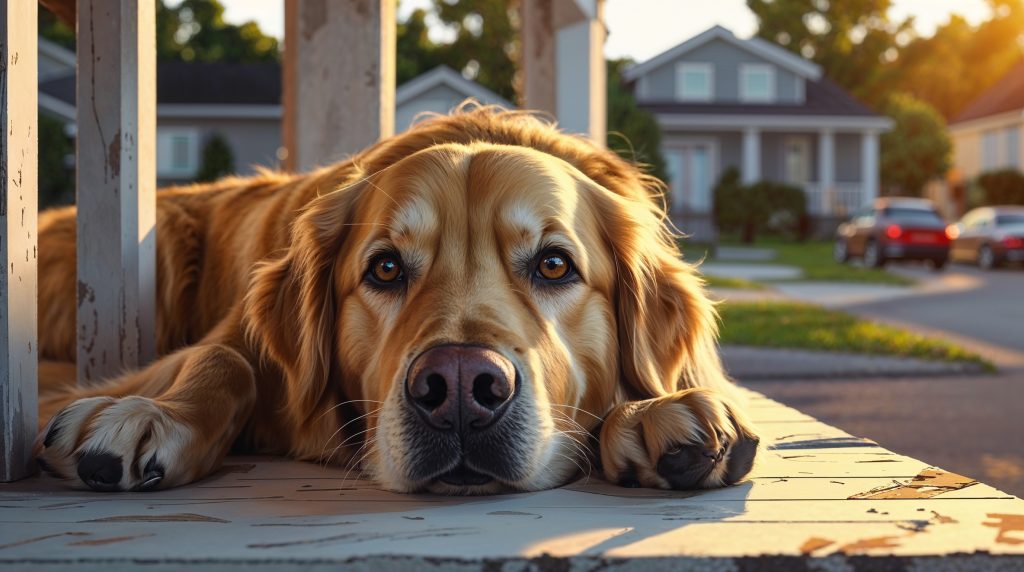
He lay on the porch in the afternoon sun and remembered it all. Every hand. Every voice. Every car ride and kennel and couch and creek and tennis ball. The good and the bad stored with equal clarity, because memory doesn’t sort by preference. It just keeps everything.
Margaret came out with a blanket and draped it over him, even though it was warm. She sat in her chair and put her hand on his head.
“Good boy,” she said.
Bodie remembered the first time someone said that to him. He’d been eight weeks old. It had sounded like the whole world opening up.
It still did.
Free Stories, Straight to Your Inbox
Start with Nine Doors, nine short stories across nine genres, yours free the moment you sign up. After that, the occasional new collection and a note when there's a new book worth your time. No spam, no daily clutter. Just good stories.
We use MailerLite to manage our list and send these emails. Your address is used only to send you what you signed up for. We will not sell it, share it, or use it for anything else, and you can unsubscribe anytime.