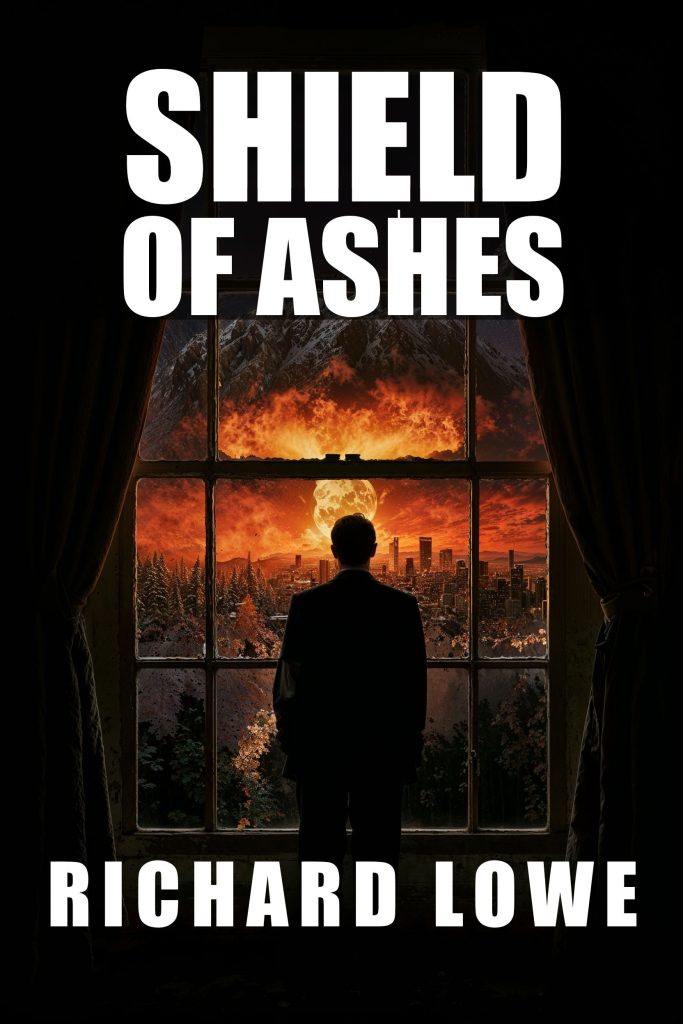
The world didn’t end with a single decision. It ended with a thousand.
Content Warning: This novel contains graphic depictions of nuclear warfare, mass civilian casualties, biological and chemical weapons, political assassination, and the collapse of civil infrastructure across multiple nations. Intended for mature readers.
Donald Trump’s third term. A world already fracturing under the weight of old alliances and new ambitions — and then North Korea launches a ballistic missile at Beijing. What follows is not a war. It’s a cascade. China retaliates against the launch sites. India and Pakistan, watching the same satellite feeds, reach for weapons they’ve never used. Iran makes its move against Israel. Russia deploys biological and chemical weapons the world thought were banned by treaties everyone pretended still mattered. And in Washington, an 82-year-old president with an artificial heart tries, and fails, and tries again, to stop a fire that nobody can outrun.
But nobody is watching Ukraine. They should be.
Shield of Ashes spans fourteen countries and more than a hundred characters across seven days of escalating catastrophe. From the generals making decisions in hardened bunkers to the families who never made it home. A Ukrainian drone programmer who encoded her grief into forty-seven thousand autonomous weapons and called the targeting system the Sofiyka Protocol, after her daughter. A rogue American pilot flying toward a target nobody told him to stop hitting. A Houston couple dying slowly from radiation exposure in their kitchen, holding each other while the city burns outside. A Pakistani launch officer who turns a key and spends the rest of his life wishing he hadn’t. An Iranian intelligence director who set the whole thing in motion and watches it unfold from forty meters underground.
No character in this novel is simply a villain. Everyone acts rationally within their own information and incentives. Catastrophe doesn’t emerge from evil — it emerges from collective rationality, from a chain of reasonable decisions that leads somewhere no one intended to go.
Behind every casualty figure is a person who had somewhere to be. Shield of Ashes is the thriller that asks what happens when the small nations stop waiting to be saved — and start fighting back.
| ISBN (Paperback): |
978-1-946458-95-7 |
| ISBN (eBook): |
978-1-946458-96-4 |
| Publisher: |
The Writing King |
| Publication Date: |
April 10, 2026 |
| Print Length: |
834 pages |
| Language: |
English |
Questions
What genre is this book?
Shield of Ashes is a near-future political and military thriller set in 2029. It follows a nuclear escalation scenario across fourteen countries over seven days, combining geopolitical strategy, military action, intelligence tradecraft, and civilian survival narratives across more than a hundred characters.
Is this a political book?
It’s not a polemic. Trump is the hero of the story — an 82-year-old president with an artificial heart trying his hardest to stop a war that keeps escalating beyond his control. No character is written as simply wrong or simply evil. The catastrophe doesn’t come from villainy. It comes from rational actors making reasonable decisions in sequence, each one making the next one worse.
How is Ukraine portrayed?
Ukraine is central to the novel and treated with care. While the great powers debate frameworks and hold meetings, Ukraine has been quietly building — weapons, alliances, capabilities that nobody expected. The novel’s argument is that small nations who have been invaded and abandoned don’t wait for permission. They prepare. Shield of Ashes takes that seriously.
How realistic is the escalation scenario?
The weapons systems, military procedures, intelligence tradecraft, and nuclear doctrine are all grounded in real-world research. The scenario extrapolates from current geopolitical tensions using actual strategic logic — not Hollywood action movie logic. Readers with military or intelligence backgrounds have described it as uncomfortably plausible.
Is this part of a series?
This is a standalone novel. The story is complete. The ending resolves the central crisis — though it leaves the world changed in ways that suggest the future will be complicated. There is room for a sequel, but none is required.
Who would enjoy this book?
Readers who follow international affairs and want fiction that takes the real world seriously. Fans of Tom Clancy, Vince Flynn, and Daniel Silva who want a thriller grounded in current geopolitics rather than Cold War assumptions. Anyone who has wondered what a real nuclear crisis would actually look like — not the movie version, but the version where nobody has complete information and every decision has consequences.
Read the Opening
Prologue
The Light
Ministry of Intelligence and Security (MOIS) Crisis Center, Tehran, Iran, Late Afternoon
The crisis center smelled of cold coffee and ozone from equipment that never shut down. Fluorescent lights hummed above monitors showing feeds from across the Middle East, the eternal vigilance of a nation surrounded by enemies.
Deputy Director Hamid Rezaei was explaining regional coordination protocols on the electronic whiteboard when the encrypted phone on the conference table erupted with the tone reserved for national catastrophe.
“Sir,” came Communications Officer Mohsen’s voice, the words tumbling over each other, “multiple confirmations of a nuclear detonation in the Karaj industrial zone.”
Rezaei placed the stylus on the console and adjusted his glasses. “Confirmed nuclear yield?”
“Ground observers report a small nuclear explosion ten minutes ago. The entire Alborz Steel Complex has been destroyed. The industrial district and adjacent neighborhoods have been obliterated.” Mohsen was breathing hard, papers rustling on his end.
Across the secure table, the chair once occupied by Major Kim Jong-ho of North Korea was already empty. Foreign liaison officers were evacuated automatically when the alarm hit.
“Estimated casualties?” Rezaei asked, activating the wall-mounted displays.
“Initial projections put fatalities at seventy-five thousand.” A pause while Mohsen steadied himself. “Collateral deaths from radiation, fire, and collapse will drive it higher. Possibly past one hundred thousand.”
The screens came alive with drone footage showing jagged rings of ruin where Iran’s largest steel facility had stood. The crater stretched across the industrial district into adjacent neighborhoods.
“Attack vector?”
“Negative, sir. No missile trails, no incursions, no warning.” Mohsen’s voice dropped. “Potentially Israel or America.”
Rezaei removed his glasses and cleaned them with his handkerchief, studying the imagery. The yield was consistent with a tactical submarine-launched weapon, optimized for industry with deliberate civilian bleed.
The factory workers starting their afternoon shift. My cousin, two kilometers from the blast zone.
He put his glasses back on.
“Dolphin-class boats could have delivered it without a trace,” Mohsen said. “Too early for forensics.”
A nation had been gutted, and everyone in the room recognized what came next.
Rezaei traced the blast pattern on the display. When he finally spoke, his voice was quiet.
“All victories require sacrifice.”
Amazon Kindle
Paperback (IngramSpark)
epub (Kobo)
×
Prologue
The Light
Ministry of Intelligence and Security (MOIS) Crisis Center, Tehran, Iran, Late Afternoon
The crisis center smelled of cold coffee and ozone from equipment that never shut down. Fluorescent lights hummed above monitors showing feeds from across the Middle East, the eternal vigilance of a nation surrounded by enemies.
Deputy Director Hamid Rezaei was explaining regional coordination protocols on the electronic whiteboard when the encrypted phone on the conference table erupted with the tone reserved for national catastrophe.
“Sir,” came Communications Officer Mohsen’s voice, the words tumbling over each other, “multiple confirmations of a nuclear detonation in the Karaj industrial zone.”
Rezaei placed the stylus on the console and adjusted his glasses. “Confirmed nuclear yield?”
“Ground observers report a small nuclear explosion ten minutes ago. The entire Alborz Steel Complex has been destroyed. The industrial district and adjacent neighborhoods have been obliterated.” Mohsen was breathing hard, papers rustling on his end.
Across the secure table, the chair once occupied by Major Kim Jong-ho of North Korea was already empty. Foreign liaison officers were evacuated automatically when the alarm hit.
“Estimated casualties?” Rezaei asked, activating the wall-mounted displays.
“Initial projections put fatalities at seventy-five thousand.” A pause while Mohsen steadied himself. “Collateral deaths from radiation, fire, and collapse will drive it higher. Possibly past one hundred thousand.”
The screens came alive with drone footage showing jagged rings of ruin where Iran’s largest steel facility had stood. The crater stretched across the industrial district into adjacent neighborhoods.
“Attack vector?”
“Negative, sir. No missile trails, no incursions, no warning.” Mohsen’s voice dropped. “Potentially Israel or America.”
Rezaei removed his glasses and cleaned them with his handkerchief, studying the imagery. The yield was consistent with a tactical submarine-launched weapon, optimized for industry with deliberate civilian bleed.
The factory workers starting their afternoon shift. My cousin, two kilometers from the blast zone.
He put his glasses back on.
“Dolphin-class boats could have delivered it without a trace,” Mohsen said. “Too early for forensics.”
A nation had been gutted, and everyone in the room recognized what came next.
Rezaei traced the blast pattern on the display. When he finally spoke, his voice was quiet.
“All victories require sacrifice.”
— End of Prologue —
Amazon Kindle
Paperback (IngramSpark)
epub (Kobo)