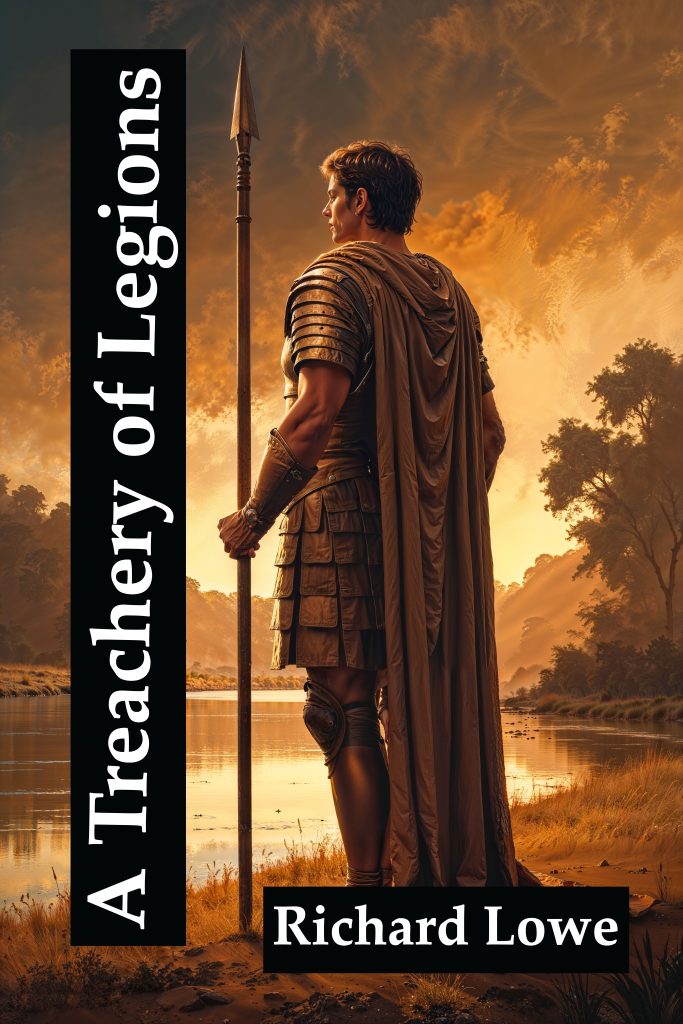
Rome, 69 AD. Four men will claim the throne before the year is out. Three of them will die for it.
Content Warning: This book contains graphic battle violence, the sack and burning of a city, political assassination, and the brutal realities of Roman civil war. Recommended for mature readers.
Marcus Antonius Primus has spent twenty years earning everything Rome can give a man who started with nothing — a tenant farmer’s son from Toulouse who enlisted at thirteen, picked up a dying centurion’s vine staff in a river battle at sixteen, and built a military career through competence and the careful management of the right kind of attention. Now he commands a legion on the Danube frontier, watching the empire tear itself apart from a safe distance.
He does not stay at a safe distance.
What follows is the story of a man who reads situations correctly and uses the reading for himself — who feeds intelligence to the wrong side of a civil war, marches without orders, wins a battle that makes an emperor, and cannot hold his men in the city afterward. He carries Cremona and the betrayal for the rest of his life, without excuse and without resolution, the way men carry the permanent things.
Alongside him: Julia, his wife, who has been running a twenty-year political operation in Rome while he fights his wars, and who knows things he doesn’t know she knows. Brunhild, a Quadi chieftain’s daughter across the Danube, who reads Roman formations because Romans killed her kin and who meets Primus at a riverbank parley with intelligence he has no reason to trust and acts on immediately. And Vespasian — the compact, unremarkable man who ends the novel with a sword at Primus’s throat, asking a question he already knows the answer to.
A Treachery of Legions is a novel about authority and its cost, about the distance between the man you say you are and the man you have been, and about the specific quality of a frontier river at dawn when you are the only person awake and the work is what there is.
Narrated by Primus himself at sixty-three, looking back at everything with the clarity and the selective blindness of a man who has had decades to decide what version of events he can live with, this is historical fiction that refuses to make the past comfortable — that insists the Romans were not performing modernity in togas, that guilt was a different thing for them, that the gods were present and operational, and that the distance between their world and ours is real and worth inhabiting.
Based on the documented historical figure of Marcus Antonius Primus, general of the Flavian cause in the Year of the Four Emperors. The interior life, the marriage, the woman across the river, and the sword scene are invented. The war, the battles, the sack of Cremona, and the burning of the Capitoline are not.
| ISBN (Paperback): |
978-1-972810-22-4 |
| ISBN (eBook): |
978-1-972810-23-1 |
| Publisher: |
The Writing King |
| Publication Date: |
April 8, 2026 |
| Print Length: |
340 pages |
| Language: |
English |
Questions
Who was Marcus Antonius Primus?
A documented historical figure — general of the Flavian cause in the Year of the Four Emperors (69 AD). He marched without orders, won the second Battle of Cremona, helped make Vespasian emperor, and then could not stop his troops from sacking the city. He spent the rest of his life in comfortable retirement, never trusted with significant command again. The interior life, the marriage, the woman across the river, and the sword scene are invented. The war, the battles, the sack of Cremona, and the burning of the Capitoline are not.
How is this narrated?
By Primus himself at sixty-three, looking back. He has had decades to decide what version of events he can live with, and the novel is interested in that process — the clarity and the selective blindness of a man who knows what he did and has had a long time to arrange his account of it.
Is this historically accurate?
The major events are real. The Year of the Four Emperors, the Flavian march on Rome, the second Battle of Cremona, the sack of the city, the burning of the Capitoline, Vespasian’s ascension — all documented. The book is careful about how Romans actually thought and spoke, insisting they were not performing modernity in togas. The interior life, certain relationships, and specific scenes are the author’s invention built on the historical record.
Who would enjoy this book?
Readers who want Roman historical fiction that doesn’t romanticize its subject. Fans of Robert Harris, Steven Saylor, or Colleen McCullough who want something that takes Roman moral psychology seriously — where guilt operated differently, the gods were present and functional, and the distance between their world and ours is real and maintained.
Read the Opening
Prologue
The room smelled of lamp oil and cold stone and the particular stillness that comes when men have sent everyone else away.
He was not a tall man. I had expected tall. The dispatches from the east described him in the language men use for generals they respect, steady, capable, a soldier’s soldier, and I had built a picture from those words that did not match the compact, unremarkable figure standing three feet from me with a sword leveled at my throat.
The blade was plain iron, no decoration, the grip wrapped in plain leather worn to the shape of his hand. The kind of sword a man carries because he intends to use it, not because he wants anyone to look at it. It needed sharpening. He had not sharpened it. That was also information.
He had not raised his voice. He had not called guards. He had waited until the last of his attendants cleared the threshold, and then he had drawn the sword with the economy of a man performing a task he had thought about well in advance. The point was close enough that I could feel the cold coming off the iron.
I did not step back.
Not because it was brave. I did not step back because stepping back would have told him something about me that I did not want him to know, and in that room, in that moment, there was very little I still controlled. What I did with my feet was one of the things I could still choose.
He looked at me the way a man looks at a contract before he signs it. Checking the terms. Making certain he had read them correctly the first time.
Outside, Rome moved through its morning. Carts on the stones. Someone shouting at a slave in the street below. The ordinary machinery of a city that had spent the last year watching men kill each other over who got to stand in this room.
The man holding the sword had won. I had helped him win. These were facts we both held, and they did not explain the sword, except that they explained it completely.
I had come to this room believing I understood my position. Standing inside it, three feet from that blade, I began to revise.
His face told me nothing. That was itself a kind of information. Angry men show their anger. Frightened men show something behind the eyes. This man showed me the same face he probably showed a river he was deciding whether to cross: assessment, patience, the willingness to wait for the right moment and no particular feeling about the waiting.
He had been a soldier longer than I had. I had forgotten that. Or chosen to forget it, which amounts to the same thing.
The lamp on the table between us guttered once in a draft from somewhere and the light shifted and for a moment the shadows under his eyes deepened and he looked like what he was: a man past sixty who had spent forty years in the field and was now standing in a palace in Rome with a sword in his hand and a question he had not yet asked.
He drew a breath. He opened his mouth.
And I thought: here it is. Here is the thing I have been walking toward since that morning on a road in Toulouse when I was eleven years old and a legion came down out of the north and a cavalryman laughed at me, not unkindly, and I felt for the first time the weight of being the thing other men look past.
I waited for the question.
Amazon Kindle
Paperback (IngramSpark)
epub (Kobo)
×
Prologue
The room smelled of lamp oil and cold stone and the particular stillness that comes when men have sent everyone else away.
He was not a tall man. I had expected tall. The dispatches from the east described him in the language men use for generals they respect, steady, capable, a soldier’s soldier, and I had built a picture from those words that did not match the compact, unremarkable figure standing three feet from me with a sword leveled at my throat.
The blade was plain iron, no decoration, the grip wrapped in plain leather worn to the shape of his hand. The kind of sword a man carries because he intends to use it, not because he wants anyone to look at it. It needed sharpening. He had not sharpened it. That was also information.
He had not raised his voice. He had not called guards. He had waited until the last of his attendants cleared the threshold, and then he had drawn the sword with the economy of a man performing a task he had thought about well in advance. The point was close enough that I could feel the cold coming off the iron.
I did not step back.
Not because it was brave. I did not step back because stepping back would have told him something about me that I did not want him to know, and in that room, in that moment, there was very little I still controlled. What I did with my feet was one of the things I could still choose.
He looked at me the way a man looks at a contract before he signs it. Checking the terms. Making certain he had read them correctly the first time.
Outside, Rome moved through its morning. Carts on the stones. Someone shouting at a slave in the street below. The ordinary machinery of a city that had spent the last year watching men kill each other over who got to stand in this room.
The man holding the sword had won. I had helped him win. These were facts we both held, and they did not explain the sword, except that they explained it completely.
I had come to this room believing I understood my position. Standing inside it, three feet from that blade, I began to revise.
His face told me nothing. That was itself a kind of information. Angry men show their anger. Frightened men show something behind the eyes. This man showed me the same face he probably showed a river he was deciding whether to cross: assessment, patience, the willingness to wait for the right moment and no particular feeling about the waiting.
He had been a soldier longer than I had. I had forgotten that. Or chosen to forget it, which amounts to the same thing.
The lamp on the table between us guttered once in a draft from somewhere and the light shifted and for a moment the shadows under his eyes deepened and he looked like what he was: a man past sixty who had spent forty years in the field and was now standing in a palace in Rome with a sword in his hand and a question he had not yet asked.
He drew a breath. He opened his mouth.
And I thought: here it is. Here is the thing I have been walking toward since that morning on a road in Toulouse when I was eleven years old and a legion came down out of the north and a cavalryman laughed at me, not unkindly, and I felt for the first time the weight of being the thing other men look past.
I waited for the question.
Chapter One
Toulouse, 49 AD
I was eleven years old the first time I saw a Roman legion on the march and I have never entirely recovered from it. I say this from the vantage of sixty-three, which gives it more dignity than it deserves. What actually happened was that a small boy in a road forgot to fill the water jars because he was looking at soldiers, and a large and complicated set of consequences followed from that forgetting, and I have spent fifty years pretending the large and complicated consequences were the result of deliberate decision rather than distraction. They were mostly distraction. The deliberate decisions came later, once the distraction had already committed me to a direction.
They came down the road from the north in the early morning, before the heat, the way soldiers learn to move when they have been doing it long enough to know the morning is the only part of the day that belongs to them. I had gone out to fill the water jars from the well at the edge of our land. I stood in the road with the empty jars and watched them come and I forgot entirely about the water.
The legion filled the road from edge to edge. I had seen soldiers before, small groups of them moving between postings, two or three men with road dust on their tunics stopping at our well for water and moving on. Those men looked like what they were: individual men who carried weapons for a living and were tired and thirsty and wanted to get where they were going. The legion was not that. The legion looked like a single thing that happened to be made of men, the way a river is a single thing that happens to be made of water.
The sound they made was not what I had expected. What I heard instead was a deep and regular percussion, thousands of hobnailed sandals on the stone road in a rhythm so consistent it did not sound like thousands of separate men but like one vast slow heartbeat.
A cavalryman near the column’s edge saw me standing in the road. He said something to the man beside him, gesturing toward me with his chin. Both of them looked. The first man laughed. It was not a cruel laugh. That was what stayed with me, later, turning it over the way you turn a stone over to see what is underneath. It was the laugh of a man who has seen something small and unthreatening that briefly catches his eye. The laugh of a man who is entirely comfortable in his position and has no particular feeling about mine.
I watched until they were past and the road was empty and the dust was settling back onto the stones and then I stood there a while longer, still holding the empty jars, thinking about the laugh.
When I got home my father looked at the jars.
“The well is empty?” he said.
“I forgot to fill them.”
He was quiet for a moment. “What happened?”
“There was a legion on the road.”
He took the empty jars from me and set them down and looked at his hands. “Go fill them,” he said.
“I want to know about the legion.”
He was quiet for long enough that I thought he was not going to answer. Then: “A man is what Rome decides he is. No more.”
“And what does Rome decide we are?”
He picked up the jars and handed them back to me.
“Men who fill water jars,” he said. “Go.”
— End of Preview —
Amazon Kindle
Paperback (IngramSpark)
epub (Kobo)