
I. Kael
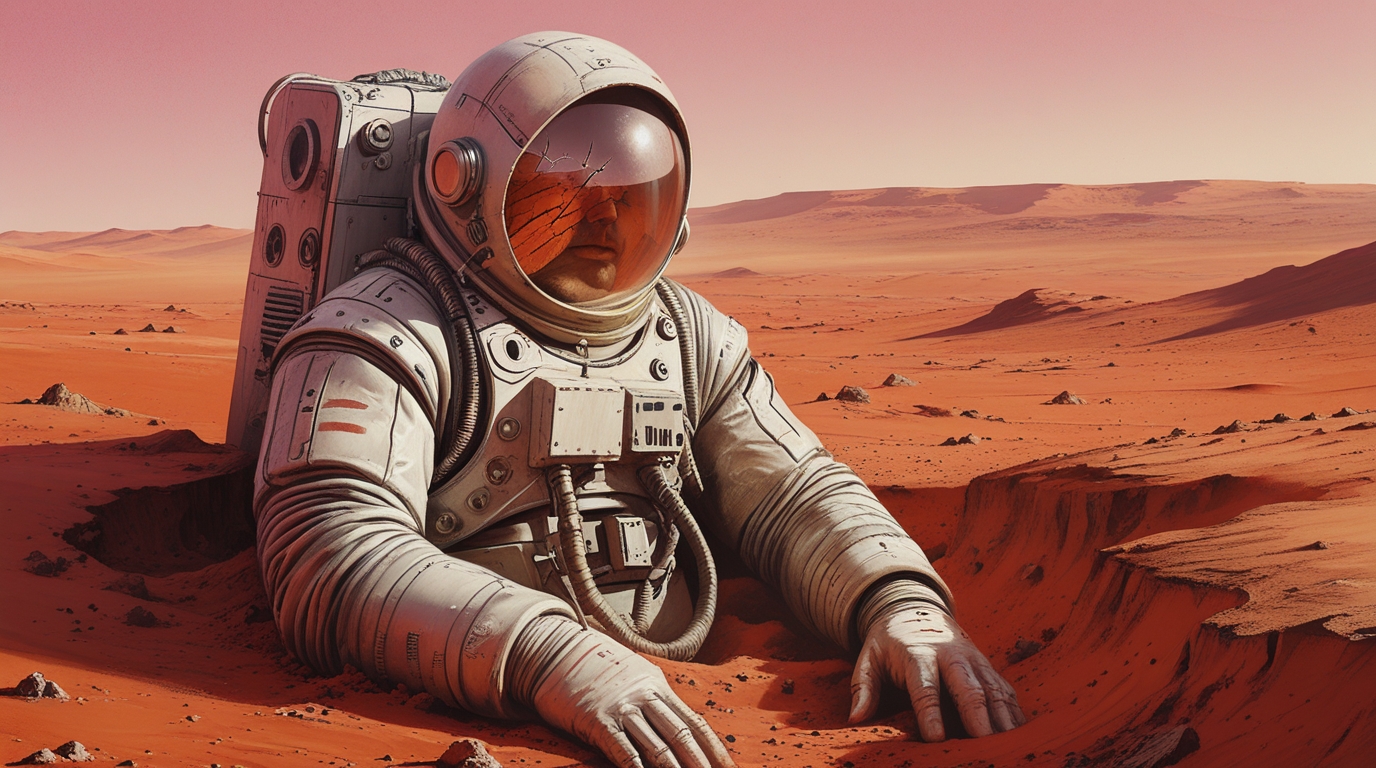
The first thing Kael Oduya planted on Mars was a flag. The second was a coffin.
They found the body sixty meters from the landing site, half-buried in red dust, faceplate cracked, suit fabric bleached white by centuries of ultraviolet. A human body on a planet where no human had ever been.
“Base, we got a problem.”
Commander Lín Zhāng’s voice came back on a three-second delay. “Define problem.”
“There’s a dead person out here.”
The silence lasted longer than three seconds.
Kael knelt beside the body. The suit was old. Not just old. Ancient. Bulky and crude, with visible rivets and a helmet that looked hand-built. A patch on the shoulder, faded past reading. Something that might have been a flag on the chest. The body inside was mummified, the Martian cold and vacuum having done what embalming never could. Preserved for centuries. Waiting.
“Kael, confirm what you’re seeing.”
“I’m seeing a human being in a pressure suit that’s three, four hundred years old. And, Commander? There’s a building behind the next ridge.”
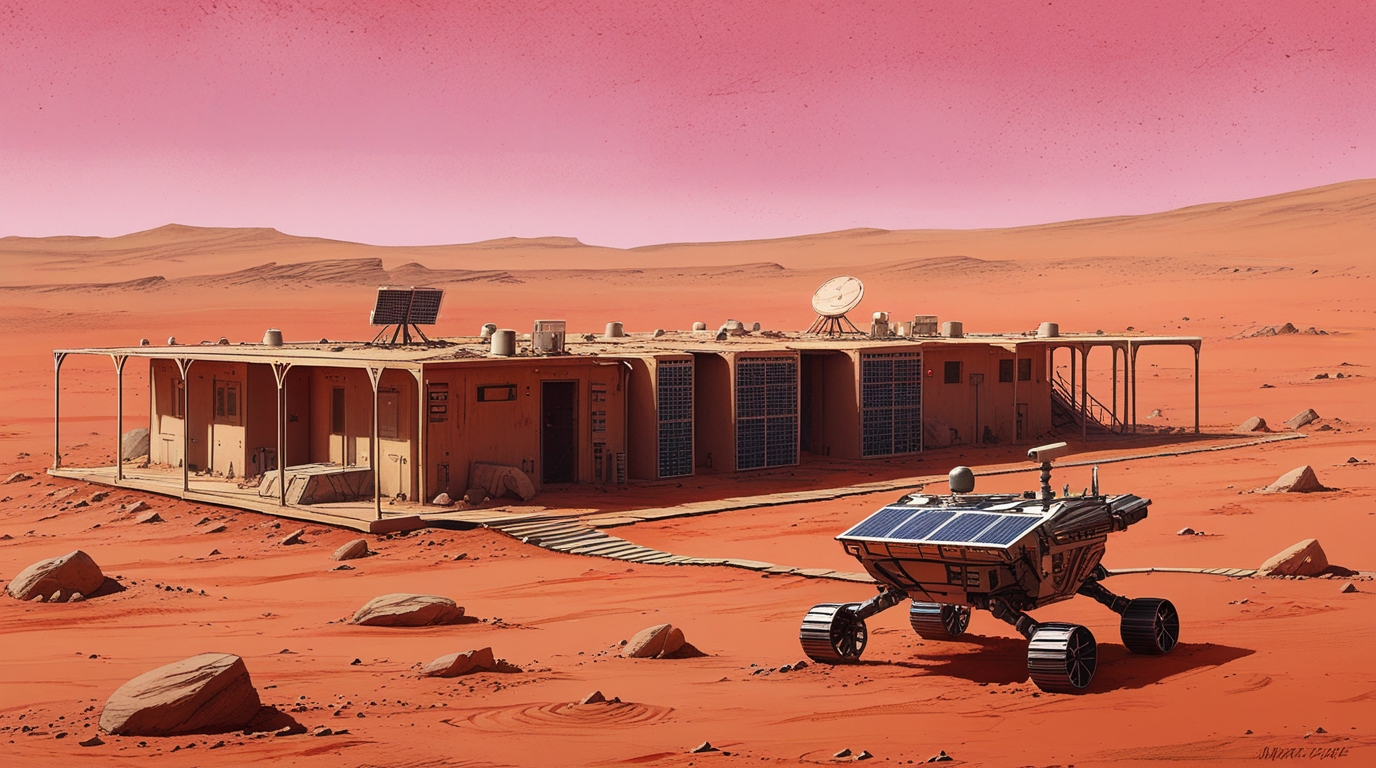
Lín told him to wait for backup. He didn’t. He walked the sixty meters to the ridge and looked over and there it was. Low modular structures connected by covered walkways, half-buried in red dust, solar panels still visible on the rooftops. A settlement. Human architecture on a planet that was supposed to be virgin ground.
The backup arrived twenty minutes later. Petros Karagiannis, their chief engineer, stood at the ridge and said nothing for a long time. Then he said “Well” and started walking down.
The base was intact. Mars didn’t rot things. The airlocks still functioned, which said something about the engineering that nobody was in the mood to admire. Kael’s team cycled through and found breathable air inside, stale and thin but breathable, maintained by systems running on residual solar power that had been trickling in through dust-covered panels for four hundred years.
They found the rest of the bodies. A hundred and twelve of them. Some in bunks, curled under blankets that had gone stiff. Some at workstations, slumped over consoles that had run out of things to display. Some in the greenhouse, which was dead, grow lights dark, planting beds full of desiccated stems that crumbled at a touch. A few in the medical bay, on tables, with tubes still attached to arms that had dried to leather.
The children were the hardest. Small suits in a storage room, sized for bodies that had been born here, grown here, died here. Kael counted eleven small suits. He counted them twice because the first time he lost track, which never happened. He was an engineer. He counted things for a living.
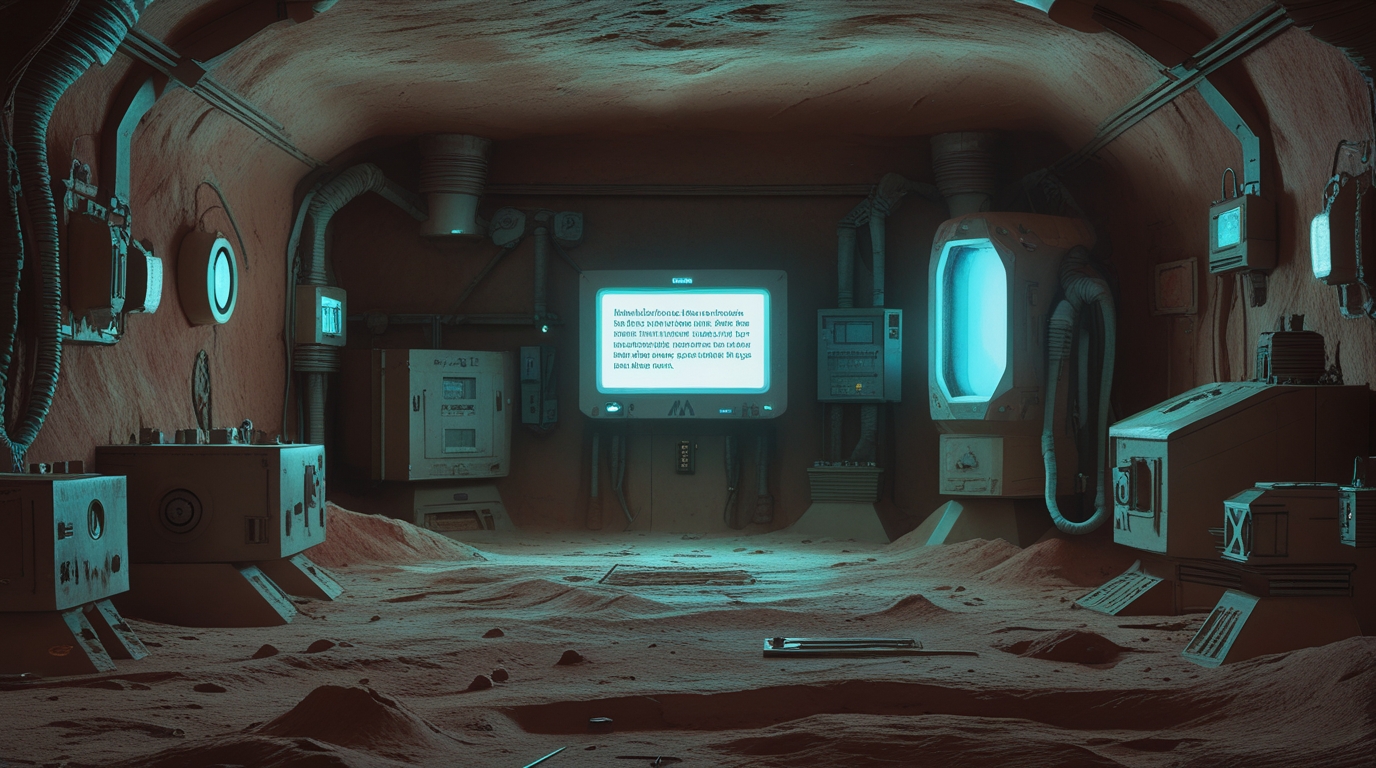
Petros found the power bus and restored the operations center. The main screen flickered, went white, then resolved into text. The last log entry.
Greenhouse 3 offline. Down to two food sources. Water recycler at 40%, rationing again. Fourteen dead this quarter. Mostly the children. If anyone reads this, we held on as long as we could. Earth stopped answering two years ago. We don’t know why. We’re not angry. We’re just tired.
Aliyah Patel, Colony Administrator, Mars Settlement One.
Kael read it. Read it again. Petros read it over his shoulder and walked away without speaking. Amara Diallo, who’d come in with the second team and was supposed to be documenting the structural layout, sat down on the floor of the operations center and put her head in her hands.
Lín arrived an hour later. She read the log. She didn’t sit down. She didn’t put her head in her hands. She stood in the center of the room and looked at the walls, at the screens, at the empty chairs where people had worked and waited and died, and her face did something that Kael had never seen it do. It went blank. Not calm. Not controlled. Blank, like a system that had received input it couldn’t process and needed a moment to reboot.
Then she said, “Find the rest of the logs. All of them. I want every entry from day one.”
The logs ran for eleven years. Four hundred and seven years old, preserved on storage systems that had survived because Mars didn’t corrode electronics any more than it corroded bodies. The first entry was dated with the optimism of someone who believed they were starting something permanent.
Day 1. We’re here. 200 souls, give or take the baby Tomás insists is coming any day now. The habitat modules are pressurized and holding. First meal on Mars tonight: reconstituted chicken with actual freeze-dried vegetables. Garcia insists on saying grace. Nobody stops him. Even the atheists are feeling something tonight.
Eleven years of entries after that. The tone shifted so gradually that you could read ten in a row and not notice the change. The excitement of the first year, the pragmatism of the second, the worry of the third when the first supply shipment was late, the fear of the fourth when it didn’t come at all. By year five the entries were shorter. By year seven they were clinical. By year nine they were just lists. Supplies remaining. Personnel alive. Systems functional. The human voice had been squeezed out, replaced by the language of inventory, because inventory was all that was left.
The final two years were the worst. Not because of what they said but because of the gaps between entries. Weeks, then months. Aliyah Patel had stopped writing because there was nothing left to write. The colony was dying and she’d run out of ways to describe it.
Lín called a meeting that night. She told her people what they’d found. She told them the first colony had been sent by an Earth that subsequently lost the records in centuries of chaos, wars, data purges. Two hundred people, forgotten. She told them they would bury the dead with proper ceremony, that they would preserve the base as a memorial, and that they would use its structures as initial shelter because the engineering was sound and it would save them eight weeks of construction time.
Nobody objected to living in a graveyard. The practical ones understood the math. The sentimental ones understood something else, that these walls deserved to have living people in them again.
Kael slept that night in a bunk where someone had died four centuries ago. The mattress was hard and the air was old and through the wall he could hear Petros snoring, which was the most alive sound he’d ever heard.
II. Adaora
The terraforming started three months after landing and the coughing started four months after that.
Dr. Adaora Nkem noticed it first as a statistical anomaly. Three cases in one week, all presenting with the same persistent dry cough that didn’t respond to standard treatment. The retrovirus should have handled it. Minor respiratory irritation was exactly what enhanced immune systems suppressed. But the coughs got worse.
“Dust exposure,” said Dr. Yuki Tanaka, her colleague and the mission’s xenobiologist, though that title had seemed like a joke when they’d launched. Mars was dead. Everyone knew Mars was dead. Yuki’s real job was supposed to be soil chemistry. “The lower habitat modules aren’t rated for the fine particulate we’re seeing.”
“The retrovirus compensates for dust exposure. We tested that before launch.”
“Martian dust is different. Higher perchlorate content, finer grain, more abrasive.”
“Run a panel on all three. Full respiratory.”
The panels came back normal. No infection. No chemical irritation. No allergic response. Just inflammation, deep in the lungs, getting worse by the day. Adaora ordered rest, hydration, and monitoring. The standard approach for something the standard tests couldn’t identify.
Nineteen cases by the end of the second week. Forty-six by the end of the third. Same progression every time: dry cough, then wet cough, then blood in the sputum, then difficulty breathing as lung tissue scarred. The retrovirus was making everything worse. Enhanced immune cells flooded the lungs and attacked inflamed tissue, interpreting damage as evidence of a pathogen and escalating their assault. The body’s own defenses were eating the lungs from inside.
The young and healthy went down fastest. That was the detail that made Adaora stop sleeping. The retrovirus was strongest in the young. Most aggressive response. Most tissue damage. The people dying first were the ones whose immune systems worked best. She was watching evolution run backward, fitness becoming a death sentence.
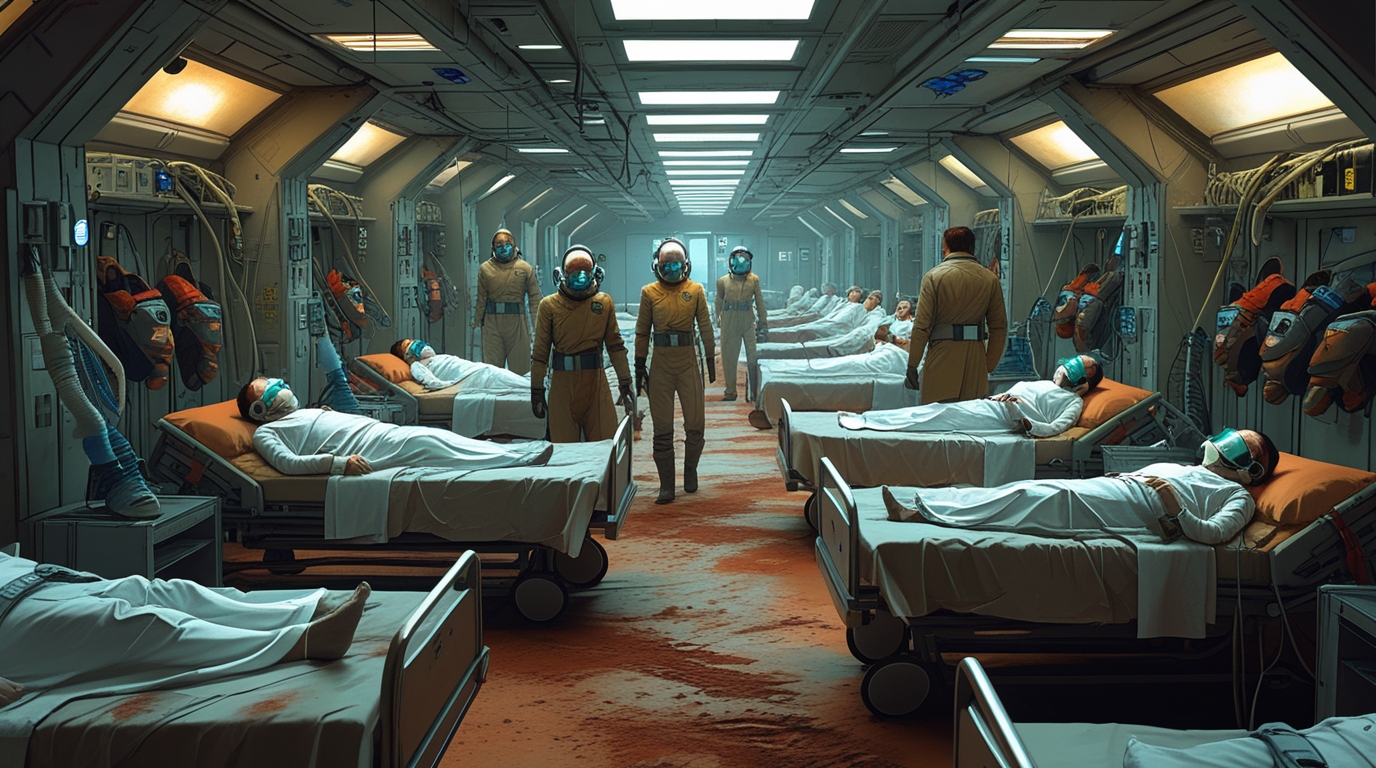
Kael Oduya came in on a Tuesday, coughing blood into his sleeve and trying to pretend he wasn’t. Amara Diallo had sent him. The medical bay was already full, beds lining the corridor, patients breathing through masks that hissed with supplemental oxygen. The sound of coughing was everywhere, wet and deep, the sound of lungs that were losing a war against themselves.
Adaora listened to his chest. Crackling in both lower lobes, fluid accumulating where air should be. She put him on oxygen and fluids and added his name to the list.
“Am I going to die?” he asked.
“Not if I can help it. Lie down. Drink nothing until I say otherwise.”
“What’s in the water?”
She looked at him. She had always valued honesty over comfort, a trait that made her a good doctor and a difficult friend. “We’re finding out.”
She’d already told Yuki to test the water. Adaora had noticed what the patient map was telling her: all forty-six cases were the heaviest water consumers. Field workers, atmospheric processor operators, agricultural staff. People who drank more than average because their jobs demanded it.
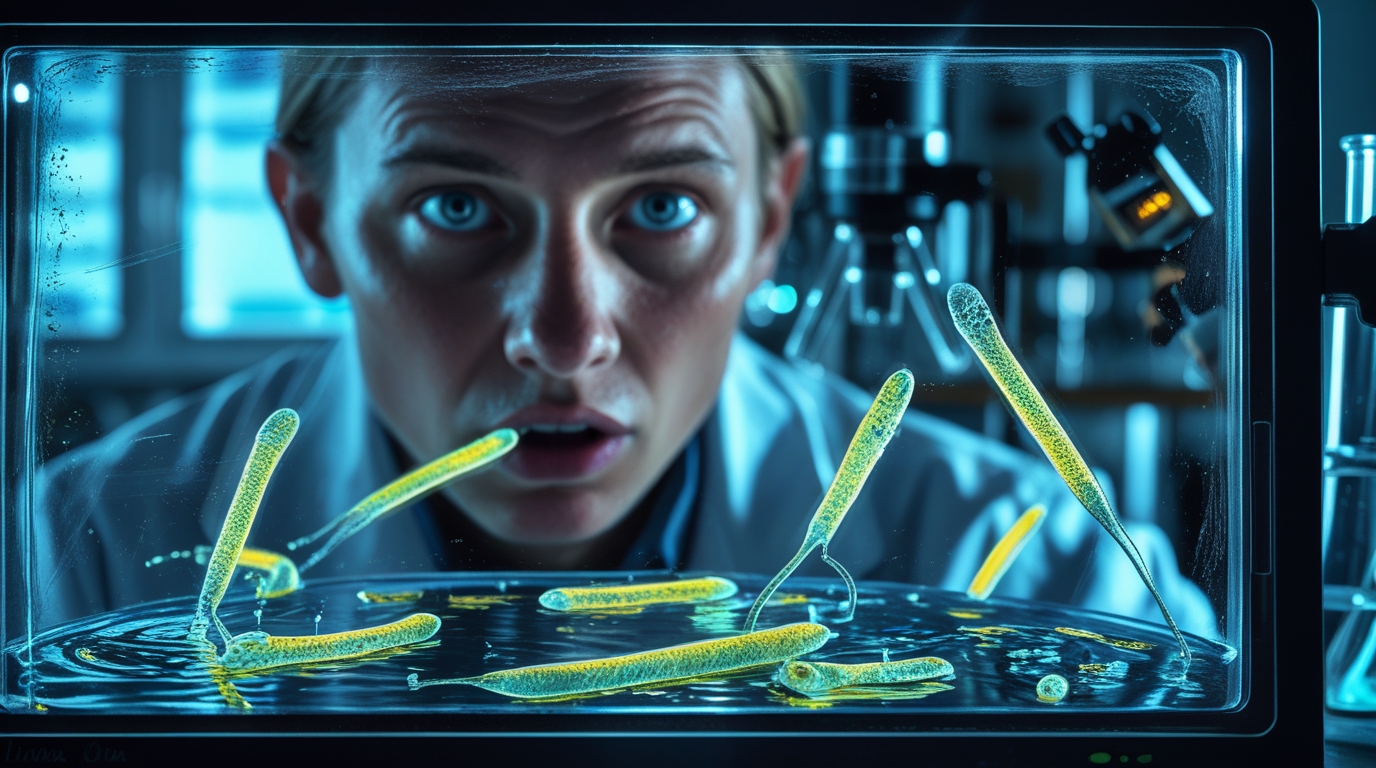
Yuki found them on a Thursday, four days later. “Adaora. Come look at this.”
The microscope display showed the water sample at four hundred times magnification. Nothing unusual. Mineral traces, dissolved gases, standard polar melt chemistry. Then Yuki pushed to a thousand.
They were moving. Rod-shaped. Translucent. Slow, with the deliberation of organisms that had been doing this for a very long time. Not in the database because they weren’t from Earth. Not flagged by the filtration because nobody had programmed the filters to look for life that shouldn’t exist.
“That’s not possible,” Adaora said.
“And yet.”
“Mars is dead.”
“Mars was dead. Or we thought it was. These were in the ice. The polar caps. Dormant for a billion years, give or take. We melted them out.”
Adaora sat down. Life on Mars. Ancient life, preserved in polar ice since Mars had oceans, awakened by the terraforming project, now living inside the lungs of her patients. Humanity’s first contact with alien biology, and it was killing people.
Yuki laid it out. The organisms were anaerobic, evolved on ancient Mars when the atmosphere was mostly CO2. Human lungs were the perfect habitat. Warm, moist, carbon dioxide on every exhale. They colonized the respiratory tract and metabolized the CO2 the way they’d been metabolizing it for a billion years. Their waste products were toxic to human tissue. Slow accumulation, scarring, progressive respiratory failure.
The retrovirus couldn’t see them. Designed for Earth pathogens. Martian biology didn’t match any signature in its library. It defaulted to generalized immune response, which was like using a flamethrower to kill an insect you couldn’t see. It destroyed everything in the area and the insect kept eating.
“How do we kill them?” Adaora asked.
“I need to map their biochemistry. Find a vulnerability. These are organisms from an entirely different domain of life. I can’t just throw antibiotics at them.”
“How long?”
“Weeks. Maybe more.”
“People will die.”
“I know.” Yuki’s voice was steady but her hands weren’t. “I’ll work faster than I’ve ever worked. But I need you to understand what we’re dealing with. This is the most important biological discovery in human history and it’s trying to suffocate your patients. I can’t rush it and I can’t afford to get it wrong.”
She didn’t rush it. Eleven people died while she worked. Three weeks of eighteen-hour days in the lab, mapping metabolic pathways that followed rules nobody had ever seen, testing compounds against organisms that responded to nothing in the pharmacological library. Eleven names added to the colony memorial, below Aliyah Patel’s two hundred.
III. Lín
Commander Lín Zhāng sent the transmission to Earth at 0300, when the communications window was optimal and the operations center was empty except for her. She kept it factual. Clinical. Pathogen description, origin, effects, case count, mortality rate. She requested emergency medical supplies, xenobiological expertise, and guidance.
She did not mention that she was terrified. Not of the disease. Of what Earth would do.
The response arrived twenty-six minutes later.
Mars Colony, this is Earth Central. Transmission received, classified Priority One. Effective immediately, all personnel movement between Mars and Earth orbit is suspended. No vessels will dock at Mars facilities. No personnel will depart Mars surface. Unmanned supply drops will continue on standard schedule with supplemental medical materials. Full quarantine protocols in effect until further notice. This is not a recommendation. This is an order.
Lín read it three times. Then she sat in the operations center, in the same room where Aliyah Patel had written her last log, and let the parallels wash over her. A colony on Mars. Earth pulling back. Supply shipments becoming the only connection to a home world that was afraid of what it had found.
The differences mattered. Aliyah’s Earth had simply stopped sending. Lost interest, lost funding, lost the records. This Earth was still engaged, still supplying, still connected. But the quarantine meant no people. No ships docking. No one coming and no one leaving. Mars was a box that Earth was keeping sealed.
She called a colony-wide meeting. The main greenhouse, the only space big enough. Lín stood on an equipment crate and told them straight. She didn’t soften it. These were people who’d crossed interplanetary space to move dirt on a dead world. They didn’t need softening.
Nobody panicked. They’d all read Aliyah’s logs. They’d all slept in the bunks of dead colonists. They knew what Earth was capable of, and quarantine was better than silence.
Amara Diallo said it from the back row. “So we sort it ourselves.” Flat. No drama. The way you’d say “pass the wrench.” Heads nodded around her.
Petros on comms from his bed, voice raspy with fluid: “We got smart people and we got time. Figure out the bug, build filters, keep working. Been doing hard things since we got here. This is just another hard thing.”
They sorted it themselves. Yuki cracked the biochemistry. The filtration fix was fabricated from Martian materials because Earth hadn’t sent anything that worked. Iron oxide and silicate compounds processed in a kiln they built from spare parts. Not elegant. But it caught the bacteria.
The treatment was worse. Immunosuppressants that partially disabled the retrovirus response. The colonists’ own enhanced immune systems were doing more damage than the microbes. To save their lungs, Adaora had to make them less enhanced. Less protected. More fragile in the old human way.
“Reduced retrovirus function,” Adaora told each patient. “Your immune system drops to baseline. More susceptible to conventional illness. Shorter lifespan.”
Kael, breathing easier on his third day of treatment: “By how much?”
“Nobody’s ever suppressed the retrovirus long-term. Maybe decades.”
“So instead of two-fifty, I live to one-fifty.”
“Possibly.”
“Still longer than Aliyah’s people got.” He looked at the ceiling. “Do what you gotta do, Doc. Got processors to run.”
IV. Adaora
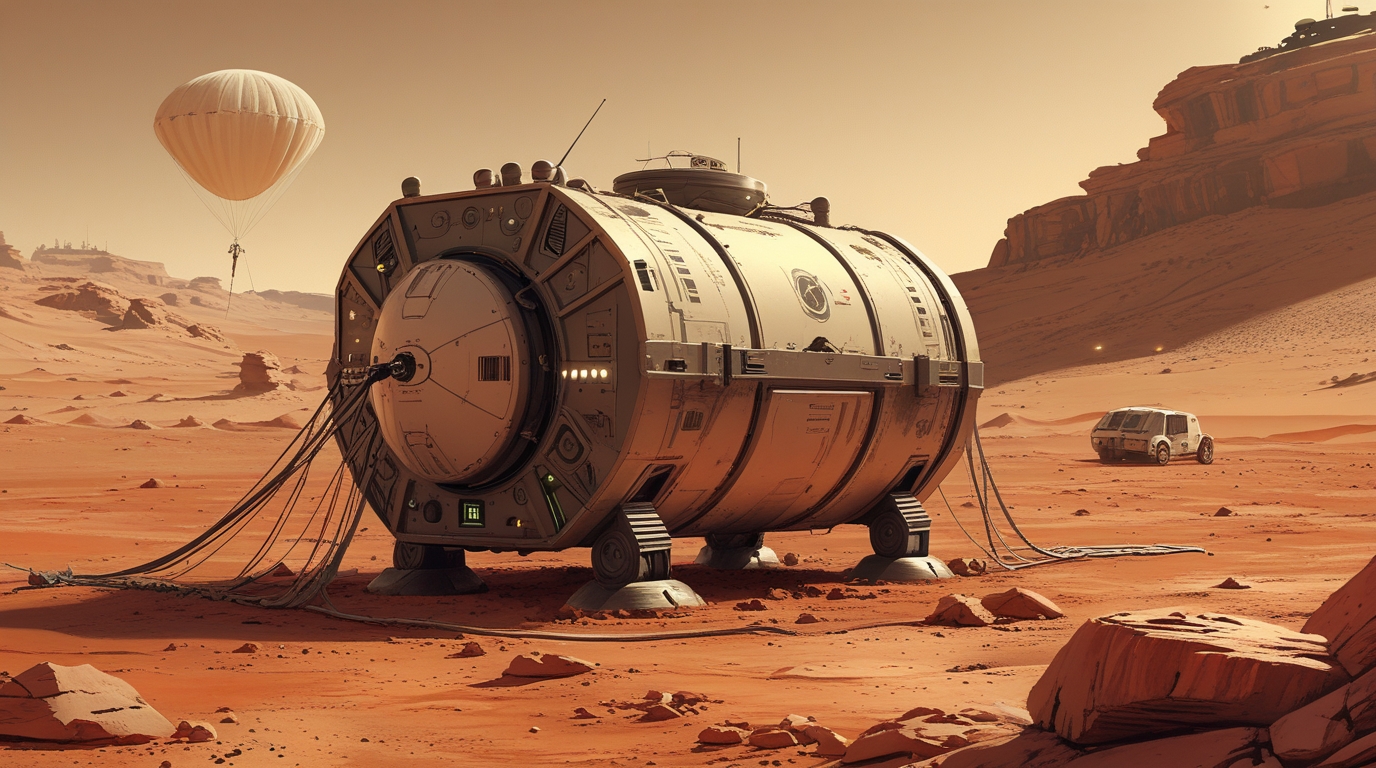
The supply drops came every six weeks. Unmanned pods on automated trajectories, decelerating on retro-rockets, landing in the designated zone three kilometers from the habitat. Nobody from Earth. No messages beyond the manifests.
Adaora watched the medical supplies come in and sorted them into two piles: useful and not. The ratio was roughly one to four. Earth sent standard antibiotics formulated for Earth pathogens. Adaora used them for secondary infections in immunosuppressed patients, which was something. Earth sent respiratory therapy equipment calibrated for Earth gravity. Her team recalibrated it, which took days they didn’t have. Earth sent diagnostic tools that couldn’t detect Martian microorganisms because nobody had updated the reference libraries. Those went to Yuki, who stripped them for parts.
“They’re trying,” Yuki said one evening, reassembling a spectral analyzer from components of three different Earth-sent instruments. “They just don’t understand what we need.”
“They could ask.”
“They’re scared. Scared people send what they have, not what you need.”
“Earth sends us parts for a house,” Amara said, arriving from her shift and inspecting a crate of water purification membranes sized for nothing in their system. “We build a boat.”
The phrase caught on. Within a month, “build a boat” was colony shorthand for improvising from inadequate materials. Within a year, it was just how Mars worked. Earth sends parts. Mars builds boats.
Adaora filed her first report on M. patelensis, as Yuki had named the organism, honoring Aliyah Patel. The naming felt right. The woman who’d died on Mars had her name attached to the first alien life humanity had ever discovered. There were worse monuments.
The report went to Earth and got back a wall of questions. How did the organisms reproduce? What was their growth rate? Could they survive in Earth-normal atmosphere? Could they be weaponized? Were there other organisms in the ice? Could the polar caps be sterilized?
Adaora answered what she could and ignored what she couldn’t. The weaponization question she ignored on principle. The sterilization question she ignored because it was insane. The polar caps were Mars’s water supply. Sterilize the ice and the colony died. Some things didn’t need explaining, but she explained them anyway.
The questions kept coming. Earth was fascinated by the biology and terrified of the implications and unable to decide which feeling should drive policy. The quarantine held. The supply drops continued. Mars solved its own problems with its own materials and its own people and slowly, so slowly that Adaora almost missed it, stopped asking Earth for permission.
V. Kael
Three years after landing, the colony’s language started to split.
Kael heard it first in the children. The ones born on Mars, or brought young enough that Earth was just a word, spoke differently from their parents. It wasn’t slang. It was efficiency. Pressure suit life, where every transmission ate battery. Recycled air, where breath was metered. Radio channels where brevity kept you alive.
Articles went first. “The” and “a” were dead weight. “Procs are up” became “Procs up.” “Going outside” became “goin’ topsid.” “The water’s been filtered” became “water’s clean-run.” Earth was “dirtside,” always had been among the adults, but the children took it further. Mars wasn’t Mars. Mars was “here.” Just here. The only place that mattered.
Pronouns at the start of sentences disappeared. “I need you at the processor” became “Needja at proc.” “We’ve got a problem” became “Got a problem.” Verbs compressed. Syllables dropped. What was left was dense, fast, functional. A language shaped by thin air and limited bandwidth.
Kael resisted longer than most. He was Nigerian-Irish by ancestry, had grown up speaking three languages, took pride in the full weight of English. But language was a river. It went where the current took it.
Amara picked it up from the younger crew on her shift. Petros, recovered but breathing short for the rest of his life, started using it without noticing. Even Lín, precise and formal in every official communication, caught herself saying “clean-run” in a staff meeting and paused, startled by her own mouth.
Five years after landing. The colony had a name now. Patel. After the woman who’d died here first. Five hundred people, seventy-three of them Mars-born. The oldest Mars-born child was eight. The youngest was three weeks. All of them spoke Martian before they spoke English, if they spoke English at all.
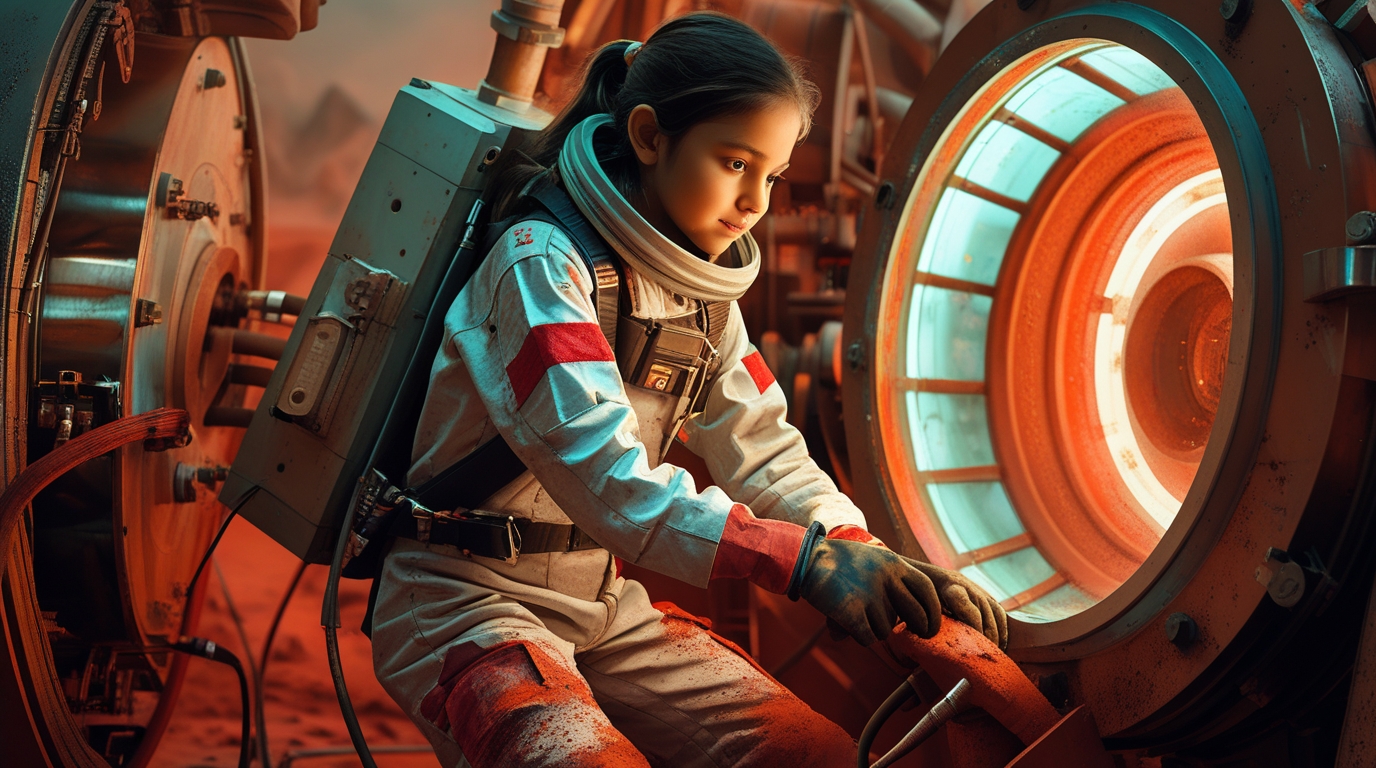
Kael’s daughter Saoirse was seven. Born in the medical bay, Adaora’s hands the first to hold her. She’d never seen Earth. Never breathed unprocessed air. Never felt rain or wind that pushed back or gravity that held you down like it meant it. Mars was her whole world and she spoke it like a native.
“Da, got a spike on Four.” She found him at the monitoring station, still wearing the patched pressure suit she’d decorated with a red stripe, colony style. All the Mars-born kids marked their suits. Identity in a world where everyone wore the same equipment.
“Show me.”
“Three’s clean-run but Four’s tempin’ hot. Amara says prob’ly dust but I checked filter an’ specks’re nominal. Somethin’ deeper in, yeah?”
“How d’you know it’s not the filter?”
“Cuz I checked filter, Da. Clean-run. Nominal. Whatever’s cookin’ Four, it ain’t intake-side.”
She was seven. She could diagnose a processing fault by sound and troubleshoot a filtration system by instinct. She’d been crawling through maintenance conduits since she could walk. The Mars-born grew up as engineers the way Earth children grew up as readers. It was the language of survival, and they spoke it before they spoke anything else.
They fixed Processor Four together, father and daughter, hands in the machinery. Halfway through, Kael realized he’d stopped translating between her dialect and his. He was just hearing it. Not an accent. A new language being born, one dropped article at a time, in the mouths of children who’d never known any air but recycled.
Eight years after landing. The memorial on the ridge held two hundred and fourteen names. The first two hundred, then their fourteen. Kael stood there on a sol when the dust was low and the sky was almost pink.
Saoirse found him. Ten years old. Tall for her age, thin the way all Mars-born were thin because low gravity stretched bones long.
“Da. Whatcha doin’ out here?”
“Reading the names.”
“Aliyah Patel.” She read the first one carved in the stone. “She the one wrote the logs, yeah?”
“Aye.”
“Teacher had us read ’em last sol. Whole run, start t’finish.” She was quiet for a moment, which was unusual for her. “Dirtside forgot ’em. Just stopped sendin’ and let ’em die.”
“They did.”
“That gonna happen to us?”
She asked it the way Mars-born asked everything. Direct and flat. No cushioning. Wasted breath was wasted air.
“No.”
“How d’you know?”
“Because Aliyah’s people needed dirtside to survive. We don’t. Not anymore.”
She thought about that. “Cuz we build boats.”
“Cuz we build boats.”
She nodded, satisfied. The logic was clean and she accepted it the way she accepted atmospheric readings and filtration specs, as data that either held up or didn’t.
“Da.”
“Yeah?”
“When I’m grown, I’m gonna run procs. Like you.”
“You already run procs better than half my crew.”
“Yeah-yeah. But I mean proper. Full shift. My own station.”
“You’ll have it.”
“An’ my kids after me. An’ theirs. All the way down ’til somebody takes a breath topsid without a helmet.”
Kael looked at the sky. Thin, cold, mostly CO2. Unbreathable. But point-zero-zero-four-one percent oxygen now, up from point-zero-zero-three-one when they’d landed. The line on the graph went up. It always went up.
“That’s the job,” he said.
“Yeah-yeah. That’s the job.”
They walked back together. Father and daughter. Two dialects, slowly merging into one. Behind them the memorial held its names, and ahead of them the processors hummed, feeding oxygen into an atmosphere that would take eight hundred years to breathe.
Mars resisted. It always did.
They fed it oxygen anyway.
VI. Adaora
Dr. Adaora Nkem filed her final research report on M. patelensis twelve years after the first case. Three hundred pages, the most comprehensive study of extraterrestrial biology in human history.
The summary was one paragraph:
Martian anaerobic microorganisms, designated M. patelensis in honor of Mars Settlement One administrator Aliyah Patel, represent the first confirmed extraterrestrial life. Preserved in polar ice for approximately 1.2 billion years, these organisms pose significant respiratory threat through waste product toxicity and retrovirus-mediated immune cascade. Effective filtration and immunosuppressive protocols developed on-site from local materials. M. patelensis confirms Mars supported microbial life during its wet period. All future colonization efforts should screen for endogenous microorganisms before connecting human water systems to local ice sources.
She sent it to Earth and to the colony archive. Then she went to the greenhouse, because the greenhouse was where she went when the weight of being the person who kept five hundred people alive got heavy enough to notice.
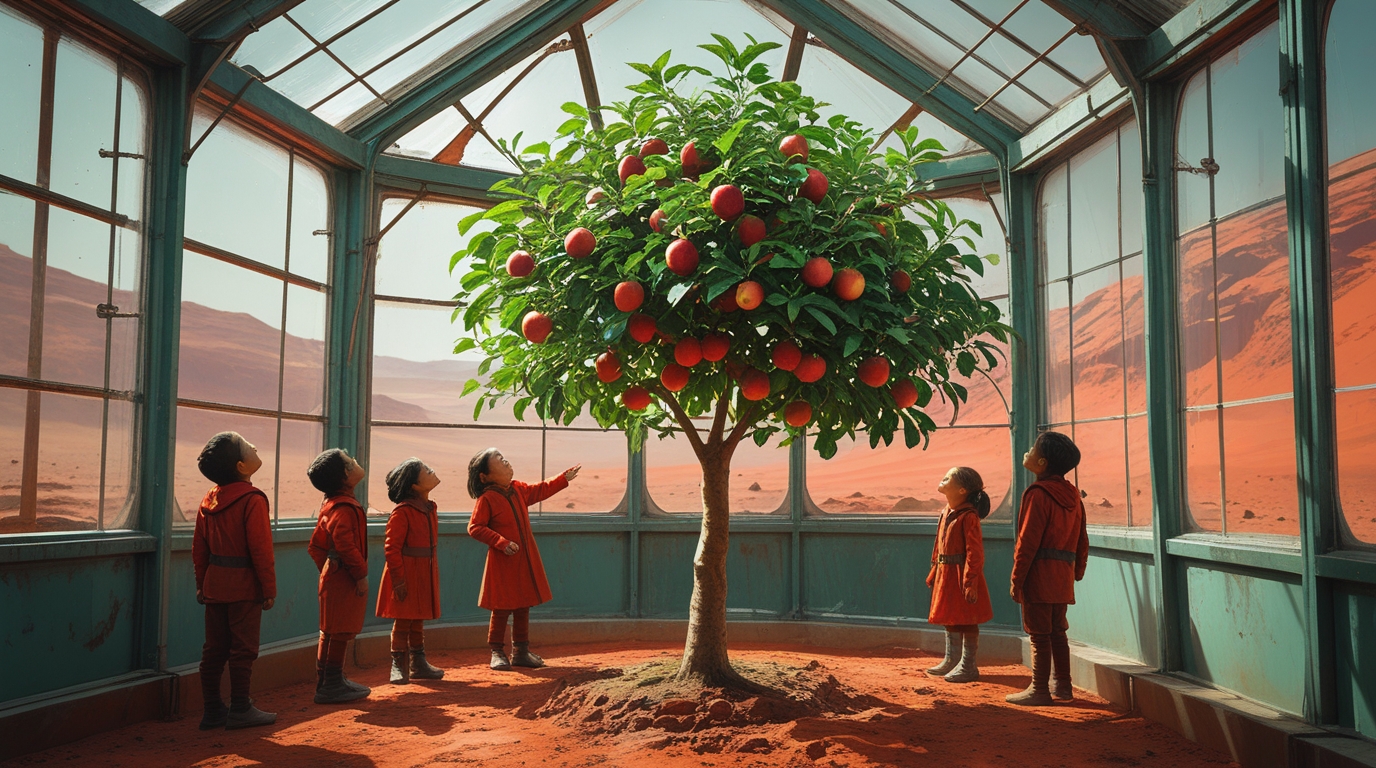
Saoirse was there with a group of younger children, Mars-born all of them, showing them the apple tree. It had taken six years to coax fruit from Martian soil. Six years of adjusted pH, supplemental nutrients, hand pollination because there were no bees, and the stubborn refusal of the agricultural team to accept that an Earth tree couldn’t grow on Mars. The first apple had been divided into pieces so small each colonist got a single bite. Saoirse had been four. She’d eaten her piece and announced, with the absolute certainty of a child who’d never known any other world, “Tastes like here.”
Now the tree produced a full crop every season. Saoirse was explaining pollination to the younger kids in rapid-fire Martian, her hands moving through the branches with the confidence of someone who’d been doing this since she could reach the lowest bough.
“Pollen goes flower t’flower, yeah? On dirtside they got bugs do it, bees an’ such. We ain’t got bees so we do it by hand, brush t’brush, every flower, every sol during bloom. Miss one an’ that’s one less apple come harvest. Nah, don’t touch that one, it’s settin’. See how the base is fat? That’s fruit comin’. Leave it be.”
The children listened with the seriousness of people learning a survival skill, which is what it was. Some of them would never know that “t’flower” had once been “to flower” or that “every sol” had once been “every day” or that “nah” had once been “no.” The dialect was becoming a language. Driven by children who had no reason to speak the way Earth spoke. Earth was a word in a history lesson. Here was real.
Adaora watched them. She was not a sentimental woman. She had delivered most of these children, treated their parents for a plague that came from billion-year-old ice, signed death certificates for eleven people she couldn’t save, and spent twelve years writing the definitive text on an organism that shouldn’t exist. Sentiment was a luxury that Mars hadn’t offered her.
But she understood, standing in this greenhouse, watching children who spoke a language that hadn’t existed a decade ago tend an Earth tree on an alien world, that something had happened here that went beyond survival. Beyond terraforming, beyond colony management, beyond the medical and biological and political crises that had defined their first decade. Something new was growing, and it wasn’t just apples.
Outside, the latest supply pod from Earth sat in the landing zone, unopened. Nobody had gotten around to it. They’d been busy with the harvest.
VII. Lín
The transmission from Earth arrived on a Tuesday, eleven years into the quarantine.
Mars Colony, this is Earth Central. Quarantine review board has concluded assessment of xenobiological threat. Based on data provided by your medical team, the board finds that Martian microorganisms require specific environmental conditions not present in Earth biosphere. Quarantine modified: unmanned supply schedule increased to monthly. Manned resupply missions under review. Personnel transfer restrictions remain pending further study.
Modified. Not lifted. The quarantine would never fully lift. Earth would always be afraid of what lived in Martian water. And Mars would always remember being left alone with it.
Lín drafted her reply. Professional. She thanked Earth Central for the increased schedule. She provided a status report: 512 personnel, 97 Mars-born, fourteen deceased, atmospheric processing ahead of projections, agricultural output strong.
She did not mention that the last supply pod was still sitting unopened in the landing zone.
She did not mention that the colony fabrication lab, built by Yuki from spare parts and Martian iron, now produced better filtration membranes than anything Earth had ever sent.
She did not mention that Saoirse Oduya, age twelve, had recently informed her that when she was old enough she intended to run for Colony Director. “Cuz somebody’s gotta,” the girl had said, “an’ might as well be somebody who knows how procs work.”
She did not mention that the Mars-born had started calling themselves something. Not colonists. Not settlers. Not Martians, even, which was the Earth word for them.
Reds.
Short, hard, theirs. The color of the ground under their feet, the dust on their suits, the sky at sunset. One syllable. No wasted breath.
Lín signed the transmission and sent it. Then she sat in the operations center, in the same room where Aliyah Patel had written her last log four hundred and eighteen years ago, and listened to the colony through the walls. The hum of processors. The chatter of children in a dialect she could barely follow anymore. The sound of a place that had stopped being a colony and started being a country.
Earth would figure that out eventually. Lín hoped it would be later rather than sooner. A colony Earth forgot about died. But a country Earth couldn’t control was a different problem. A bigger one. The kind that lasted centuries.
She looked at the wall where Aliyah’s last words were engraved in a metal plate, preserved the way Mars preserved everything.
We held on as long as we could.
Lín touched the plate. Cold metal under warm fingers.
“We’re still holding,” she said.
Thank you for continuing this journey through humanity’s history. Two hundred people died on Mars because Earth forgot them. Four hundred years later, their children came back. This time, they stayed.
New episodes publish every Tuesday.
Next week: A tired Irish general holds a hundred billion people together through stubbornness and a robot who is better at numbers than it has any right to be.