
January 31, 2005 – Los Angeles
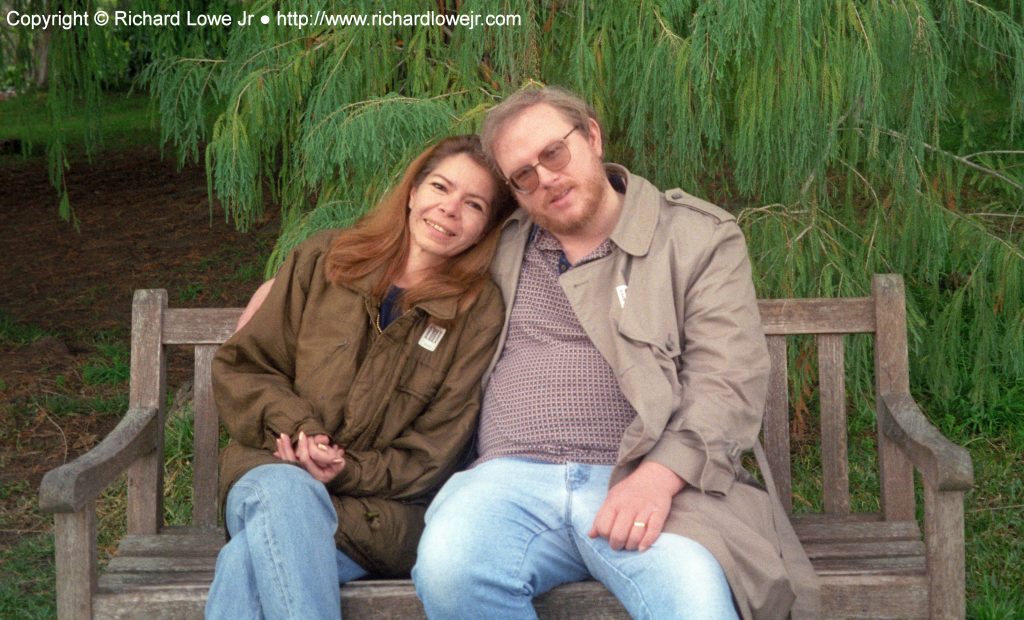
Claudia called me in the middle of work. She didn’t feel well. This was common by then, after years of illness, but I heard something different in her voice. Something that made me tell my boss I had to leave. He was pissed but said okay. I got the impression we’d be talking about that later.
I didn’t care.
I drove home at a hundred and ten miles per hour, my hands tight on the wheel, running through the possibilities in my head. Got there and assessed the situation. At first I thought it was one of her normal problems, something we could handle the way we’d handled everything else for years. The breathing treatments, the medications, the routines I knew by heart. We had been through this so many times that I had become a kind of amateur nurse, always knowing what to do next.
But by nightfall it was obvious our normal handling wasn’t working. Nothing was helping. The steroids weren’t clearing her breathing. The nebulizer treatments weren’t enough. I watched her struggle for air and knew we had crossed into territory I couldn’t manage alone. I called 911.
The paramedics carried her down the stairs, and I followed them out to the ambulance. They wouldn’t let me ride with them, so I walked. The hospital was only a block away. I followed on foot through the dark streets, thinking about hospital stays and recovery times, mentally preparing for another week of sleeping in waiting room chairs and negotiating with nurses about visiting hours. Claudia had been in the hospital nine times before. Twice she had fallen into comas and come back. She had nine lives, she used to say. It never crossed my mind that this was the tenth.
She died the next morning. Queen of Angels hospital, 9:57am.
I was standing in the room when it happened, watching the doctors and nurses do what they could, which by then wasn’t much. They wanted to extend her life as long as possible, keep her on the machines, but they needed my permission. I looked at her lying there, her body swollen and failing, and I thought about what she would want. I told them no. She wouldn’t have wanted to survive that way. So when her body finally gave out, they let her go.
I walked to the bed and looked at Claudia for the last time. Twelve and a half years together flashed through my mind in fragments. The woman I married, who weighed less than a hundred pounds and laughed easily. The years that followed, hospitals and medications and midnight emergencies blurring together into one long vigil. The way she still managed to smile at me even when breathing took everything she had.
Our journey together was over.
Claudia was Guatemalan, raised in New Orleans, and she had been a smoker her entire adult life. When we married, I knew about the cigarettes. She had so many other good qualities that I decided one flaw could be tolerated. I had known drug users and alcoholics. How bad could smoking be?
I learned.
A few months after our wedding, she called me in a panic. Trouble breathing. I rushed home, scooped her up, drove like a maniac to the clinic. The doctor said asthma, gave her a shot of adrenaline that made her whole body shake, and told her she had to quit smoking. Claudia nodded and said she understood. She said she would quit tomorrow.
Tomorrow never came. It never does for smokers.
What followed was twelve and a half years of watching the woman I loved destroy herself one cigarette at a time. The asthma became COPD, permanent lung damage that would never heal. The steroids they prescribed to keep her breathing caused her to retain water, massive amounts of it locked into her tissues. By the end, she weighed three hundred and ten pounds, most of it fluid her body couldn’t release. Her skin became brittle from the medications, and sores opened on her legs that wouldn’t close. I changed her bandages twice a day, every day, for years. I checked her temperature, her blood sugar, her blood pressure. I hooked her up to IV antibiotics when infections set in. I bought HEPA filters and oxygen machines and special equipment so she could use the bathroom and shower.
What killed her in the end wasn’t the COPD directly. It was sepsis, a blood infection that probably started in the blisters and cuts on her feet. All those years of fighting to keep her alive, and it was something we never saw coming that took her.
After she was gone, I went through our apartment and cleaned out everything. Medical equipment, pill bottles, machines, walkers, bandages. Two full trash cans of the debris that illness leaves behind. It felt necessary, a kind of exorcism of everything that had defined our life together for so long.
And then I found the cigarettes.
Hundreds of empty packs, stuffed into every possible hiding place in the back room. Behind books, under furniture, crammed into corners I never thought to check. She had been begging friends for smokes, walking to the corner liquor store whenever she could scrape together a few dollars. The one cigarette a day I had agreed to, just to preserve my sanity, had been a lie. She had been killing herself the whole time, and I had been too exhausted to see it.
The anger I felt in that moment is hard to describe. It sat in my chest like a hot stone, and it stayed there for a long time.
A few days after Claudia died, I got in my car and drove east into the desert.
I don’t remember making a conscious decision to go. I just went. Joshua Tree National Park had been a refuge for me during the worst of her illness, a place I had hiked a few times when I needed space to breathe. Claudia had encouraged me to get out once in a while. She knew I needed it, and maybe she needed the space too. But this trip was different. This time I wasn’t escaping temporarily. I was looking for something I couldn’t name.
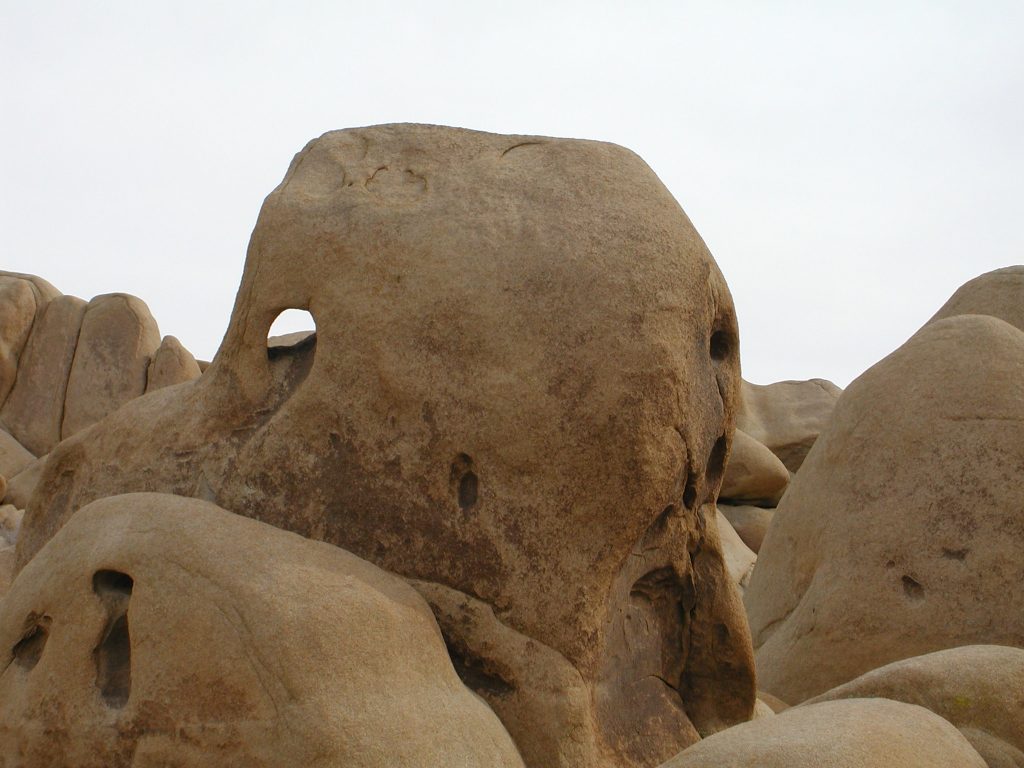
I drove all the way to Skull Rock, about the middle of the lower park, parked the car, and climbed to the top. The rock formation looks exactly like its name, a massive boulder shaped like a human skull, and sitting up there felt like perching on the head of some ancient giant buried in the desert sand.
I sat there for hours.
The desert spread out below me, ancient and indifferent to my grief. Joshua trees stood like sentinels across the landscape, their twisted arms reaching toward a sky that didn’t care about anything happening on the ground below. The silence was so complete I could hear my own heartbeat, my own breathing, the whisper of wind across stone that had been there for millions of years.
I wanted to cry. I needed to cry. Twelve and a half years of loving someone, eight of those years watching her suffer through the worst of it, and now she was gone. The grief was enormous, a pressure building behind my eyes and in my throat, demanding release. I had come to the desert hoping the solitude would crack something open, would let the pain pour out where nobody could see.
But I couldn’t cry. The tears wouldn’t come.
My father had conditioned me well. Men don’t cry. Men don’t feel emotions except anger. I had learned that lesson so deeply it had become part of my bones, woven into my nervous system in ways I couldn’t undo just by wanting to. So I sat on that rock in the California desert, trying to let the grief out, and it stayed locked inside me. All I had was the silence and the ancient landscape and the hot stone of anger still sitting in my chest, right next to the grief that wouldn’t release.
I stayed until the light began to change, the desert shifting from harsh afternoon glare to the golden warmth that comes before sunset. And somewhere in those hours, between the failed attempts at crying and the weight of everything I had lost, I made a decision.
I was going to rebuild my life from the ground up.
I was forty-four years old. I had spent the last twelve and a half years focused on keeping Claudia alive, managing her illness, working my job at Trader Joe’s, doing what needed to be done. And underneath all of that, running like a current through my entire life, was the shyness. I had been painfully shy for as long as I could remember, the kind of shy that made it hard to talk to strangers, hard to be in crowds, hard to exist in the world without feeling like I was always on the outside looking in.
Sitting on Skull Rock, watching the shadows lengthen across the desert floor, I understood something I couldn’t unlearn. Claudia had spent years locked in an apartment, trapped by IV drugs and medical equipment and a body that betrayed her. She had been a prisoner of her illness, her world shrinking down to the size of a sickroom. And I had been trapped too, in a different way. Trapped by fear, by shyness, by a life that had become so small I could barely breathe.
Life is short. Too short to waste on fear. Too short to spend hiding from the world. Too short to die without having really lived.
I climbed down from the rock as the stars began to appear, one by one, in a sky turning from purple to black. I got in my car and drove home through the darkness, the desert disappearing behind me.
Something had shifted. I could feel it in my chest, right next to the anger and the grief that wouldn’t release. A small, stubborn flame. The beginning of whatever came next.
The camera had already been part of my life before Claudia died. I had started taking short trips during her illness, photographing landscapes and nature whenever I could steal a few hours away. She encouraged me to go. She knew I needed the escape, and maybe she needed the quiet too. But after she was gone, the camera became something different. Not just an escape anymore. A lifeline. A way of looking at the world that put a barrier between me and the rawness of everything I was feeling.
I photographed everything. National parks, state parks, flowers, hiking trails. I went in the evenings after work, on weekends, whenever I could get away. The wide open spaces gave me room to breathe, room to think, room to process what I had lost without having to talk to anyone about it. The camera gave me permission to be present in the world without having to interact with it directly. I could observe. I could frame. I could capture. And nobody expected me to make conversation.
The renaissance faires came next, and they were the opposite of everything the desert offered. Noise and color and cheerful absurdity, crowds of people in elaborate costumes pretending to live in another century. I wandered through the grounds with my camera, photographing jousters and sword fights and merchants selling things nobody needed. It felt like stepping through a portal into a world where death and illness and grief didn’t exist, where everyone was playing at being someone else, and where I could disappear into the role of observer without anyone questioning why I was there.
And at every faire, there were belly dancers. Traditional styles, Moroccan and Turkish, women in bright costumes moving in ways I had never seen before. The colors and the motion caught my attention in a way I couldn’t explain. Something about watching them dance relaxed me, eased the grief and the stress in a way the landscapes couldn’t. I sat in the back row with my telephoto lens, keeping my distance, watching through the viewfinder. Safe. Invisible. Just the guy with the camera.
I didn’t know yet that those dancers would change everything. I didn’t know that a woman named Marjhani would walk toward me one day and terrify me with her piercings and tattoos and warmth, that she would invite me into a community that would become my chosen family for the next eight years. I didn’t know about the million photographs still to come, or the birthday parties where dozens of dancers would perform just for me, or the friends who would welcome me without ever asking what I was running from.
But I was already on the path. Skull Rock had pointed me in a direction, and the camera was carrying me forward. I just couldn’t see yet where the road would lead.
Claudia was gone. The life I had known was over. And somewhere in the space between grief and hope, I was beginning to find my way forward, one photograph at a time.
[PHOTOS: Joshua Tree National Park, Skull Rock]