
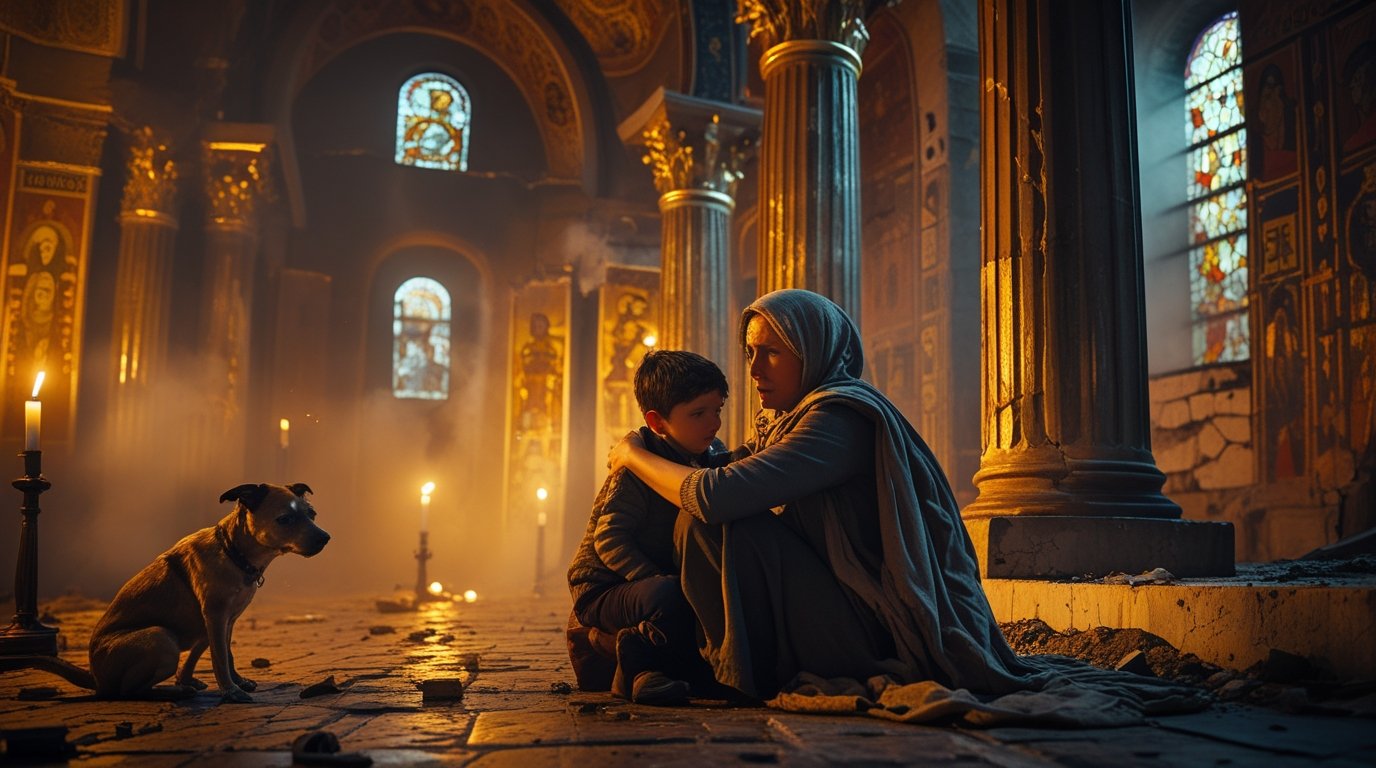
The Last Candle in Constantinople
I’ve been obsessed with the fall of Constantinople since I read about it in college. May 29, 1453. The end of the Roman Empire, the real end, not the one in the history books that says it fell a thousand years earlier. The idea that an entire civilization’s last moments came down to ordinary people doing ordinary things while the walls crumbled around them stuck with me for decades. I wanted to write it from the ground level, not the emperor’s balcony. The candlemaker. The baker. The woman trying to get her children to safety. History remembers the generals. Nobody remembers the candle that went out last.
Anna’s hands wouldn’t stop shaking. She pressed them against her thighs, but the tremors reached deeper. Cold stone bit through her torn dress, and she tasted her own sweat mixing with the smoky incense drifting through shattered windows.
Nikolas tugged at her sleeve. Seven years old, too young to understand the screaming outside. “My belly hurts.”
Nothing left to give him. The last crust of bread, green with mold, had gone to him yesterday. Anna pressed her palm against her own stomach, felt it clench tight.
A dog nosed through the crowd, once someone’s pet, now just ribs showing through patchy fur. Its left ear hung in tatters. It worked the floor with practiced desperation, tail low. When it found something, gristle, maybe worse, it swallowed fast, eyes scanning for thieves.
Nikolas watched, fascinated. “He’s hungry like us.”
The animal moved with careful precision. It had learned the same lessons: stay quiet, stay small, take what you find.
“Don’t stare,” Anna whispered, though she couldn’t look away.
The wounded man beside them breathed through his mouth, blood crusted across his forehead. His eyes stared at nothing. Anna couldn’t tell if he was dying or already gone.
The great doors shuddered under impact. Wood splintered.
“Anna.” Theodoros dropped beside her, his baker’s apron black with ash. She’d kissed him once, years ago, behind his father’s shop. Now his young face looked ancient. “The walls are gone.”
Her throat closed. The dog reappeared from the cathedral’s depths, dragging what looked like leather. When it came closer, Anna saw it wasn’t leather. The animal settled against a pillar and worked at its prize methodically. Not just hungry but starving in a way that made you eat anything.
The dog’s single-minded focus felt almost beautiful. While people around it wept and broke apart, it did what it needed to do. No despair. Just survival.

“I wish I was that dog,” the old woman said quietly.
Another crash shook dust from the dome overhead. The dog’s head snapped up, then it moved again, reading each sound for danger or opportunity.
Father Gennadios tried to continue the service, but his voice cracked on every word. The dog circled the altar’s base, nose working the stone. It found a communion wafer and ate it with strange reverence.
The priest and animal looked at each other for a moment. Both trying to survive as best they could.
“How long do we have?” The old woman’s voice broke.
Theodoros shook his head.
More people pushed through the doors. A silk merchant Anna recognized, his fine clothes torn. A girl, maybe sixteen, searching faces. An old man clutching a dead chicken to his chest like treasure.
The dog approached the man with the chicken. It didn’t beg, just sat and looked at him with amber eyes. The man stared back, then tore off a piece of the bird’s neck and tossed it down. The dog caught it mid-air and swallowed whole.
“Good boy,” the old man whispered. The dog’s tail moved once.
Bodies pressed together tighter. The dog moved between them like water, never getting stepped on. Anna watched it work and envied its grace.
A woman by the altar began sobbing, deep sounds that came from somewhere below her ribs. The dog stopped and tilted its head, listening.
Nikolas pointed at the golden mosaics high above. “Why do the angels look scared?”
In the flickering candlelight, the faces did seem different. Watching. Waiting.
Father Gennadios dropped his prayer book. It hit marble with a crack. The dog padded over, sniffed the leather binding, then looked up at the priest with something like understanding.
The animal found a spot near the altar where it could see all the entrances. It settled down but kept its head raised, alert.
The pounding on the doors stopped.
The dog went rigid. Its ears swiveled toward the entrance, and it rose into a crouch.
Silence. Even the sobbing woman held her breath. Just the crackle of distant fires and the dog’s barely audible whine.
Heavy boots on marble.
The girl began laughing. High and wild, as if something had snapped behind her eyes. Someone hissed for quiet, but she couldn’t stop.
Theodoros grabbed Anna’s wrist, his fingers cold and slick. “Stay close.”
The footsteps stopped outside the doors.
Anna pulled Nikolas tight against her and covered his ears. His heart hammered against her chest like a trapped bird.
The dog bared its teeth silently.
Turkish voices. Low. Deciding.
The dog flattened against the floor and belly-crawled toward the altar’s shadow.
Light flooded in. Harsh torchfire that made everyone squint. Anna squeezed her eyes shut.
The dog pressed itself against the altar’s base. When Ottoman soldiers entered, boots ringing on stone, the animal panicked and bolted for what looked like escape.
A soldier reacted without thought. His spear caught the dog mid-leap, pinning it to the marble with a wet echo that filled the cathedral.
The dog died silently. Just looked around once with those amber eyes, then went still.
Anna felt like she’d been punched. Of everything she’d witnessed, this hit hardest. The dog had done everything right. Been smart, careful, invisible. And died anyway.
Nikolas began crying, but not from fear. From rage. “He was good,” he sobbed against her shoulder. “He was just hungry.”
“Look at me.” The voice spoke accented Greek, not unkind, but absolutely certain of its authority.
Anna opened her eyes.
The Ottoman commander was younger than she’d expected, maybe thirty, with dark eyes that took in everything: the people pressed together, the dead man, the priest still holding his candle. His soldiers stood beside him, weapons drawn but lowered.
“This is now a mosque,” he said carefully. “You will leave.”
Father Gennadios stepped forward, the candle shaking in his hands so badly that wax dripped onto his shoes. “Please. Allow us to finish our prayers.”
The commander studied the old priest’s face. Around them, soldiers waited for orders.
Then one of the younger soldiers, barely more than a boy, spoke quickly in Turkish. The commander’s expression shifted.
“Quickly,” he said.
But Father Gennadios couldn’t speak. He opened his mouth, but only air came out. The candle slipped from his trembling hands and shattered on the marble. The flame died.
In the sudden darkness, Anna heard Nikolas whisper, “Mama, I’m scared.”
She held him closer. “I know, my heart.”
The young soldier struck flint and rekindled the fallen candle. He offered it to Father Gennadios, but the priest’s hands shook too much to take it.
So the boy held the flame himself and spoke in broken Greek: “Light stays.”
Anna looked at his face in the candlelight. He was scared too. Just a boy far from home.
When they filed out of the cathedral, slowly, like people walking on ice, Anna kept Nikolas’s hand locked in hers and didn’t look back. Behind them, she could hear the soldiers already talking, deciding what to do with the old church.
The night air hit them like a slap. Outside, Constantinople burned. Streets she’d known her whole life had become rivers of rubble. Bodies everywhere. Soldiers and civilians. Greeks and Turks.
They walked through the conquered city without direction. Nikolas stumbled often, exhausted, hollow with hunger, but Anna kept pulling him forward. Stopping meant thinking. Thinking meant falling apart.
The air stank of smoke and worse things. Sometimes Nikolas would stop walking and just stare at something. Anna would tug him forward. His hand felt so small.
“Where are we going?” he asked once.
“I don’t know,” she said. It was the first honest thing she’d told him all day.
They passed a fountain where Ottoman soldiers were washing blood from their hands. One looked up at Anna and Nikolas, then back to his washing. She pulled Nikolas closer.
As gray light crept across the harbor, they found themselves at the water’s edge. Ottoman ships filled the bay where Byzantine vessels had floated days before.
Nikolas was still breathing. Still holding her hand.
Anna sat on broken stone and pulled her son into her lap. Around them, other survivors found places to rest. An old woman with kind eyes shared a sip of water from a cracked cup.
The smell of smoke hung over everything. In the distance, she could hear voices calling names, looking for family. Some answered. Most didn’t.
Nikolas fell asleep against her chest, his breathing finally steady. Anna felt his heartbeat, warm and alive. She closed her eyes and listened to him breathe.
Free Stories, Straight to Your Inbox
Start with Nine Doors, nine short stories across nine genres, yours free the moment you sign up. After that, the occasional new collection and a note when there's a new book worth your time. No spam, no daily clutter. Just good stories.
We use MailerLite to manage our list and send these emails. Your address is used only to send you what you signed up for. We will not sell it, share it, or use it for anything else, and you can unsubscribe anytime.