
Movie Reviews
Film and television reviewed the way I’d want to read them — with a rating that means something, an honest accounting of what works and what doesn’t, and craft notes for writers who want to understand how the machinery operates.
Each review includes a craft notes section for writers — specific observations about structure, character, world-building, and what the film does that you can actually use. Not theory. Technique you can steal.
Samurai (13)
 May 17, 2026
13 Assassins (2010)
Takashi Miike's 2010 samurai siege film. Forty-five minute climax. Pairs with Seven Samurai as the modern remake the genre needed.
 May 17, 2026
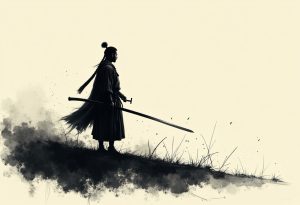
Harakiri (1962)
Kobayashi's 1962 anti-samurai film. A ronin requests ritual suicide at a clan's gate. The most ruthless dismantling of bushido ever committed to film.
 May 19, 2026
Lone Wolf and Cub: Sword of Vengeance (1972)
Kenji Misumi's 1972 first Lone Wolf film. Itto Ogami and infant son Daigoro on the assassin road. Six-film series template.
 May 17, 2026
Ran (1985)
Kurosawa's 1985 King Lear in feudal Japan. Three-hour battle epic with armies of 1,400 extras. The film he spent ten years preparing.
 May 19, 2026
Sanjuro (1962)
Kurosawa's 1962 Yojimbo sequel. Mifune returns as the ronin. The final-fountain-of-blood draw became foundational anime image.
 May 17, 2026
Seven Samurai (1954)
Kurosawa's 1954 samurai epic. Three hours twenty-seven minutes. The film every assembled-team movie since 1960 has copied.
 May 19, 2026
Sword of the Beast (1965)
Hideo Gosha's 1965 second film. Fugitive samurai on the run. The genre's anti-feudal voice. Criterion-canonical.
 May 19, 2026
The Hidden Fortress (1958)
Kurosawa's 1958 medieval adventure. Mifune as general, two bumbling peasants. Lucas cited as Star Wars influence.
 May 19, 2026
The Sword of Doom (1966)
Kihachi Okamoto's 1966 nihilist samurai film. Tatsuya Nakadai as soulless killer. Adapted novel never finished. Abrupt ending.
 May 19, 2026
The Twilight Samurai (2002)
Yoji Yamada's 2002 late-Edo samurai drama. Hiroyuki Sanada as widowed petty officer. Domestic samurai life. Academy Award nominee.
 May 19, 2026
Three Outlaw Samurai (1964)
Hideo Gosha's 1964 directorial debut. Three masterless samurai aid peasant uprising. Spin-off from TV series. Stark and brutal.
 May 17, 2026
Throne of Blood (1957)
Kurosawa's 1957 Macbeth set in feudal Japan. Mifune as Washizu. The arrow finale is among the most committed practical-effects sequences ever filmed.
 May 17, 2026
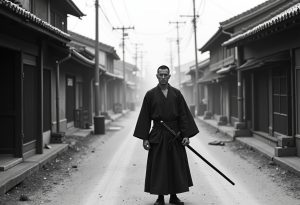
Yojimbo (1961)
Kurosawa's 1961 samurai-noir. Mifune as the masterless ronin who plays two factions against each other. Direct source for Fistful of Dollars and Last Man Standing.