
Movie Reviews
Film and television reviewed the way I’d want to read them — with a rating that means something, an honest accounting of what works and what doesn’t, and craft notes for writers who want to understand how the machinery operates.
Each review includes a craft notes section for writers — specific observations about structure, character, world-building, and what the film does that you can actually use. Not theory. Technique you can steal.
Foreign Movies (61)
 May 17, 2026
13 Assassins (2010)
Takashi Miike's 2010 samurai siege film. Forty-five minute climax. Pairs with Seven Samurai as the modern remake the genre needed.
 May 17, 2026
8½ (1963)
Fellini's 1963 self-portrait. Mastroianni as a director who can't make his next film. Five Oscars. The film film school built itself around in Europe.
 May 17, 2026
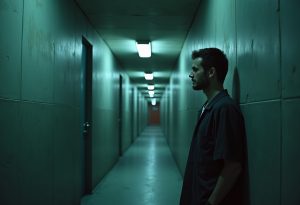
A Bittersweet Life (2005)
Kim Jee-woon's 2005 Korean crime drama. Lee Byung-hun as a hotel enforcer one mistake from death. Compressed, controlled, lethal.
 May 17, 2026
A Prophet (2009)
Audiard's 2009 French prison film. Tahar Rahim as Malik. Six-year rise inside the system. Pairs with the Shawshank/Bronson prison cluster.
 May 17, 2026
A Separation (2011)
Farhadi's 2011 Iranian domestic-legal drama. A middle-class couple's divorce becomes a moral procedural. Best Foreign Oscar. Pairs with Presumed Innocent.
 May 17, 2026
A Touch of Sin (2013)
Jia Zhangke's 2013 Chinese anthology. Four stories of modern violence in industrial China. Won Best Screenplay at Cannes.
 May 17, 2026
Battle Royale (2000)
Fukasaku's 2000 teen-survival film. Junior high students sent to an island to kill each other. The source The Hunger Games stole from and softened.
 May 17, 2026
Battleship Potemkin (1925)
Eisenstein's 1925 Soviet propaganda film. The Odessa Steps sequence remains the most-imitated montage in cinema. 75 minutes that changed editing.
 May 17, 2026
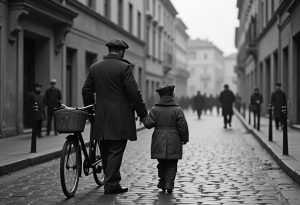
Bicycle Thieves (1948)
De Sica's 1948 Italian neorealist drama. A father and son search Rome for a stolen bicycle. The foundation document of postwar realist cinema.
 May 17, 2026
Breathless (1960)
Godard's 1960 French New Wave debut. Belmondo and Seberg in Paris. The jump cuts that broke continuity editing for the rest of cinema.
 May 17, 2026
Children of Heaven (1997)
Majidi's 1997 Iranian family drama. A boy and his sister share one pair of shoes between school sessions. First Iranian film nominated for Best Foreign Oscar.
 May 17, 2026
Cinema Paradiso (1988)
Tornatore's 1988 Italian drama. A boy grows up in a small-town movie theater. The director's cut adds an hour and changes the film. The shorter cut is the one to watch.
 May 17, 2026
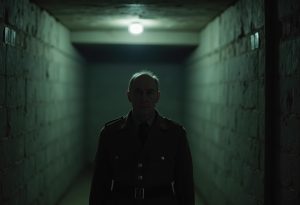
Come and See (1985)
Klimov's 1985 Soviet WWII drama. A teenage boy joins partisans in Nazi-occupied Belarus. Among the most devastating war films ever made.
 May 17, 2026
Downfall (2004)
Hirschbiegel's 2004 German WWII drama. Bruno Ganz as Hitler in the bunker's last ten days. The film YouTube remix culture turned into meme footage.
 May 17, 2026
Fanny and Alexander (1982)
Bergman's 1982 Swedish family epic. Theatrical cut three hours, TV cut five. The autobiographical work he meant to end his career on.
 May 17, 2026
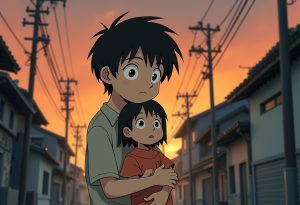
Grave of the Fireflies (1988)
Takahata's 1988 Studio Ghibli WWII drama. Two siblings starve in firebombed Japan. The animation widely cited as the most devastating ever made.
 May 17, 2026
Harakiri (1962)
Kobayashi's 1962 anti-samurai film. A ronin requests ritual suicide at a clan's gate. The most ruthless dismantling of bushido ever committed to film.
 May 17, 2026
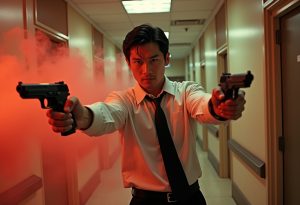
Hard Boiled (1992)
John Woo's 1992 Hong Kong action film. Chow Yun-fat and Tony Leung. The hospital sequence that John Wick choreography traces back to.
 May 17, 2026
High and Low (1963)
Kurosawa's 1963 kidnapping procedural. Mifune as the shoe executive. First hour in one room, then the film cracks open. Adapted from an Ed McBain novel.
 May 17, 2026
I Saw the Devil (2010)
Kim Jee-woon's 2010 extreme revenge thriller. Lee Byung-hun as the cop, Choi Min-sik as the killer. Where the genre ends. Not for casual viewing.
 May 19, 2026
In the Mood for Love (2000)
Wong Kar-wai's 2000 1960s Hong Kong romance. Tony Leung, Maggie Cheung. Unfulfilled longing. Cheongsam parade. Slow motion.
 May 17, 2026
Infernal Affairs (2002)
Lau and Mak's 2002 Hong Kong crime thriller. Two moles on opposite sides. The film Scorsese remade as The Departed. Often called the better version.
 May 17, 2026
La Dolce Vita (1960)
Fellini's 1960 Rome decadence drama. Three hours of Marcello Mastroianni drifting through high society. Gave English the word 'paparazzi.'
 May 17, 2026
Le Samouraï (1967)
Melville's 1967 French crime film. Alain Delon as the hitman in trench coat and fedora. The visual template every quiet-assassin film has copied since.
 May 19, 2026
Le Trou (1960)
Jacques Becker's 1960 French prison drama. Five inmates plan escape from La Sante. Real-time digging sequences. Becker's final film.
 May 17, 2026
Let the Right One In (2008)
Alfredson's 2008 Swedish vampire film. A bullied 12-year-old boy and the girl-shaped vampire next door. The American remake softened everything that worked.
 May 17, 2026
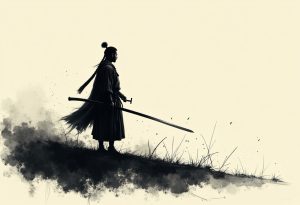
Leviathan (2014)
Zvyagintsev's 2014 Russian drama. A man fighting a corrupt mayor over his coastal property. The whale skeleton on the beach. Modern Russia in two hours forty.
 May 19, 2026
Lone Wolf and Cub: Sword of Vengeance (1972)
Kenji Misumi's 1972 first Lone Wolf film. Itto Ogami and infant son Daigoro on the assassin road. Six-film series template.
 May 17, 2026
M (1931)
Fritz Lang's 1931 German film. Peter Lorre as a child murderer hunted by both police and the criminal underworld. The first proper serial killer film.
 May 17, 2026
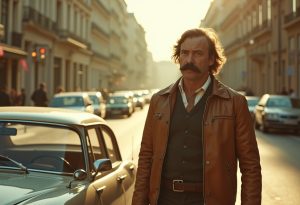
Memories of Murder (2003)
Bong Joon-ho's 2003 procedural. Korean cops hunt a serial killer in the 1980s. Based on the real Hwaseong murders. Pairs with Zodiac.
 May 17, 2026
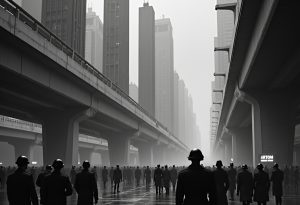
Mesrine (2008)
Richet's 2008 two-part French gangster epic. Vincent Cassel as Jacques Mesrine. Killer Instinct and Public Enemy Number One. Four hours total, earned.
 May 17, 2026
Metropolis (1927)
Fritz Lang's 1927 German silent SF epic. The film every dystopian city movie has copied. Restored 2010 cut is the version to watch.
 May 19, 2026
My Neighbor Totoro (1988)
Hayao Miyazaki's 1988 Studio Ghibli pastoral. Two girls discover forest spirits in rural Japan. Catbus, soot sprites, kindness throughout.
 May 17, 2026
Oldboy (2003)
Park Chan-wook's 2003 Korean revenge film. Oh Dae-su imprisoned 15 years in one room. The hammer hallway take. Peak of Park's vengeance trilogy.
 May 17, 2026
Oldboy (2013)
Spike Lee's 2013 remake of Park Chan-wook's Korean original. Josh Brolin and Sharlto Copley. Cleaner and more straightforward than the 2003 version.
 May 17, 2026
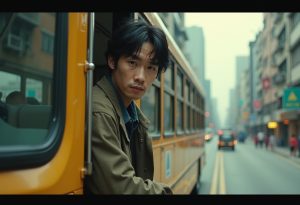
Persona (1966)
Bergman's 1966 Swedish psychological drama. Two women at a beach cottage. Identity dissolves. The film Bergman called his closest to abstract music.
 May 17, 2026
Police Story (1985)
Jackie Chan's 1985 Hong Kong action film. He directed, choreographed, and did his own stunts. The mall finale is among the great unfaked action sequences.
 May 17, 2026
Princess Mononoke (1997)
Miyazaki's 1997 environmental fantasy. Iron age Japan, forest gods, no clear villain. The film that defined Studio Ghibli's mature period for Western audiences.
 May 17, 2026
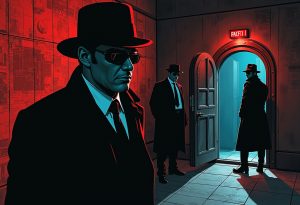
Ran (1985)
Kurosawa's 1985 King Lear in feudal Japan. Three-hour battle epic with armies of 1,400 extras. The film he spent ten years preparing.
 May 19, 2026
Rififi (1955)
Jules Dassin's 1955 French heist. Thirty-two-minute silent jewelry heist sequence. Template for every heist procedural since.
 May 19, 2026
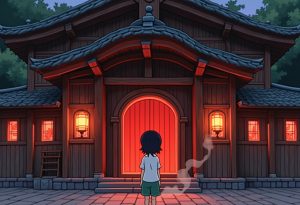
Sanjuro (1962)
Kurosawa's 1962 Yojimbo sequel. Mifune returns as the ronin. The final-fountain-of-blood draw became foundational anime image.
 May 17, 2026
Spirited Away (2001)
Miyazaki's 2001 fantasy. A ten-year-old girl trapped in a bathhouse for spirits. First non-English Best Animated Feature Oscar winner.
 May 17, 2026
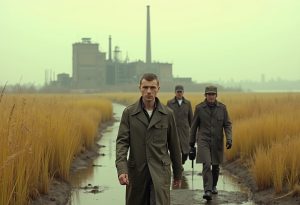
Stalker (1979)
Tarkovsky's 1979 Soviet SF film. A guide leads two men into the Zone. Two and a half slow hours that justify every minute. One of the great philosophical films.
 May 19, 2026
Sword of the Beast (1965)
Hideo Gosha's 1965 second film. Fugitive samurai on the run. The genre's anti-feudal voice. Criterion-canonical.
 May 17, 2026
Taste of Cherry (1997)
Kiarostami's 1997 Iranian drama. A man drives around Tehran looking for someone to bury him after his suicide. Palme d'Or. Tests viewer patience and rewards it.
 May 17, 2026
The 400 Blows (1959)
Truffaut's 1959 French New Wave foundation. Jean-Pierre Léaud as Antoine Doinel. Semi-autobiographical. Closing freeze frame defined modern cinema endings.
 May 17, 2026
The Conformist (1970)
Bertolucci's 1970 political thriller. Trintignant as a man trying to become normal under fascism. Storaro's cinematography reshaped what color film could do.
 May 17, 2026
The Girl with the Dragon Tattoo (2009)
Oplev's 2009 Swedish thriller. Noomi Rapace as Lisbeth Salander. Original adaptation of Stieg Larsson's trilogy. Sharper than the Fincher remake.
 May 19, 2026
The Hidden Fortress (1958)
Kurosawa's 1958 medieval adventure. Mifune as general, two bumbling peasants. Lucas cited as Star Wars influence.
 May 17, 2026
The Hunt (2012)
Vinterberg's 2012 Danish small-town drama. Mads Mikkelsen as a kindergarten teacher falsely accused of child abuse. Mob mentality study at its sharpest.
 May 17, 2026
The Killer (1989)
John Woo's 1989 Hong Kong heroic bloodshed film. Chow Yun-fat as a hitman trying to retire. The film Tarantino spent a decade trying to remake.
 May 17, 2026
The Lives of Others (2006)
Donnersmarck's 2006 German drama. A Stasi officer surveilling a playwright. Won Best Foreign Language Oscar. East Germany at the edge of collapse.
 May 19, 2026
The Sword of Doom (1966)
Kihachi Okamoto's 1966 nihilist samurai film. Tatsuya Nakadai as soulless killer. Adapted novel never finished. Abrupt ending.
 May 19, 2026
The Twilight Samurai (2002)
Yoji Yamada's 2002 late-Edo samurai drama. Hiroyuki Sanada as widowed petty officer. Domestic samurai life. Academy Award nominee.
 May 17, 2026
The Wailing (2016)
Na Hong-jin's 2016 Korean rural-horror. A village cop investigates a stranger. Three hours of ambiguity. Earns its length.
 May 19, 2026
Three Outlaw Samurai (1964)
Hideo Gosha's 1964 directorial debut. Three masterless samurai aid peasant uprising. Spin-off from TV series. Stark and brutal.
 May 17, 2026
Throne of Blood (1957)
Kurosawa's 1957 Macbeth set in feudal Japan. Mifune as Washizu. The arrow finale is among the most committed practical-effects sequences ever filmed.
 May 17, 2026
Train to Busan (2016)
Yeon Sang-ho's 2016 Korean zombie film. The whole movie happens on one train. The first zombie film in a decade to feel necessary.
 May 17, 2026
Wild Strawberries (1957)
Bergman's 1957 Swedish drama. An aging professor's day-long road trip to accept an honorary degree. Memory, regret, dreams. Among Bergman's most accessible.
 May 17, 2026
Wings of Desire (1987)
Wenders's 1987 German fantasy. Angels watch over divided Berlin. Bruno Ganz, Otto Sander. The source Hollywood remade as City of Angels.
 May 17, 2026
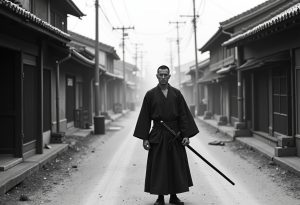
Yojimbo (1961)
Kurosawa's 1961 samurai-noir. Mifune as the masterless ronin who plays two factions against each other. Direct source for Fistful of Dollars and Last Man Standing.